

Passion can be understood as the active charge in a relationship. In psychology, passion is tied to intense desire and strong enthusiasm. You can still care for someone deeply and yet feel the spark thinning out. In everyday life, passion shows up as desire, curiosity, effort, affection, playfulness, and emotional energy.
Many of the signs of lack of passion in a relationship show up long before either of you says anything explicit. One person stops reaching. The other stops noticing. Conversations become efficient. Touch fades into habit or disappears. Resentment starts doing the talking, even when nobody names it. That quiet erosion is often more important than one dramatic argument.
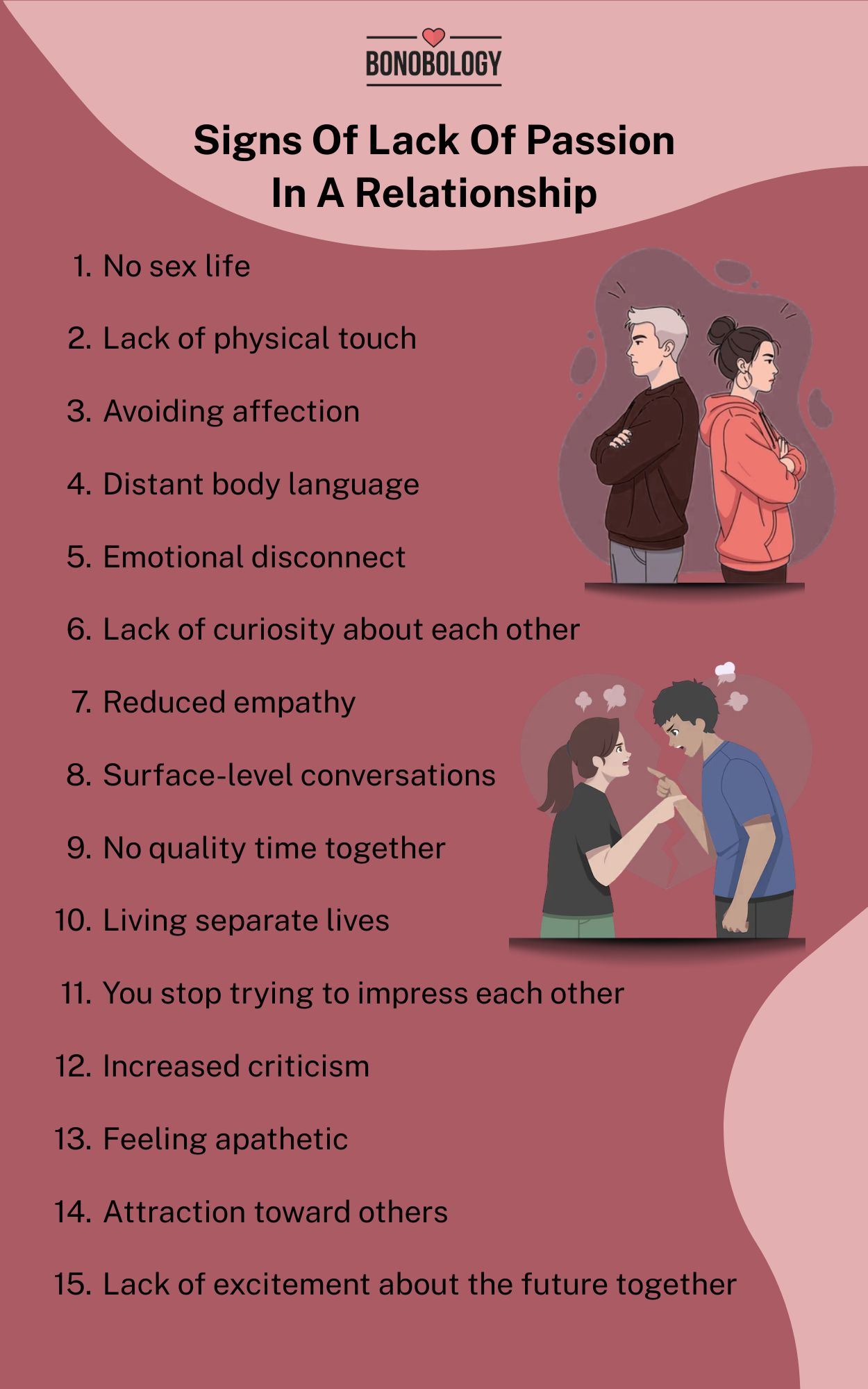
Some common signs of lack of passion in a relationship include:
- No sex life
- Distant body language
- Lack of curiosity about each other
- Gia tăng chỉ trích
- Feeling apathetic
What Does Lack Of Passion In A Relationship Look Like?
Mục lục
At its core, a passionless bond is one where desire, vitality, and effort have dropped. Sure, you may still love your partner. You may still function well as a team. But:
- The relationship feels less alive
- There is less pull toward each other
- Less warmth in ordinary moments
- And less instinct to move closer
It helps to separate three things people often confuse.
- Comfort means safety, trust, and ease. That is healthy
- Boredom means the relationship feels stale and overlearned. That is risky if it becomes chronic
- Lack of passion sits somewhere in between and often slides toward boredom when neither person protects novelty, emotional presence, or erotic energy
Long term relationships do not have to become an empty friendship, but it usually does become less obsessive than early stage infatuation.

Why Passion Fades And When It Is Normal
Sexual desire declines gradually over time in many long term relationships, and the high arousal state of new love is not built to stay at full intensity forever. If you stop expecting a permanent giai đoạn trăng mật, you stop panicking every time intensity shifts. At the same time, complete emotional flatness is not something you should accept as inevitable.
Routine is one big reason things cool down.
- New experiences with a partner can increase desire and satisfaction
- While repetitive, low engagement patterns push couples toward autopilot
That is one reason shared activities and hobbies matter more than people think. How would passion survive if all you’re doing together are the mundane chores?
Losing passion in a relationship can feel especially confusing when:
- You still respect your partner
- Enjoy their company
- And have no major crisis to point to
That confusion is understandable. Stress, parenthood, poor sleep, depression, libido changes, resentment, and buried conflict can all affect your closeness.
Bài đọc liên quan: Liệu pháp tăng cường sự thân mật tại nhà: 15 bài tập tăng cường sự thân mật trong hôn nhân
The Clear Signs Of Lack Of Passion In A Relationship
The clearest signs of lack of passion in a relationship usually cluster around touch, curiosity, effort, and emotional warmth. One sign on its own may just mean you’re going through a miếng vá thô. But several signs together, especially if they continue over months, deserve your attention.
Physical and intimacy signs
These signs show up in the body first. They show how comfortable, connected, and desired you feel physically with each other. When passion starts fading, physical closeness is often the first to go, or it begins to feel mechanical instead of natural.
1. Little or no sex life
A drop in sex is often the first sign people notice, but what frequency is not the only thing that matters. You should also pay attention to whether the sex feels:
- Muốn
- Tương thân
- And emotionally connected
Low desire can be a result of:
- Căng thẳng
- Trầm cảm
- Thuốc men
- Đau
- Căng thẳng trong mối quan hệ
- And health conditions
You might still sleep in the same bed and go weeks avoiding the topic because both of you already know how awkward it feels.
2. Lack of physical touch
When hugs, kisses, nắm tay, cuddling, and casual contact fade, the relationship starts feeling colder. Affectionate touch is a big part of intimacy in a relationship, and partner responsiveness helps forecast affectionate touch in couples. In real life, this can look like:
- You come home and there is no reaching for each other anymore
- No touch unless one person asks
3. Avoiding closeness or affection
This sign is subtler than no touch at all. Sometimes affection is technically present, but one of you:
- Avoids it
- Stiffens under it
- Turns it into a joke
- Or treats it as an obligation
That pattern matters because repeated turning away from bids for connection creates less safety, less closeness, and usually less romance and sex over time. For example, one partner leans in on the couch, and the other immediately checks the phone, gets up for water, or changes the subject.
Bài đọc liên quan: Màn dạo đầu: Không chỉ là khởi động
4. Body language feels distant
You can often see passion loss before you can explain it.
- The body turns away
- Eye contact drops
- Smiles do not arrive easily
- You stop sitting close without realizing it
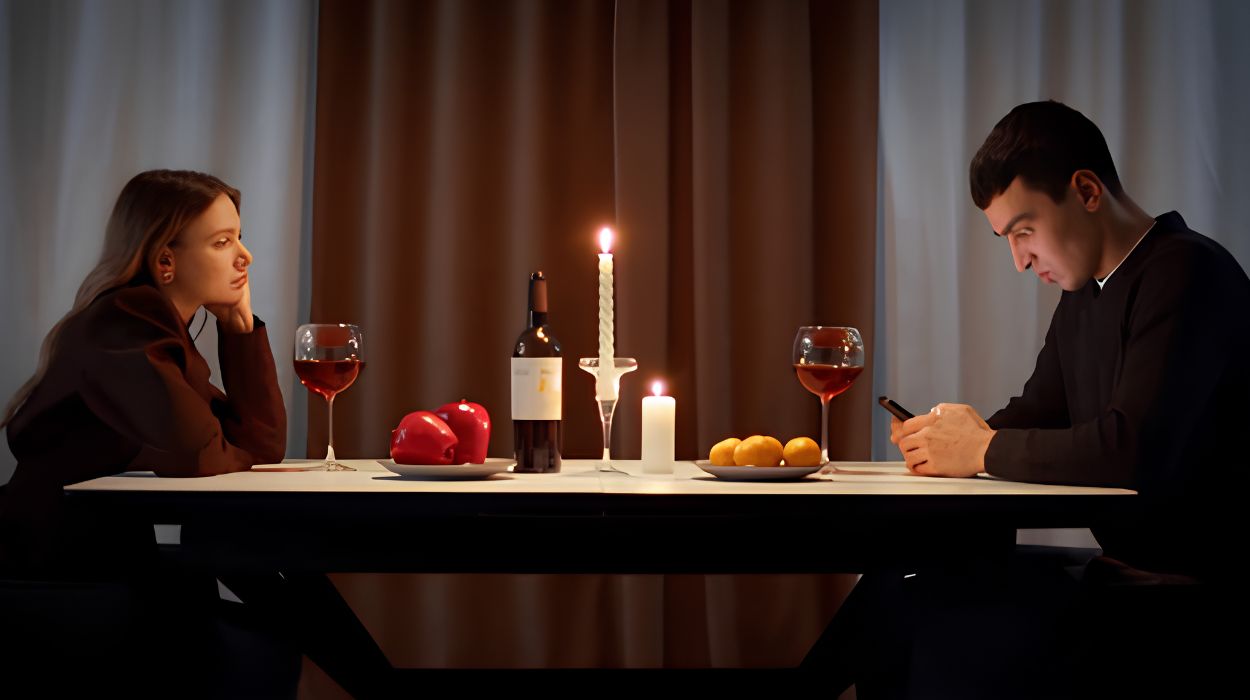
None of these seem problematic by themselves, but chronic distance in body language often comes as a result of khoảng cách tình cảm. For example, you eat dinner together, yet your shoulders, eyes, and attention are somewhere else almost the whole time.
Đọc liên quan: 11 tác động nghiêm trọng của hôn nhân không tình dục đối với vợ
Dấu hiệu cảm xúc
These signs show how the inner connection between you and your partner gets affected. It includes how seen, understood, and emotionally engaged you feel. When passion declines, emotional depth is often replaced by distance or indifference.
1. Emotional disconnect or feeling like roommates
This is one of the most common descriptions people use when passion has drained out. You still share a life, but the relationship feels not intimate but administrative. If efforts are not put into intentional intimacy, partners can start living parallel lives with sharing little to nothing with each other. It is often referred to as the roommate phase or a hôn nhân bạn cùng phòng.
“I hate the feeling of just being a roommate to my wife and we still do things together but just operate as friends .”
– Reddit user
2. Lack of curiosity about each other
Passion lives in discovery. When you stop wondering what your partner is thinking, feeling, craving, fearing, or becoming, interest starts to flatten. For example, even if you know your partner had a hard day, you do not ask what happened because you do not feel that pull or curiosity anymore.
“Desire thrives on otherness. We want novelty, someone on the other side of a bridge who makes us want to journey away from where we are to a place we’ve never been. Desire needs mystery.”
– Esther Perel, Psychotherapist
3. Reduced empathy or compassion
When passion is fading, partners often lose softness before they lose loyalty. You give less benefit of the doubt. You listen less generously. Even small sai lầm trong mối quan hệ feel more irritating than understandable. Nghiên cứu on dyadic empathy shows that empathy is linked with sexual desire, sexual satisfaction, and relationship adjustment.
4. Conversations feel surface level
If most of your conversations are about chores, schedules, money, parenting, or who is picking up what, something important may be missing. Communication is a key feature of mối quan hệ lành mạnh, and when it thins into logistics only, emotional depth usually goes with it. Example: you talk all day about tasks and still feel oddly unknown by bedtime.
Bài viết liên quan: Đây là cách nói "Hãy cùng thử nghiệm điều gì đó trên giường" với người yêu của bạn
Dấu hiệu hành vi
These are the visible patterns in how you show up in the relationship day to day. With lack of passion, effort, time, and shared experiences also take a hit. Actions slowly move from intentional to habitual.
1. No effort to spend quality time together
Dates are the first to go because they feel optional. Then play disappears, and then shared excitement goes with it. New and engaging activities with a partner can create greater desire and satisfaction, which helps explain why couples often go flat when everything together becomes routine. For example, you still run errands together, but you almost never create time that feels chosen, fun, or intimate, like a date or a hobby together.
2. Living separate lives
Yes, healthy couples do need individuality. The problem begins when it becomes extreme, when individuality becomes emotional separation. The relationship can turn into simply a housing arrangement with trách nhiệm chung if aspects of your life stop intersecting, for example:
- Sở thích
- Bạn bè
- Thói quen
- And inner worlds
Điều này có thể trông như sau:
- Spending evenings in different rooms
- Having completely different social worlds
- And not feeling like a team
3. You stop trying to impress each other
This is not about always dressing up or performing. It is about the loss of:
- Tán tỉnh
- Anticipation
- And care
When passion is alive, people still make small moves that say, “I want to be seen by you.” These moves stop happening when people fully collapse into convenience mode. There is:
- No teasing
- No effort
- No little attempts to feel desirable or make the other person feel chosen
Bài viết liên quan: Các cặp đôi cùng nhau tập luyện thể dục có đời sống tình dục tốt hơn
4. Increased criticism or negativity
If your tone toward each other has shifted from warm banter to chronic criticism, pay attention. Gottman’s research has repeatedly highlighted criticism, contempt, defensiveness, and ném đá as destructive patterns, with contempt standing out as the strongest predictor of divorce. Even neutral comments somehow become ammunition, and one small issue turns into a character attack within minutes.
Dấu hiệu tâm lý
These are the signs that reflect your internal state, thoughts, and feelings about the relationship. They often indicate deeper shifts in desire, attachment, and long-term outlook, even before major decisions are made.
1. Feeling apathetic or indifferent
Apathy is often worse than conflict because at least conflict still contains engagement. Nghiên cứu on romantic indifference has found links with lower relationship and personal well being, driven in part by:
- chán nản
- Lower intimacy
- And greater interest in alternatives
This may look like feeling a numbness instead of concern or even anger when your partner is upset.
Bài đọc liên quan: Sự thân mật tình dục: Ý nghĩa, lợi ích và cách cải thiện
2. Attraction toward others
Noticing other attractive people sometimes is okay. But it can lead to a disaster when paired with boredom, disconnection, or indifference at home. Anecdotal reports often show a pattern where outside attraction increases as the primary bond goes emotionally flat.
3. Lack of excitement about the future together
One of the clearest late stage signs is when the future stops feeling vivid. You may still plan the practical next step, but emotionally it feels
- Chỗ trống
- Nặng
- Or strangely dutiful
Nghiên cứu on indifference links it with
- Cam kết thấp hơn
- Vấn đề niềm tin
- And more thoughts of breaking up over time
Think about it. When you imagine the next five years, do you only picture stability and obligation, or is there joy and a genuine desire to keep building?
What Causes The Loss Of Passion
Because signs and causes overlap, signs of lack of passion in a relationship can be easy to dismiss as”
- Căng thẳng
- Nuôi dạy con
- Or a rough month
Sometimes that is true. Sometimes it is self protection. The hard part is that relational flatness often builds through ordinary life, which makes it easy to normalize for too long.
1. Too much familiarity
Routine and predictability are the obvious culprits, but the deeper issue is usually the death of anticipation. Too much sameness leaves nothing to discover and thus kills the curiosity. Novelty matters because it restores
- Chuyển động
- Chú ý
- And a sense that the relationship still contains undeveloped space
““Eroticism resides in the ambiguous space between anxiety and fascination.”
– Esther Perel, Psychotherapist
KHAI THÁC. Oán giận
Resentment is another major cause, and it is usually more complex than people expect. One missed need will not kill passion but hundreds of unaddressed disappointments might. Accumulated hurts can make partners feel
- Không quan trọng
- Không mong muốn
- Or uncared for
Due to this, even neutral interactions get perceived negatively.

3. Bỏ bê tình cảm
John Gottman calls bids the “fundamental unit of kêt nôi cảm xuc.” This is because passion rarely disappears in one grand moment. It thins out in a thousand
- Missed glances
- Half answers
- Distracted nods
- And cold replies
Bài viết liên quan: Khoảng thời gian bao lâu mà không quan hệ tình dục trong một mối quan hệ là quá lâu?
4. Trách nhiệm
Lack of passion in marriage often shows up after couples become very good at running a household but very poor at making space for:
- Phần còn lại
- Play
- Tình trạng cô đơn
- And eroticism
The transition to parenthood is associated with a small decline in marital satisfaction on average, and stress or depression can further reduce libido and strain connection. If you add sleep loss, constant logistics, and no buffer for pleasure, it is no surprise that desire can reduce.
How To Bring Passion Back
The goal is not to recreate the first month you were together. That version of love was never going to last exactly as it was. The real goal is to rebuild desire in a way that fits the life you actually have now and can be sustained amid your day-to-day responsibilities.
1. Rebuild emotional connection
If your partner does not feel safe, seen, or responded to, erotic energy usually does not return in any stable way. Grand gestures are great, but repeated moments of turning toward each other are more important and effective. Respond to your partner’s bids for attention like:
- Wanting to tell you about their day
- Showing you a funny video
- Or share the plot of a book they read recently
This matters because everyday responses either build or drain the emotional account of the relationship.
Đọc liên quan: Sự gần gũi và tình dục: Sự khác biệt giữa chúng và tại sao cả hai đều quan trọng
2. Thêm sự mới lạ
Shared new experiences are one of the more consistent research backed ways to increase desire and mối quan hệ hài lòng. Try something that changes the atmosphere rather than one more dutiful date.
- Learn a skill together
- Go somewhere unfamiliar
- Change the script
If you are losing passion in a relationship, novelty is not a luxury. It is often the first real intervention.
Đọc liên quan: Chuyện ấy nhàm chán? Dưới đây là 10 mẹo giúp bạn tận hưởng thời gian
3. Fix communication
If criticism, contempt, or defensive cycles are constant, desire will have no place to bloom. Once communication becomes more kind, emotional and sự thân tình sẽ làm theo
4. Giải quyết trực tiếp sự bất mãn.
You do not need perfect agreement. In fact, most vấn đề về mối quan hệ are perpetual and will keep coming up occasionally. What matters, then, is whether you can discuss these problems without contempt and with enough goodwill left intact. You can’t “spice things up” until you resolve the negative feelings you have for your partner.

5. Ưu tiên sự thân mật
For some couples this could mean scheduling time. People resist that idea because they want spontaneity, but many long term couples do better when intimacy is scheduled on the calendar instead of left to chance.
- The key is not to make it mechanical
- Make it spacious
- Less performance, more slowness, touch, flirtation, and mental presence
6. Rule out health and medication factors
A sudden change in sexual desire can be a result of:
- A sudden libido crash
- Đau khi quan hệ tình dục
- Ongoing depression
- Or SSRI side effects
In those cases, this is not merely a romance problem. It is also a health conversation. A physician, therapist, or nhà trị liệu tình dục may be the right next step.
Câu Hỏi Thường Gặp
The earliest signs are often subtle: less effort, fewer affectionate gestures, less reaching for each other, more logistical talk, and a noticeable drop in curiosity about your partner’s inner life. Many couples miss this stage because nothing looks dramatic yet. It simply feels flatter.
It is normal for early intensity to change. Desire often becomes less automatic over time, and the honeymoon phase does not stay at full volume forever. What is not wise to normalize is chronic indifference, emotional distance, and a complete lack of effort. Long term romance can still exist.
Yes, it often can, especially when both people are still emotionally invested. Research supports novelty, better responsiveness, improved communication, and couple based interventions as meaningful ways to improve desire, intimacy, and relationship satisfaction. The caveat is simple: both people have to participate.
Những điểm chính
- Passion loss is usually gradual, and it often shows up first through silence, reduced touch, low curiosity, and less emotional responsiveness
- It comes up in behavior as much as in feeling and looks like parallel lives, fewer bids, more criticism, and less empathy
- Early signs can be reversible, especially when both partners are willing to reconnect, create novelty, and repair resentment.
- Awareness is the first step. Naming the pattern early can help couples revive their passion l
.
Some relationships lose passion because they were never nurtured, others because life simply got in the way. What matters is what you choose to do with that awareness. If both of you are still willing to show up, to listen, to try again with intention, passion can return in a more grounded, lasting way. And if not, these signs also give you the clarity to make decisions that are honest to your needs rather than staying stuck in quiet disconnection.
10 điều nên làm ngoài phòng ngủ để có đời sống tình dục tốt hơn
Làm thế nào để tồn tại trong một cuộc hôn nhân không tình dục mà không cần lừa dối
Đóng góp của bạn không phải là khoản quyên góp từ thiện . Khoản đóng góp này sẽ giúp Bonobology tiếp tục cung cấp cho bạn những thông tin mới và cập nhật nhất trong nỗ lực giúp đỡ mọi người trên thế giới học cách làm bất cứ điều gì.





Đang hot
Cách đối phó với thái độ phòng thủ trong các mối quan hệ: Hướng dẫn
Tôi 30 tuổi mà chưa từng có bạn gái: Bạn đang làm sai điều gì vậy?
Liệu pháp Imago: Khái niệm, cách thức hoạt động, lợi ích và những điều cần lưu ý
Banksying trong hẹn hò: Nó có nghĩa là gì và cách nhận biết nó
Tôi có đang tiến tới quá nhanh sau cái chết của vợ/chồng không—Làm thế nào để quyết định
15 dấu hiệu cho thấy bạn sẽ quay lại với người yêu cũ
Cách vượt qua vấn đề về lòng tin - Chuyên gia trị liệu chia sẻ 9 mẹo
Học cách tha thứ cho bản thân khi làm tổn thương người mình yêu
Làm thế nào để tìm thấy sự bình yên sau khi bị lừa dối — 9 lời khuyên từ chuyên gia trị liệu
Làm thế nào để đối phó với một người chồng ngoại tình
35 Dấu Hiệu Đáng Lo Ngại Của Hành Vi Gaslighting Trong Một Mối Quan Hệ
Ghosting tự luyến là gì và cách ứng phó với nó
'Chồng tôi gây gổ rồi đổ lỗi cho tôi': Cách ứng phó
Làm thế nào để xây dựng lại cuộc sống của bạn sau cái chết của vợ/chồng: 11 lời khuyên từ chuyên gia
Chồng tôi mất và tôi muốn anh ấy quay lại: Đối mặt với nỗi đau buồn
“Tôi có đáng yêu không” – 9 lý do khiến bạn cảm thấy như vậy
11 Dấu hiệu bạn gái bạn đã từng bị lạm dụng tình dục và cách giúp cô ấy
Đối phó với việc chia tay: Những ứng dụng chia tay cần có trên điện thoại của bạn
15 dấu hiệu bạn đang lãng phí thời gian cố gắng quay lại với người yêu cũ
Tại sao bạn lại bị ám ảnh bởi một người mà bạn hầu như không biết - 10 lý do có thể xảy ra