
Guilt can be a powerful weapon for exercising control over another. Sadly, it’s rampantly and skillfully used by many people in their most intimate connections – with romantic partners, friends, children and parents. Irrespective of whether it’s intentional or not, guilt-tripping in relationships impedes healthy communication and conflict resolution in relationships and leads to feelings of frustration and resentment.
In questo articolo, lo psicologo clinico Devaleena Ghosh (M.Res, Manchester University), fondatore di Kornash: The Lifestyle Management School, specializzato in consulenza di coppia e terapia familiare, svela gli strati del senso di colpa nelle relazioni, spiegando perché si tratta di una forma di abuso emotivo, quali sono i segnali d'allarme a cui fare attenzione e come gestire il senso di colpa del partner.
Cibo da asporto veloce
Guilt-tripping is a form of emotional manipulation where one person makes another feel guilty to control their behavior or decisions.
Cosa si intende per senso di colpa nelle relazioni?
Sommario
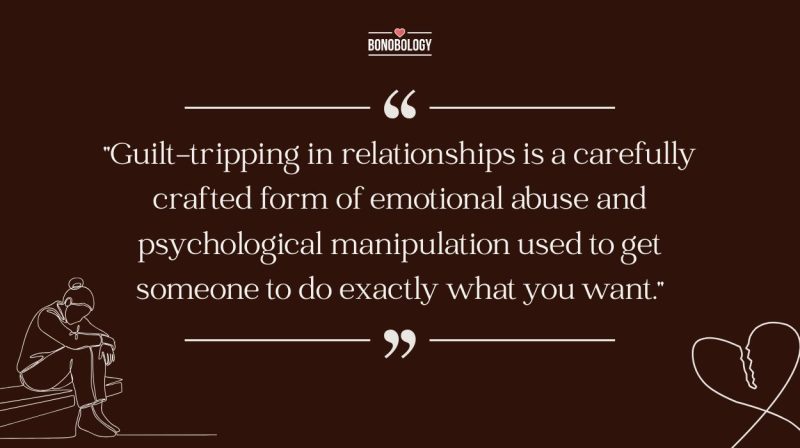
Il senso di colpa nelle relazioni è una forma accuratamente studiata di abuso emotivo e manipolazione psicologica, utilizzata per indurre qualcuno a fare esattamente ciò che si desidera. Nella maggior parte dei casi, far sentire in colpa una persona cara è un modo incredibilmente calcolatore e subdolo per esercitare il controllo, e chi usa quest'arma è consapevole delle conseguenze delle proprie azioni.
Anche se il senso di colpa è inconscio o involontario, funziona comunque come mezzo per costringere la persona che lo subisce a fare (o non fare) qualcosa contro la sua volontà. Quindi, cosa significa quando qualcuno ti fa sentire in colpa? Significa che sei vittima di bullismo, costretto ad agire come un'altra persona vorrebbe che facessi.
Letture correlate: Abuso verbale nelle relazioni: segnali, effetti e come affrontarlo
Il senso di colpa è una forma di abuso?
Through their words, a person:
- Makes you feel bad about your choices
- Induces guilt for your actions
- And compels you to change course, aligning your words, thoughts and actions with what they want from you
With that context of the guilt-tripping meaning, let’s address the question, “Is guilt trip a form of abuse?” Given that guilt-tripping in relationships has all the elements of manipolazione emotiva, it is undoubtedly a form of abuse. What’s more worrying is that it is a rampant, and often unrecognized, a form of abuse.
By now, you understand that it is done with the objective of getting something out of the other person. Why do people resort to this sly technique in their most intimate relationships? Simply because it enables them to get the maximum output with minimal effort.

Why does guilt-tripping work?
Per comprendere l'impatto di questa forma di abuso emotivo, è fondamentale capire perché il senso di colpa nelle relazioni si rivela così efficace. Noi esseri umani siamo creature intrinsecamente sociali. Traiamo beneficio dai rinforzi positivi del nostro comportamento da parte delle persone a noi più vicine.
However, it works as negative reinforcement when a loved one disapproves of our behavior and expresses that disapproval through:
- Parole
- Mimica
- Or even body language,,
This makes us want to distance or detach from the behavior that brought it on. In other words, a guilt trip is an emotional punishment for an action, meted out with the intent to get you to change a certain:
- Comportamento
- Pensiero
- Action
- Or speech
Il senso di colpa che proviamo quando percepiamo una palpabile disapprovazione o delusione deriva dalla paura del rifiuto in amore . Chi alimenta questo senso di colpa sfrutta tale paura allontanandoti, anche in modo sottile, per rafforzare il tipo di comportamento che desidera vedere.
Letture correlate: Abuso emotivo: 9 segnali e 5 consigli per affrontarlo
Segnali di senso di colpa nelle relazioni
Do you always feel as if you’re non buono abbastanza? That somehow you always fall short in living up to the expectations of your partner? Do you find yourself always blaming yourself for not doing enough? Has living up to the expectations of your significant other or your family led to a constant sense of exhaustion?
These are all signs of guilt-tripping. These tendencies of self-blame and feeling like you’re always falling short are triggered by guilt-induced by loved ones – be it your significant other, your parents or children.
To make sure you know what you’re dealing with, let’s take a look at some of the signs of guilt-tripping:
1. Giving more than you receive
In un relazione sana, effort and care flow both ways. However, when you consistently find yourself carrying the emotional and practical weight, it signals an imbalance. You may be the one:
- Initiating conversations
- Risoluzione dei conflitti
- Pianificazione
- Or supporting your partner while receiving little in return
Over time, this dynamic shifts the relationship from a partnership to a one-sided responsibility, where your needs become secondary and your efforts feel invisible.
2. You’re spreading yourself thin
You may notice yourself constantly trying to meet your partner’s expectations:
- Adjusting your behavior
- Impegnarsi troppo
- Or sacrificing your own needs to avoid conflict or disappointment
Despite these efforts, nothing seems enough. This creates a cycle where you keep giving more, hoping for approval or peace, but end up feeling emotivamente svuotato and inadequate. The relationship begins to feel like an endless obligation rather than a source of support.
Letture correlate: 15 esempi di manipolazione nelle relazioni
3. Feeling disapproved of
Qualunque cosa tu faccia, il tuo partner non approva. Gratitudine e apprezzamento mancano dalla tua equazione. Sei intrappolato in un circolo vizioso di "se solo..." – se solo lo facessi bene, lo renderei felice. Peccato che, per quanto riguarda il tuo partner, quasi nulla di ciò che fai si qualifichi come "fatto bene".
4. The cold shoulder
Withholding communication or affection as a form of punishment, called ostruzionismo, is a common guilt-tripping tactic. When you express your needs or disagree, your partner may:
- Ritirare
- Ignorarti
- Or become emotionally unavailable
This silence creates discomfort and anxiety, pushing you to give in just to restore normalcy.

5. Voicing resentment
To notice the signs of guilt-tripping in your relationship, focus on the stile di comunicazione between you and your partner. People often use honest communication as an excuse to say the most hurtful things. If your partner voices their resentment toward you often and unfiltered, you’re being guilt-tripped.
Letture correlate: Come rispondere al silenzio punitivo: strategie efficaci per gestirlo
Modi per affrontare i sensi di colpa nelle relazioni
È altrettanto importante, se non di più, capire cosa fare quando il partner ti fa sentire in colpa, perché quando ti senti costantemente in colpa per i tuoi comportamenti e le tue azioni, tendi a interiorizzarli. Questo innesca una tendenza ancora più pericolosa all'auto-colpevolizzazione e al senso di colpa.
Per esempio,
- if your parents guilt-tripped you as a child, you may internalize it to such an extent that negative, self-disparaging talk becomes second nature to you
- Besides, you may end up attracting partners who do the same because their language is so familiar to what you’ve grown up with. After all, there is no denying that il modo in cui sei stato cresciuto influenza le tue relazioni da adulto
Per assicurarti di riuscire a liberarti da questo schema, diamo un'occhiata ad alcuni modi per gestire i sensi di colpa nelle relazioni:
1. Self-worth and self-esteem
Your value is not defined by how much you can please someone else. Guilt-tripping often makes us cercare la convalida externally, making approval feel like a reward you must earn.
- Begin by consciously separating your self-worth from others’ opinions
- Focus on internal validation, acknowledging your efforts, strengths, and boundaries
- Practices like journaling, self-reflection, and small personal wins can gradually rebuild confidence and reduce emotional dependence

2. Non-toxic support system
Surround yourself with emotionally healthy people to create a strong counterbalance to the manipulation. Supportive friends or family members offer:
- Prospettiva
- Rassicurazione
- And acceptance without conditions
Their presence helps you recognize what rispetto reciproco looks like, making it easier to identify unhealthy patterns. Over time, this network reinforces that you don’t need to overextend yourself to be valued or loved.
3. Define your priorities and limits
Awareness is the first step toward healing. To deal with guilt-tripping in relationships:
- You ought to know what your priorities and limitations are
- If meeting someone else’s expectations requires you to go beyond your limits, learn how to say ‘no’
- And be okay with whatever reaction comes your way
In other words, don’t feel guilty about prioritizing self-preservation.
4. Cercare una terapia
Breaking old patterns, especially ones the foundation of which may have been laid in your childhood days, is never easy. Having a safe space to vocalize your feelings and thoughts, coupled with the guidance of a trained psychologist, can help you gain a more robust perspective on the reality of your dinamiche relazionali and effect change. A trained psychologist helps you:
- Understand why you respond the way you do
- Identify manipulation tactics
- And develop healthier coping mechanisms

5. Set and reinforce boundaries
Impostazione efficace dei confini can be an impactful way of dealing with guilt-tripping in relationships. However, it’s advisable to do so under the guidance of a therapist or counselor. Going it alone may backfire as you’d lack the necessary tools to communicate and assert your boundaries the right way.
DOMANDE FREQUENTI
Guilt-tripping is a form of emotional manipulation where one person makes another feel guilty to control their behavior or decisions. It often involves subtle tactics like disappointment, blame, or passive-aggressive comments. Over time, it creates pressure to act against your own needs just to avoid feeling guilty, making it a form of psychological control rather than healthy communication.
Yes, repeated guilt-tripping is considered a form of emotional abuse. It manipulates emotions, creates power imbalance, and forces compliance through guilt rather than mutual understanding. Even when unintentional, it disrupts healthy communication and leads to resentment, frustration, and emotional exhaustion in the person experiencing it.
Common signs include constantly responsible for someone else’s emotions, being reminded of past mistakes or favors, facing silent treatment when you disagree, and feeling like nothing you do is enough. You may also notice passive-aggressive remarks or exaggerated disappointment designed to make you feel selfish or inadequate.
Puntatori chiave
- Guilt-tripping is a manipulation tactic that uses guilt as a tool to control someone’s behavior rather than resolve issues constructively.
- While one partner gains control, the other feels pressured, responsible, and emotionally drained
- Constant guilt-tripping can lead to self-doubt, resentment, and emotional exhaustion
- Healthy boundaries and awareness are key to dealing with such behavior
Considerazioni finali
Come qualsiasi altra forma di abuso, il senso di colpa può essere gravemente dannoso per la vittima e per la salute di una relazione. Una volta riconosciuti i segnali d'allarme, fai uno sforzo consapevole per scuotere lo status quo. I progressi potrebbero non essere sempre lineari, ma con un impegno costante e il giusto aiuto, puoi liberarti da questa insidiosa forma di tossicità.
Positività tossica: la maledizione delle "solo buone vibrazioni"
Il tuo contributo non costituisce una donazione di beneficenza . Permetterà a Bonobology di continuare a fornirti informazioni nuove e aggiornate, con l'obiettivo di aiutare chiunque nel mondo a imparare a fare qualsiasi cosa.











In Evidenza
Che cos'è la sicurezza in una relazione? Significato, segnali e come costruirla.
Il primo anno dopo la perdita del coniuge: cosa aspettarsi e come affrontare la situazione.
I soggetti con attaccamento evitante tornano sui propri passi? Cosa dice realmente la teoria dell'attaccamento.
Come mantenere viva la passione in una relazione a distanza: strategie collaudate che funzionano
Le relazioni con una differenza di età di 20 anni possono davvero funzionare?
Deluso quando qualcuno che ami ti ferisce? Guida per affrontare e guarire
17 segnali mortali di un uomo immaturo e come affrontarli
Cos'è una rottura in una relazione e come affrontarla
Abbandono emotivo nel matrimonio: segnali, cause e modi per affrontarlo
15 segnali che indicano che la tua ragazza non è attratta sessualmente da te
Sentirsi soffocare in una relazione: motivi, segnali, modi per affrontarla
Quanto dovrebbe durare una pausa in una relazione? Risponde uno psicoterapeuta
Perché ho difficoltà a comunicare con il mio partner? Un esperto risponde
Tornerà dopo il trattamento del silenzio? 15 modi per assicurarsi che lo faccia
Perché mi manca così tanto il mio ragazzo: motivi e modi per affrontarlo
21 chiari segnali che indicano che non vuole una relazione con te
Come i narcisisti trattano i loro ex: 11 cose comuni che fanno e come puoi reagire
Distanza emotiva: significato, cause, segnali e modi per risolverla
Il mio ragazzo è in lutto e mi allontana: consigli per affrontare e confortare il tuo uomo
Cosa fare quando la tua relazione è al punto di rottura?