

When you think about relationship goals, is it just a social media hashtag you’re thinking of or something deeper? Are long-term goals for relationships just about curating perfect pictures, or is it the trust and intimacy you build over the years? Well, as you can imagine, true relationship goals run deeper than social media snapshots.
They’re about emotional connection, secure attachment, and growing together day by day. In this article, we’ll break down what relationship goals really mean, beyond the hashtags, give you meaningful relationship goals examples, explain why having goals as a couple matters for a healthy bond, and share how you can set realistic goals to keep building a future together.
What Are Relationship Goals?
Table of Contents
Relationship goals are the shared visions, values, or couple aspirations that you and your partner work towards to strengthen your bond. They’re like a roadmap for how you both want your relationship to grow and evolve. These goals can be big life plans or everyday habits, anything from “we plan to save for a house in five years” to “let’s have dinner together without phones every night.” Here is what shared goals in a relationship boil down to:
- Not just a trend: On social media, the hashtag #relationshipgoals is often used by couples to show glamorous moments. In fact, the term took off around 2009 as an aspirational tag, and it has been criticized for creating unrealistic relationship expectations in our picture-perfect culture. However, real relationships go beyond Instagram and reels. A posed photo might get likes, but it doesn’t show communication styles, conflict resolution, or daily acts of love that truly sustain a relationship
- Deeper meaning: True healthy relationship goals focus on emotional safety, mutual growth, and a relationship vision you both share. “Relationship goals are the shared intentions you and your partner set for how you want the relationship to evolve,” explains therapist Stevie Blum. Think of it as creating your own relationship map built on trust, respect, and understanding
Related Reading: 18 Most Important Things In A Relationship
Why Relationship Goals Matter
Having clear goals as a couple isn’t just a feel-good exercise. It’s foundational to a strong relationship. When you and your partner set couple goals together, you create a shared purpose that guides you through good times and bad. This brings several benefits in key areas of your relationship:
1. Emotional safety and intimacy

Setting shared goals nurtures a safe emotional environment. You both know you’re working toward the same vision, which builds trust and intimacy. This mutual trust makes it easier to open up about hopes and fears, fostering vulnerability in relationships. Working as a team toward meaningful goals,
- Encourages honesty and emotional connection
- Deepens attachment and bonding
- Stimulates vulnerability
- Strengthens mutual respect
Related Reading: How To Improve Your Relationship: A Therapist Advises
2. Conflict resolution and communication
Couples with shared objectives tend to communicate better and navigate conflicts more smoothly. Why? Because,
- Having shared goals in a relationship shifts the mindset from me-versus-you to we’re in this together
- When disagreements arise, you can refer back to your common goals as a “north star” to stay on track
- Setting goals requires discussing plans and progress regularly. These regular relationship check-ins naturally improve your communication styles
- You practice active listening, express needs, and negotiate compromises while working toward your goals
“Having clear, defined goals creates a guidepost to return to when the relationship experiences duress,”
—Stevie Blum, therapist
3. Long-term satisfaction and stability
Perhaps the biggest reason relationship goals matter is their impact on your long-term happiness as a couple. When you have a shared direction,
- Both partners feel more secure about the future
- You’re not just drifting, but consciously building a future together
- This sense of purpose can dramatically increase relationship satisfaction and stability
- Shared goals act like glue in a relationship. They bind you together during tough times
- A shared vision makes you less likely to give up on the relationship easily
Research in relationship psychology backs this up. Couples with shared goals report significantly higher relationship satisfaction than those without clear goals. One study found that partners who set mutual goals experienced up to 30% higher relationship satisfaction, whereas 40% of couples who lacked shared goals cited that absence as a major factor in breakups
Types Of Relationship Goals
While every couple is unique, healthy relationship goals remain universal and often fall into a few core categories. Think of these as different “domains” where you can set goals to improve or grow together. Below are key types of goals for couples, each with what they involve and examples of goals to set in a relationship:
1. Communication goals

Good communication is the bedrock of a strong relationship. By setting communication goals, you can focus on how you talk, listen, and connect with each other. This ensures both you and your partner feel heard, respected, and understood. For example,
- A communication goal could be practicing active listening during disagreements
- Or scheduling regular relationship check-ins. You could set aside one evening a week to just talk about how each of you is feeling, without interruptions
- You might set a goal to spend 15 minutes each day talking distraction-free about your day, or to use “I” statements instead of blaming language during conflicts.
- The aim is to improve understanding and empathy
Related Reading: 9 Tips To Create A Balanced Relationship With Your SO
2. Trust and transparency goals
Trust is the foundation of any long-term relationship goals you set. Trust and transparency goals are all about being honest, reliable, and open with each other. This includes being faithful, sharing important life updates, and everyday honesty like being transparent about finances or admitting when you’re upset.
Goals in this category might involve building trust gradually by keeping your word consistently or sharing parts of your life you might normally keep private. For example, trust and transparency goals in a relationship can look like,
- No secret passwords
- Sharing access to devices or accounts to show there’s nothing to hide
- Updating each other regularly about your schedule and who you spend time with
- Practicing full honesty about feelings. If something’s bothering you, you address it instead of bottling it up
- Discussing your relationship openly
By setting these goals, you nurture mutual respect and a sense of safety. You both know you can count on each other and that there are no huge surprises lurking in the dark.
“Trust is the active engagement with the unknown. It’s a leap of faith. By being open and true to each other, you take that leap of faith together and strengthen your bond.”
—Esther Perel, a renowned relationship therapist
3. Financial goals
Money can be a major stressor in relationships, so having shared financial goals is crucial. These goals involve how you handle money as a team and often include
- Budgeting
- Saving
- Spending
- Planning for the future
Financial planning for couples ensures you’re aligned in this practical but important aspect of life. For younger couples or those in early stages of their relationship, financial goals can look like splitting bills fairly or saving a set amount each month toward a shared dream like travel. For married couples, marriage goals often involve larger financial decisions like joint investments or planning for retirement. The key is transparency and teamwork. No secret spending, no resentment over money differences.
Related Reading: 15 Qualities Of A Good Relationship That Make Life Bliss
4. Family and parenting goals
If you plan to have children or already do, family and parenting goals are vital. Even if you don’t want kids, you still need to be on the same page about how you relate to each other’s families and any caregiving roles, like caring for aging parents or pets. The idea is to align your visions on family life so that you remain a united team in these deeply important matters.
- For couples considering children, a core goal might be to discuss and agree on parenting styles or values. For example, “We will present a united front on discipline” or “We commit to weekly family meetings when we have kids to ensure everyone feels heard.”
- If you’re not at that stage yet, a family planning goal could be deciding when or if to start trying for a baby, or even going to a pre-marriage counselor to talk through expectations about kids
- For those who don’t want children, family goals could involve how you’ll nurture a family vision together in other ways, like meaningful relationships with nieces/nephews or community involvement
- Co-parenting goals for those with kids or blending families might include agreeing on education savings plans or aligning on rules for screen time
- Goals might cover the extended family. For instance, setting healthy boundaries with in-laws or scheduling regular visits to maintain family bonds without straining your own relationship
5. Intimacy and affection goals

Keeping the spark alive is a continuous project in long-term relationships. Setting intimacy and affection goals makes you intentional about fostering emotional closeness and physical/sexual intimacy. Intimacy goals include,
- Committing to quality time together regularly, like having a weekly date night or a daily goodbye kiss ritual
- Being intentional about your sexual relationship. For instance, “Have intimate time at least once a week” or “Try something new in bed once a month to keep things exciting”
- Emotional intimacy goals might involve deeper sharing, such as each partner opening up about one fear or dream each week, so you continually learn about each other
- Some couples also use tools like the Gottman principles of turning towards each other’s bids for connection
Related Reading: Healthy Relationship Dynamics – 10 Fundamentals
6. Growth goals
A healthy relationship should support personal growth for both partners. Growth goals facilitate this by helping you find ways to support each other’s personal ambitions, self-improvement, and life dreams. Growth goals can look something like this:
- Attending each other’s important events or achievements. For example, if one partner aims to run a marathon, a supportive goal might be, “I will train with you once a week and be there on race day with a big sign.”
- Setting joint growth goals, like learning a new skill together
- Giving space when needed. For instance, encouraging each other to have individual hobbies or friend time without guilt
7. Adventure and lifestyle goals

Adventure and lifestyle goals are the fun goals. The things that bring novelty, joy, and a sense of living life to the fullest together. They ensure that, amidst responsibilities, you continue to create happy memories as a couple. These goals often involve,
- Travel and adventure goals
- Hobbies
- How you want your day-to-day life to look like as partners
Lifestyle alignment also comes into play. For instance, if one of you loves outdoors and the other loves city life, an important goal might be finding activities that satisfy both. The key is to intentionally incorporate adventure, novelty, and leisure into your relationship. Not only do these goals keep the relationship exciting, but they also strengthen your friendship. Laughing together and discovering new things as a team brings you closer. Plus, shared positive experiences become cherished memories. They remind you why you fell in love and keep that emotional connection strong.
Related Reading: 10 Basic Rights In A Relationship You Should Know Of
8. Health and wellness goals
Taking care of your health is easier with a partner by your side. Health and wellness goals for couples involve staying physically and mentally healthy together. This could mean,
- Exercising together
- Supporting each other’s mental health
- Maintaining a balanced lifestyle that keeps you both feeling your best
- Running a 5K together
- Doing yoga every morning
- Taking a nightly walk
- Cooking healthy meals at home 5 days a week, if eating well is a priority
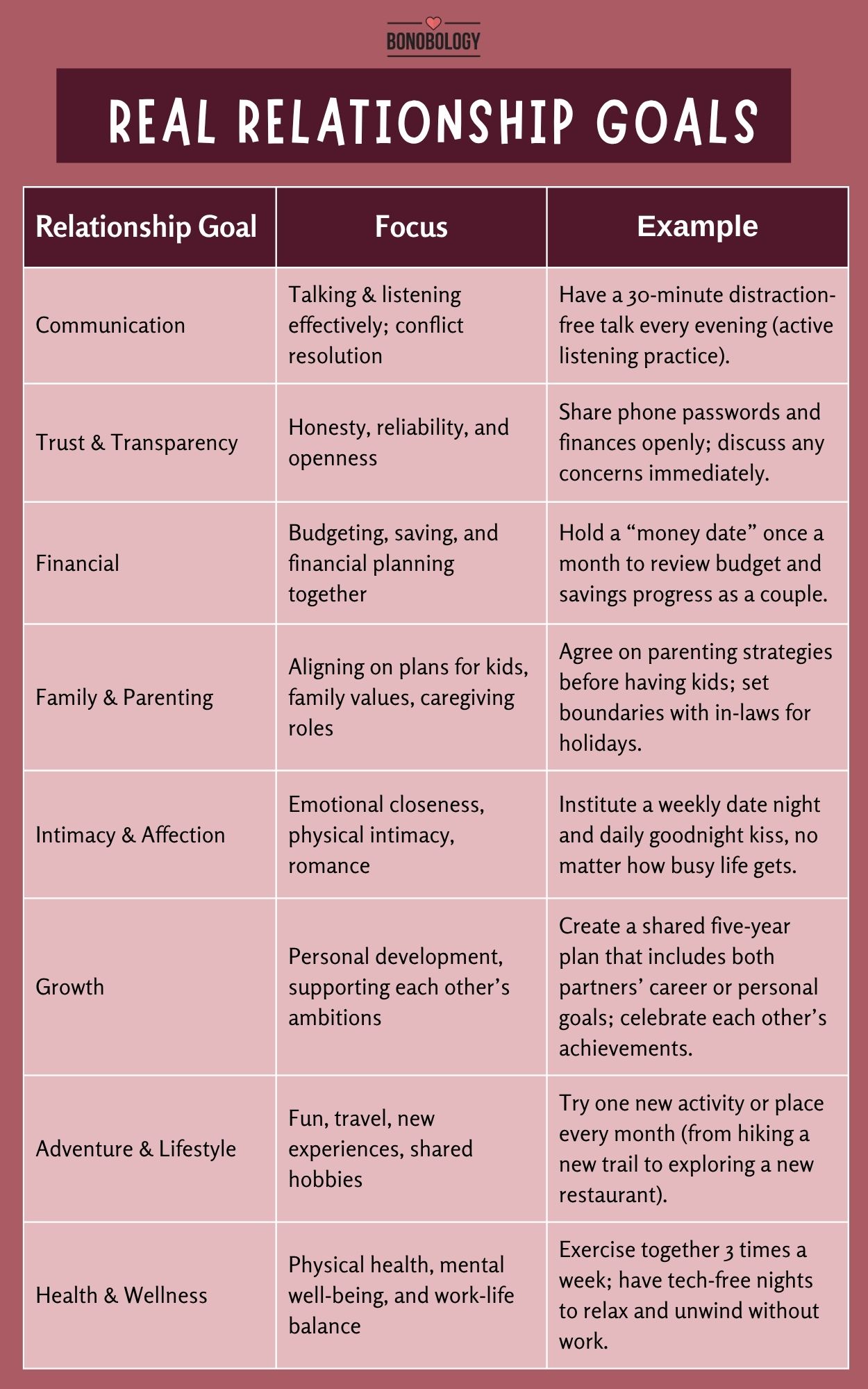
Examples Of Healthy Relationship Goals
It’s helpful to see what real, everyday relationship goals examples look like. Here are some practical examples of healthy relationship goals that many couples use to stay connected. These aren’t one-size-fits-all, but they illustrate how you can turn the concepts above into concrete actions. Each example is a simple habit or practice that reflects a deeper goal of closeness, understanding, or partnership.
1. Have a weekly emotional check-in

Make it a goal to sit down once a week for an honest heart-to-heart. This “emotional check-in” is when you both share how you’re really doing emotionally, beyond the “I’m fine” of daily life. For example, every Sunday evening, you might chat on the couch about highlights and struggles of the past week. Ask each other questions like,
- “Did you feel supported by me this week?”
- “Is there anything we should work on or celebrate?”
- “Is there anything you’d like to share with me?”
The purpose is to stay emotionally connected and address any brewing issues before they grow. This weekly practice builds vulnerability in relationships and ensures small misunderstandings don’t snowball. It’s a simple habit that can greatly boost your relationship satisfaction and prevent resentment between partners.
Related Reading: 21 Core Relationship Rules To Deepen Your Bond
2. Plan finances together every month
Money matters are better handled as a team. A great goal is to plan your finances together monthly. For instance, decide that on the first Saturday of each month, you’ll sit down and review your budget, pay bills, and discuss any upcoming expenses or savings targets. By doing this, you ensure both partners know where you stand financially. There are no surprises like hidden debts or mysterious spending. It also reinforces transparency.
You’re openly talking about money goals and challenges. Maybe this month’s goal is saving for a vacation, or cutting back on dining out to build your emergency fund. Over time, these monthly finance meetings can reduce money-related conflicts significantly. You replace financial stress with a shared plan, which strengthens trust.
3. Take a yearly trip without the kids

For couples with children or very demanding jobs, one healthy goal is to carve out couple-only time, away from daily responsibilities. A powerful example is planning a yearly trip without the kids. This could be a weekend getaway to a cozy bed-and-breakfast, or a week-long vacation. The key is that it’s just the two of you, rekindling your bond. Why is this important? Because amidst soccer practices, homework, or even just daily chores, romance can take a backseat.
Knowing you have an annual escape on the calendar can keep you motivated to power through the tough or mundane times. It often reminds couples of their early dating days, reinforcing that beyond being mom or dad or busy professionals, they are still romantic partners and best friends. Couples who do this tend to maintain long-term relationship goals like keeping their marriage vibrant and not losing each other in the shuffle of life’s duties.
Related Reading: Positive Relationship: Psychology, Signs And Benefits
4. Exercise together regularly
Here’s a goal that hits both the wellness and bonding targets: exercising together. For example, commit to doing a 30-minute workout as a couple three times a week. This could be jogging in your neighborhood, following a YouTube fitness routine at home, or going to the gym together. Working out, side by side, not only helps you both stay healthy, but also gives you quality time.
Besides, reaching fitness milestones together becomes something you’re proud of as a team. And on a deeper level, this goal is about mutual support. It says, “I care about your health and I want us to be vital and active for years to come.”
5. Start a new hobby as a couple

Another example of a healthy goal is to start and maintain a hobby together. It’s easy for couples to fall into a rut of routine—work, eat, Netflix, sleep, repeat. Introducing a shared hobby adds excitement and novelty. Perhaps you both decide to learn painting, join a weekly trivia night team, start a small garden, or even launch a tiny side business making crafts. Pick something that interests you both, or agree to alternate choosing activities until you find a mutual passion.
The immediate benefit is more quality time together, but it goes beyond that. You’ll be learning or creating something as a team, which builds cooperation and communication skills. Shared hobbies also give you positive topics to talk about that aren’t just the mundane day-to-day. This can especially help long-term couples avoid the trap of only discussing work or family logistics.
How To Set Realistic Relationship Goals
It’s one thing to list out goals; it’s another to actually achieve them. Many couples get excited about couple goals, but then get discouraged if they fall off track. To avoid that, follow these tips for setting realistic relationship goals that you can stick to and celebrate:
1. Use the SMART approach—Specific, Measurable, Achievable, Relevant, Time-Bound

When setting goals, clarity is king. SMART relationship goals help you achieve that clarity. SMART stands for Specific, Measurable, Achievable, Relevant, and Time-bound. Applying this to relationship goals means:
- Specific: Define exactly what you want to do. Not “communicate better,” but perhaps “have a 15-minute talk each night without distractions.”
- Measurable: Set goals in a way that you can measure success. For example, “We’ll eat home-cooked meals 5 nights a week” is measurable. You can track it
- Achievable: Set goals that stretch you but are possible. If you currently never have a date night, aiming for one every week might fail, but once a month can be a realistic start point
- Relevant: Choose goals that actually matter to your relationship’s needs and your shared values, rather than what others are doing
- Time-Bound: Give yourselves a timeline or deadline. Goals can be ongoing habits, but it helps to check in at set intervals. Being time-bound adds a little healthy pressure and a sense of progress
Related Reading: 15 Core Values In A Relationship For A Happy And Lasting Bond
2. Balance individual and couple goals
A healthy relationship is a balance between “I” and “We.” When setting goals, make sure to include both personal goals and shared couple goals and see how they can coexist. So, have a conversation,
- What do you want to achieve for yourself?
- What does your partner want for themselves?
- Discuss what goals you want to achieve together
For example, one of you might have a personal goal to go back to school, while as a couple you have a goal to buy a house. A realistic plan might be to sequence or adjust these goals so they don’t conflict. Maybe prioritize the education for two years, then focus on the house. Aligning values and priorities openly like this prevents resentment later.
The key is communication and fairness. Avoid a situation where one person’s life goals are always subsumed by the relationship or the other’s goals. That leads to imbalance and frustration.
3. Avoid comparison with others

Nothing can sour your goal-setting like constantly comparing your relationship to someone else’s. In the age of Instagram, it’s easy to fall into the comparison trap. However, this can turn toxic pretty quickly. Remember that every couple is unique. The goals that make sense for you might not be the same as the flashy “#couplegoals” you see online. That’s perfectly okay.
Chasing someone else’s idea of a perfect relationship will likely lead to frustration and performance pressure in relationships. So, avoid copying what others do just because it looks cool. Instead, focus on what your relationship needs. If you find yourself slipping into envy or comparison, remember that social media is a highlight reel, not a blooper reel. The only yardstick for success in your relationship is how both of you feel about it. Are you both happier, closer, and more secure than before? That’s your win.
Related Reading: How To Increase Love In A Relationship: 11 Tips From A Therapist
Common Mistakes To Avoid When Setting Relationship Goals
As you work on your relationship goals, be mindful of a few common pitfalls. Many couples start with good intentions but hit these snags, which can derail progress. Here are some mistakes to avoid, along with how to overcome them:
1. Unrealistic expectations

It’s great to be optimistic about your relationship, but unrealistic relationship expectations can do more harm than good. For example, deciding “We will never argue again” is unrealistic. Conflict is inevitable in a relationship. The goal should be to argue better, not never. Similarly, expecting your partner or yourself to change overnight sets you up for disappointment. Remember, change takes time, and nobody is perfect.
Unrealistic expectations can also be emotional. Like believing “if we set goals, we’ll always be happy and never feel disconnected.” In reality, you’ll still have ups and downs, but the goals help you navigate them. To avoid this pitfall, keep goals challenging yet attainable and be patient with progress.
Related Reading: 10 Biggest Priorities In A Relationship
2. Copying social media “goals”
Another mistake to avoid is mimicking those viral “relationship goals” posts on social media without considering if they fit you. Maybe you saw a couple doing a coordinated dance every morning or exchanging expensive gifts regularly, and you feel like you should be doing those things. Adopting goals just because they’re trendy can lead to superficial relationship standards.
For instance, planning an elaborate weekly photoshoot picnic because you want to post it online, while in reality neither of you enjoys picnics or photography, misses the whole point. It becomes performance, not a genuine connection.
If you find yourself doing things mainly for the ‘gram, take a step back. The most important moments in a relationship usually aren’t public. It’s the late-night supportive talks, the inside jokes, the small sacrifices, none of which get likes on Instagram, but those are the real relationship success predictors. So avoid the “must do it for content” trap.
3. Lack of follow-through
One common mistake is setting goals with a lot of enthusiasm, but then not following through consistently. Life gets busy, motivation wanes, and those wonderful plans fall by the wayside. Without follow-through, goals are just words on paper. The danger here is that repeatedly not following through can also erode trust in a subtle but certain way. If you keep saying “we’ll do X” and it doesn’t happen, you might start to doubt each other’s commitment or reliability. To avoid this,
- Treat your relationship goals as real commitments
- Put reminders in your calendar, just like you would for a work meeting
- Hold each other gently accountable
- If you notice a goal slipping, revisit why
- Celebrate small wins to keep momentum
Consistency is key. Remember, goals to set in a relationship are not a one-time to-do list. They’re ongoing practices. The more you follow through, the more trust and progress you build.

4. Over-focusing on one area and neglecting others
Another pitfall is putting all your energy into one type of goal while ignoring other aspects of the relationship. This can lead to feelings of neglect or frustration about certain aspects of the relationship. Balance is crucial. A relationship is multi-dimensional, so your approach to goals should be too. If you realize all your goals are in one category, consider diversifying.
The earlier section on types of goals can serve as a checklist. You and your partner can reflect: Are we touching on communication, trust, financial, family, intimacy, growth, adventure, health? You don’t need major goals in every single category at once, but don’t let any truly important area go completely ignored. Neglect can breed resentment.
FAQs
Relationship goals can be simple daily habits, like sharing 30 minutes of quality time or sending gratitude texts, or bigger plans, such as saving for a house, starting a family, or traveling together. Some couples set short-term goals like weekly date nights, while others focus on long-term dreams like retirement or celebrating milestones. The key is that these goals are mutual, meaningful, and strengthen your bond.
Whether dating or married, relationship goals share core themes like trust, communication, and intimacy, but the focus differs. Dating couples often prioritize building a foundation—meeting families, testing compatibility, or setting boundaries. Married couples usually set long-term goals such as buying a home, raising children, or planning retirement. Still, there’s overlap: dating couples can have serious long-term goals, and married couples benefit from fun, “dating-style” adventures. Goals should evolve with life’s stages.
To set realistic relationship goals, start with open conversations about needs and values, then prioritize a few areas that matter most. Keep goals specific and actionable using the SMART method. For example, “weekly Sunday check-ins” instead of “communicate better.” Make sure both partners agree and adapt goals to fit your current circumstances. Write them down, review progress regularly, and stay flexible. Realistic goals inspire growth while remaining achievable and sustainable.
Relationship goals give couples direction and prevent drifting into routine. By setting and pursuing shared aspirations, partners become a team working toward common dreams. This strengthens communication, trust, and intimacy, while ensuring both partners’ needs are addressed. Goals also help during tough times by offering hope and clarity. Achieving them boosts satisfaction and resilience. Ultimately, relationship goals keep love dynamic, intentional, and built for the long term.
Toxic relationship goals are those that damage well-being, independence, or trust. They often involve control, insecurity, or unrealistic expectations, like demanding constant togetherness, copying social media “couple goals,” or forcing one partner to change fundamentally. Goals driven by jealousy, outside validation, or perfectionism create pressure and erode intimacy. Healthy goals should be mutual, respectful, and supportive. A simple test: if a goal benefits both partners equally, it’s healthy; if it compromises respect or equality, it’s toxic.
Key Pointers
- Relationship goals are the shared visions and habits that guide couples beyond social media trends, focusing instead on trust, respect, and emotional connection
- They matter because they strengthen intimacy, improve communication, and provide long-term stability by giving couples a shared purpose and direction
- These goals can cover different areas such as communication, trust, finances, family, intimacy, personal growth, lifestyle adventures, and health
- Healthy examples include weekly emotional check-ins, monthly financial planning, yearly couple trips, exercising together, or starting a shared hobby
- To set them effectively, couples should use SMART goals, balance individual and shared aims, and avoid pitfalls like unrealistic expectations, copying social media trends, neglecting follow-through, or focusing only on one area
Final Thoughts
At the end of the day, relationship goals aren’t about achieving a state of perfection, but continuous progress and alignment as a couple. Every relationship has its quirks and challenges, but having shared goals helps you navigate them with unity and purpose. It’s a reminder that you’re both growing together, not apart. Rather than comparing your love story to anyone else’s highlight reel, focus on writing your own chapter filled with understanding, laughter, and resilience.
Remember that even small steps count. Each honest conversation, each compromise, each sweet gesture adds up to the love you’re building. So why not take a moment with your partner to talk about your aspirations? What do you both want for your long-term relationship goals in the next year, or even the next decade? Maybe even jot them down or create a fun couple’s vision board. And most importantly, enjoy the journey of pursuing them.
Your contribution does not constitute a charitable donation. It will allow Bonobology to continue bringing you new and up-to-date information in our pursuit of helping anyone in the world to learn how to do anything.



















Featured
No Kiss On Second Date: What It Really Means And What To Do Next
How To Get A Guy To Want You: 15 Science-Backed Strategies
Freaky Things to Do to Your Man: Fun Ideas to Spice Up Your Relationship
How Couples Can Use Simple Digital Tools to Create Meaningful Memories Together?
Best Secret Chat Apps For Lovers In 2025: Private, Encrypted, and Discreet
Jawline Fillers And Masculinity—Redefining Attraction In Modern Relationships
How To Start Dating: Tips For Beginners & Those Starting Again
25 Bedtime Stories For Girlfriend
From Self-Awareness To Compatibility: Digital Twins For Modern Relationships
Situationship Vs Relationship: Can One Lead To The Other?
How To Get A Guy To Like You: 20 Simple Techniques, No Mind Games
Situationship Vs Friends With Benefits: Similarities And Differences
The Significant Difference Between Love You And I Love You
125 Spicy Questions To Ask Your Boyfriend
125 Deep Questions To Ask Your Boyfriend To Truly Understand Him
Balancing Love And Learning: How Online Degrees Can Strengthen Relationships
What Is A Power Couple? 15 Signs You And Your Partner Are One
What Is The Role Of A Husband In A Modern Relationship?
Marrying An Older Woman: Pros And Cons, And How To Make It Work
Everything You Need To Know About Transactional Relationships