

Unconditional love is often described as love without conditions: a selfless affection given freely with no strings attached. In psychology and spirituality, this higher-form love is sometimes called agape, meaning a divine or universal compassion that expects nothing in return. Throughout history, people have created visual icons and sacred motifs to capture the idea of love without conditions, since words alone often fall short in expressing such unconditional affection and soul-level connection.
What Is Unconditional Love?
Table of Contents
Unconditional love means loving someone without any conditions or limitations; caring for them simply for who they are. You want the other person to be happy without expecting payback or change. This type of love is commonly referenced in familial bonds and spiritual contexts.
The ancient Greeks used the term agape to describe selfless, unconditional love; the kind of compassionate attachment associated with divine love.
Some key characteristics of unconditional love include:
- Acceptance despite flaws: You accept the other person wholly, love without judgment or the need for them to be “perfect”
- No strings attached: Your care isn’t based on conditions. It’s love without expectations, where you don’t keep score of give-and-take
- Emotional safety: It provides a sense of emotional security; the loved one feels safe that your affection won’t be withdrawn over mistakes or life changes
- Support and compassion: There’s deep empathy, forgiveness, and a willingness to put their well-being first, reflecting selfless love and compassionate attachment
Common misconceptions
Unconditional love doesn’t mean tolerating harmful behavior or having zero boundaries. Relationship experts caution that people sometimes think they must “love no matter what” and endure mistreatment, which isn’t healthy.
Without boundaries there’s no respect, and without respect, there’s no love. If unconditional love means having no boundaries, then it’s not love,”
– Reddit User
In reality, you can love someone deeply yet still expect mutual respect. Unconditional love is love without conditions, but it is not a license for abuse or one-sided sacrifice. It’s important to remember you can practice unconditional caring alongside self-respect and limits.
Related Reading: The Role of Trust in Relationships: How to Build and Maintain It
How Symbols Help Express Unconditional Love
Visual representation of unconditional love can convey emotions that are hard to articulate. Humans have always used symbols, art, and icons as a language of the heart.
- A small image or object can instantly evoke feelings of unconditional affection in a way that crosses language barriers”
- Culturally and psychologically, symbols serve as reminders of our values and connections
- They allow us to externalize abstract concepts like love without conditions into concrete form
- These symbols become shorthand for qualities like devotion, fidelity, and spiritual love
- In religious iconography, a symbol can represent divine love
- In everyday life, exchanging symbolic gifts like rings or flowers helps people affirm feelings that might be hard to put into words
When it comes to unconditional love, symbols are especially useful because this concept is more felt than logically defined. An infinity loop or a lotus blossom can encapsulate ideas of eternity, purity, and transcendent love without a single spoken word.
Key Symbols Of Unconditional Love
What are the major symbols that represent unconditional love? Here are several important icons and motifs, each with its own meaning and cultural background.
1. Infinity symbol (∞)
The infinity symbol, a sideways figure-eight loop, is a simple yet powerful emblem of endlessness.
- In the context of love, it represents a bond that is limitless and never-ending. With no beginning or end point, the continuous loop perfectly illustrates endless love; affection that goes on forever, without breaking or fading
- Historically, the infinity sign as a mathematical symbol for infinity (∞) was introduced in the 17th century, but its adoption as a love motif is more modern
- Today it’s a universal love symbol in jewelry, art, and especially tattoos. You’ve likely seen infinity necklaces or rings exchanged by couples, often to signify everlasting love
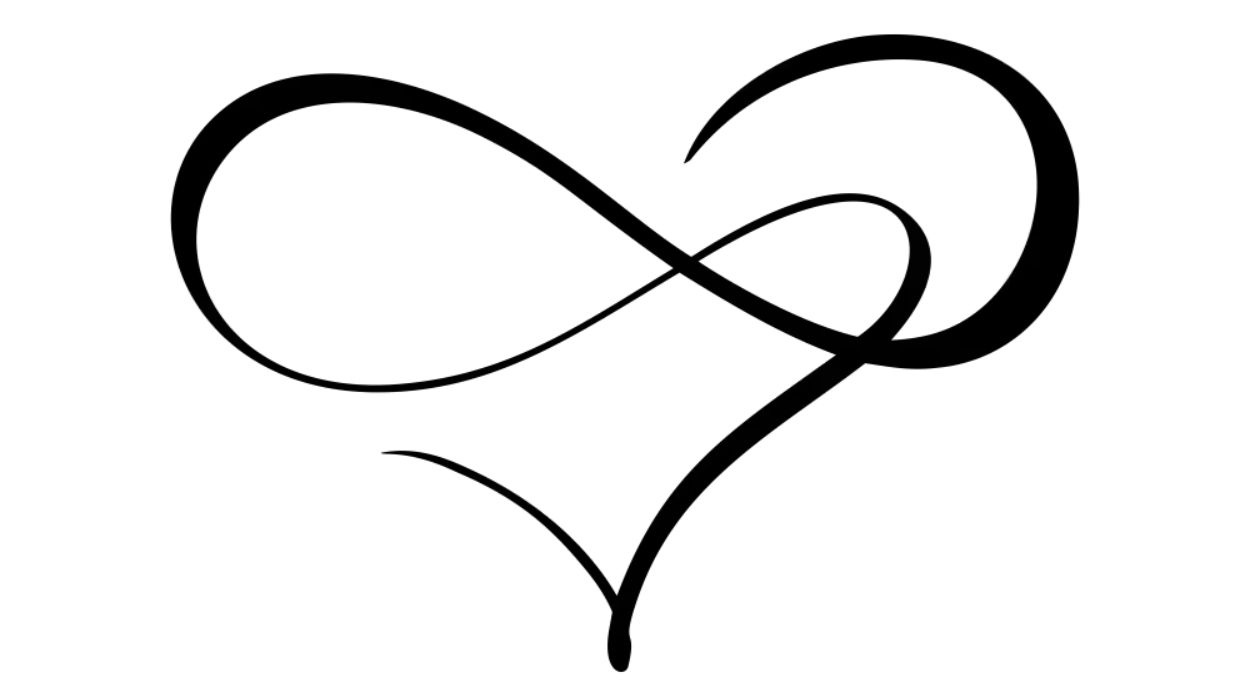
Infinity with a heart
An infinity symbol can also be combined with other imagery: for instance, an infinity loop interwoven with a heart shape is a popular design meaning “forever love”. As the infinity icon isn’t exclusively about love but eternity in general, combining it with a heart has become one of the most recognized representations of eternal, unconditional love.
2. Love knot/celtic knot
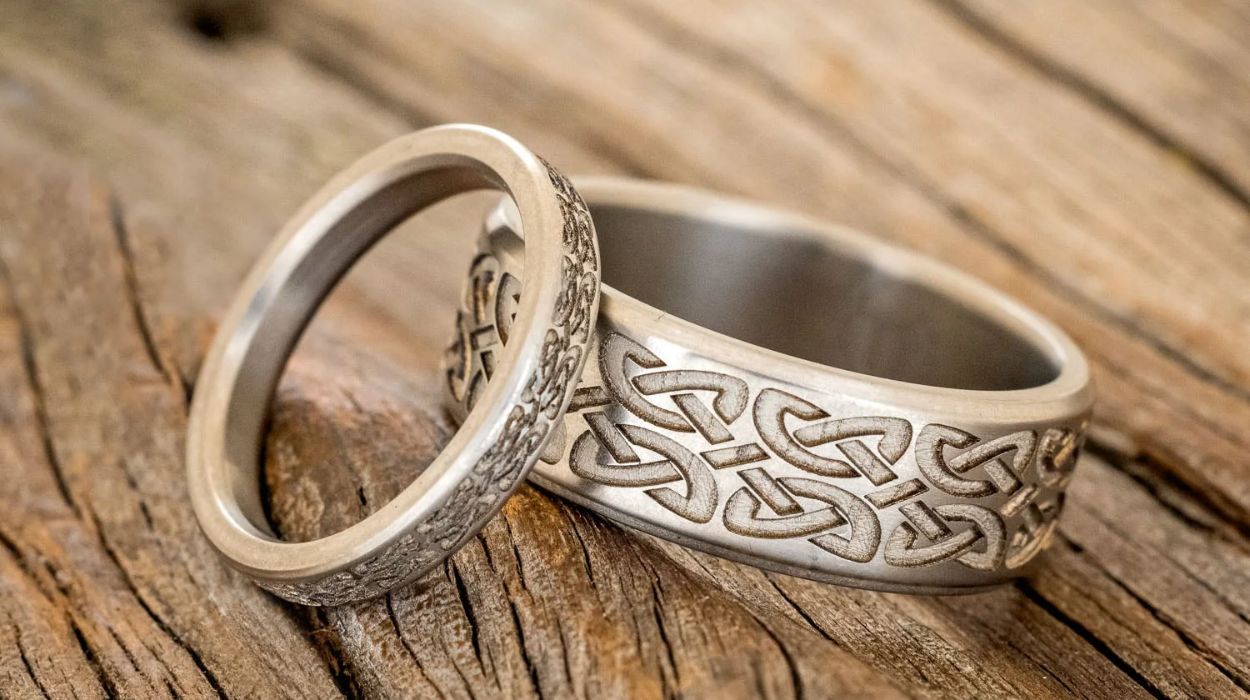
One of the oldest and most enduring symbols of eternal unity is the Love Knot. Often associated with Celtic culture, the love knot is essentially an intricate knot with no beginning and no end, woven in an unbroken loop.
- Because the lines intertwine endlessly, it stands for an unbroken bond: the union of two souls in an everlasting embrace
- Many consider the Celtic love knot, sometimes called the Celtic heart knot, as a Celtic unconditional love symbol
- Its endless interlacing is seen as a metaphor for eternal love, friendship, and loyalty that never unravels
The Celtic love knot comes from ancient knotwork designs.
- Artifacts with interlaced knot patterns date back to around the 3rd century B.C., appearing in Roman and later Celtic art
- Early Christians in Ireland and Britain adopted these knots in illuminated manuscripts and stone crosses by around the 5th century A.D.
- Over time, certain knot motifs took on specific meanings
In modern use, love knots appear in jewelry, like pendants, rings, and earrings, as a romantic gift. They’re also a popular choice for matching tattoos symbolizing an eternal bond; for instance, couples or family members might get matching Celtic knot tattoos to signify a connection that can’t be broken.
3. Lotus flower symbol
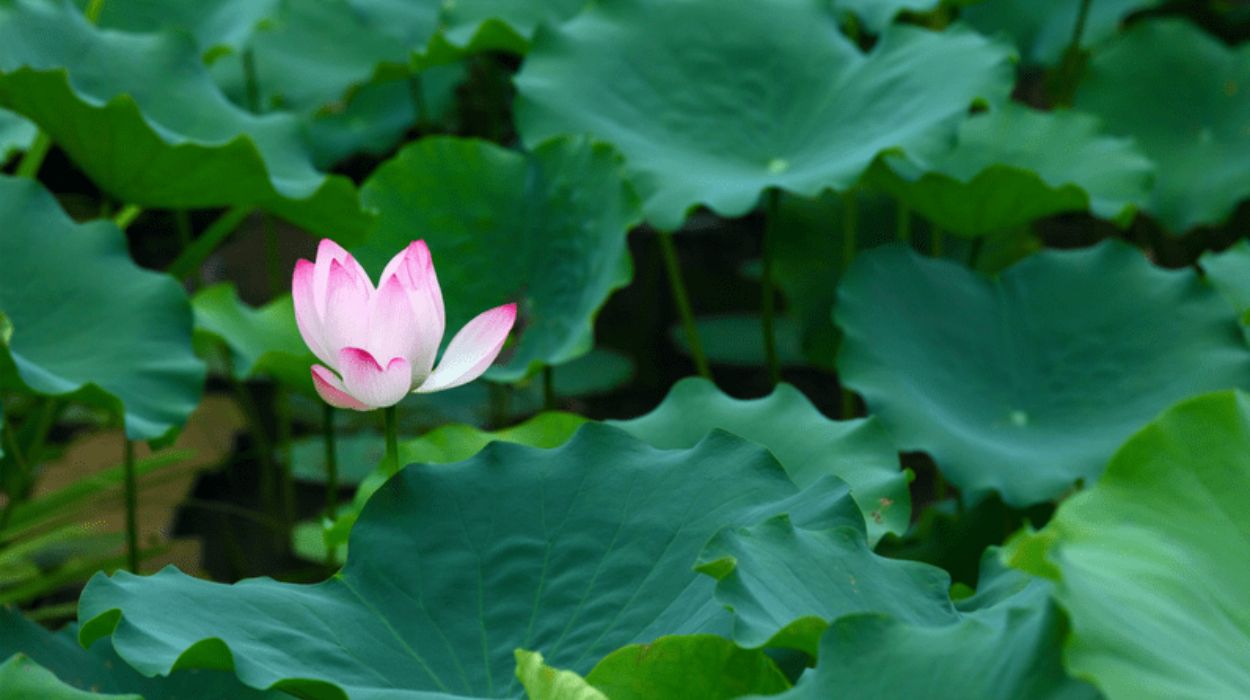
In many Eastern cultures, the lotus flower is revered as a symbol of divine, unconditional love and spiritual purity.
- The lotus has a unique life cycle: its roots are in muddy water, yet it blooms as a pristine, beautiful flower above the surface
- It embodies the idea of transcendent love that remains pure and compassionate even in the midst of suffering or darkness
- A blooming lotus is often seen as a spiritual symbol of unconditional love, especially in Buddhism and Hinduism. It represents purity of heart, enlightenment, and the kind of unconditional compassion that rises above earthly troubles
4. Buddhism
In Buddhism, the lotus, particularly the pink lotus, is associated with Buddha and the concept of universal compassion. It’s said to symbolize how an enlightened heart can exist unstained by the mud of the world. This ties closely to unconditional love: loving all beings with purity, regardless of their flaws or the “mud” around them.
5. Hinduism
In Hindu tradition, various gods and goddesses, like Lakshmi and Vishnu, are depicted on lotus flowers, indicating divine love and grace. The red lotus can specifically mean love and generosity of the highest form.The lotus as an unconditional love symbol is more about spiritual, selfless love than romantic love.
In modern times, the lotus appears frequently in tattoos and art for those who resonate with its meaning.
- Someone might get a lotus tattoo to remind themselves to love unconditionally or to stay pure of heart in difficult times
- It’s also used in logos or designs symbolizing hope, rebirth, and love that conquers all
- Importantly, the lotus connects to the idea of self-love as a foundation; the notion that you must cultivate your own inner purity and compassion in order to extend true unconditional love to others
6. Dove and swans
In the animal kingdom, doves and swans have long been associated with faithful, enduring love.
Doves
Doves are classic symbols of peace and love in many cultures.
- They famously mate for life, which is why a pair of doves represents loyalty and lifelong partnership
- In art and literature, two doves together often signify everlasting love or a marriage bond
- For example, doves were sacred to Aphrodite/Venus, the Greek and Roman goddess of love, and artwork frequently shows white doves fluttering around her as symbols of affection and harmony
- Because doves also appear gentle and pure, they’ve been used to symbolize the pure, unconditional aspect of love
- Even at weddings today, you might see the release of two white doves as a gesture of sending love and peace
Swans
Swans share a similar reputation.
- Swans are known to form monogamous pairs that can last for life
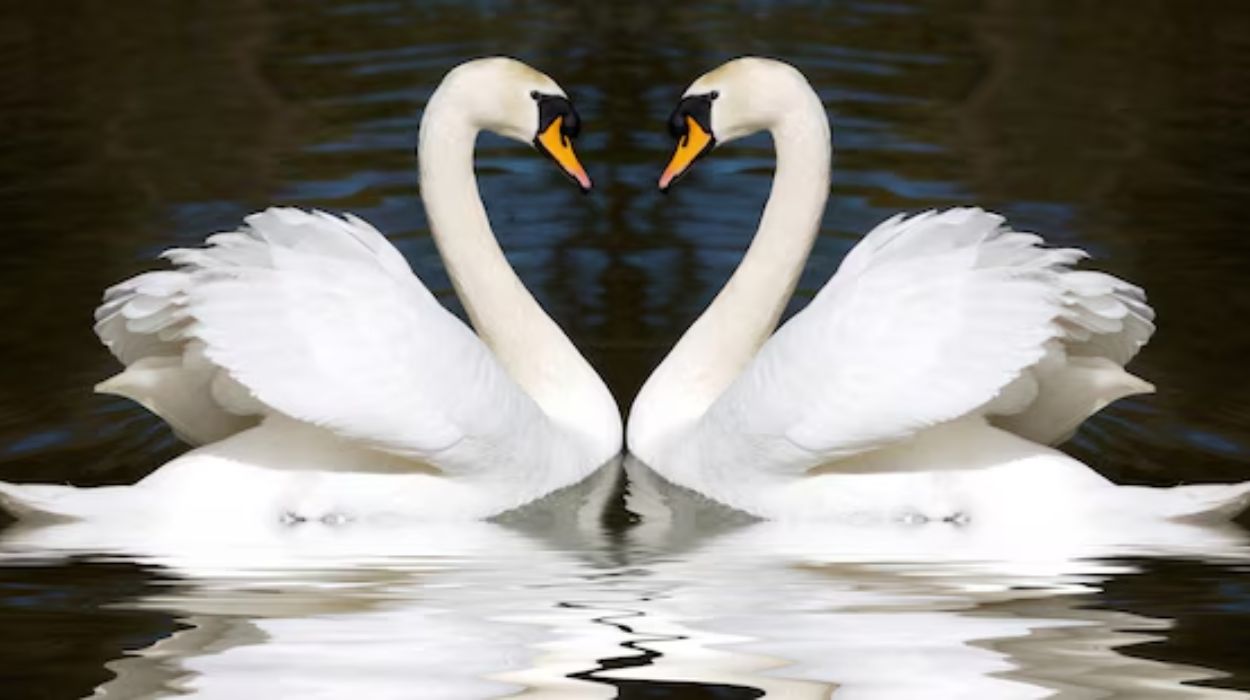
- The image of two swans facing each other with their long necks curving together into the shape of a heart is one of the most iconic portrayals of mutual love and devotion
- Culturally, swans appear in myths and fairy tales as enchanted lovers or devoted partners; think of stories like The Wild Swans or Swan Lake where love and sacrifice are themes
- In some spiritual literature, the swan represents the soul, so two swans united can also symbolize soulmates and sacred union
Doves and swans capture the lifelong bond and devotion aspect; two beings choosing each other forever. You’ll see these motifs in wedding decorations, anniversary cards, jewelry, and more. If you’re looking for a natural emblem of love everlasting, a pair of swans forming a heart or two doves cuddling on a branch are heartwarming choices.
7. Heart shape and variants
No list of love symbols would be complete without the heart shape. The heart is the most universally recognized symbol of love; you see it everywhere from Valentine’s day letters to romantic emojis.
- When you give someone a heart, you’re essentially saying “I give you my love”
- A heart icon by itself doesn’t automatically mean unconditional love; it’s a broad symbol for love of all kinds
- However, the notion of a “big heart” that gives love freely ties into unconditional love. A heart graphic often represents love without end
There are some variants and combinations:
- A heart intertwined with a knot or infinity explicitly stands for endless, unconditional love
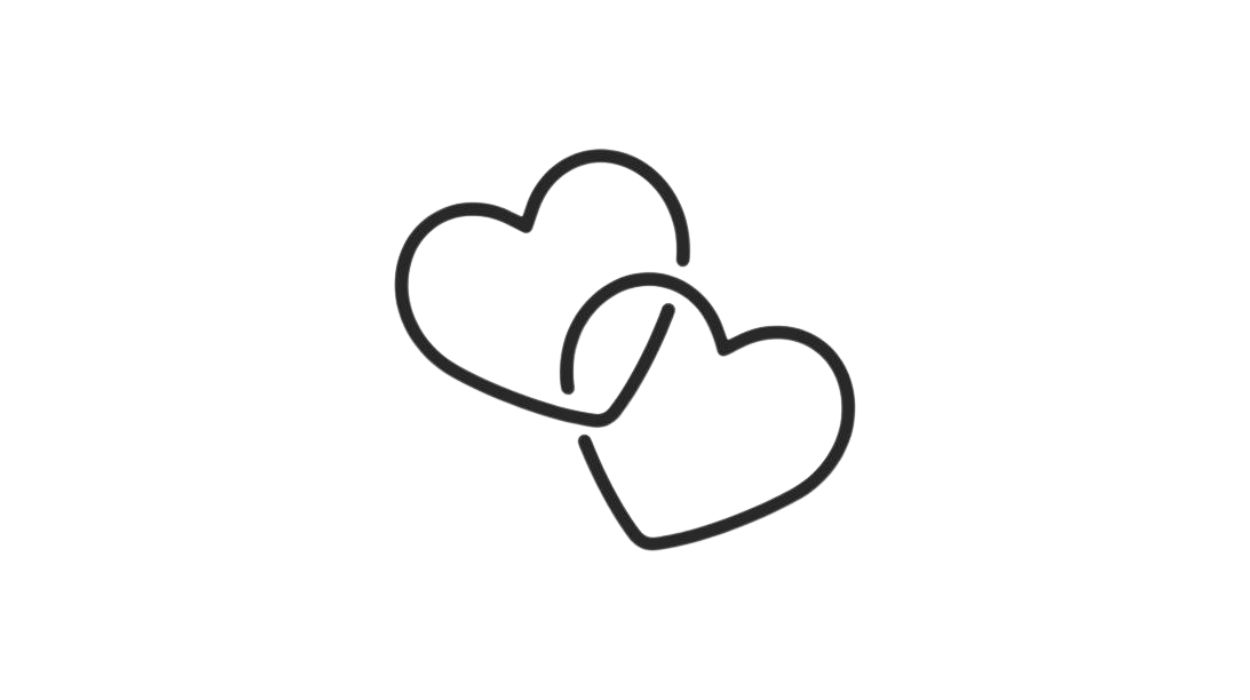
- Two hearts interlocked can mean two souls united in unconditional love or a love that is reciprocated endlessly
- Culturally, different colored hearts also have nuances, e.g., pink for friendship, purple for compassion, etc.
8. Other cultural or esoteric symbols
Beyond the well-known symbols above, many other cultural and spiritual symbols have been used to represent unconditional love. Here are a few notable examples:
a. Zibu symbols
Zibu is a set of modern angelic symbols invented by an artist for healing and spiritual purposes. One popular Zibu symbol represents “Unconditional Love”; it’s a graceful, calligraphic design often used in energy healing and tattoos. While not ancient, it’s become a personal visual mantra for unconditional love for some, said to carry angelic energy of love.
b. Sanskrit words or om
Instead of an image, some people use Sanskrit script to symbolize love. For instance, the Sanskrit word “प्रेम” (prema, meaning profound love) might be used as a symbol representing unconditional love in tattoo art or design. The Om symbol (ॐ), representing the essence of the universe in Hindu tradition, can also imply universal love when used in a spiritual context, though it’s broader in meaning.
c. Chinese characters
The Chinese character for love “爱” (ài) or compassion “慈” (cí) could be chosen to signify unconditional love, especially when paired with other symbols like a heart or infinity. In East Asian cultures, these characters themselves are powerful symbols and often incorporated into art or jewelry to convey deep affection and unconditional compassion imagery.
d. The Anahata Chakra symbol
In yoga and tantra, the heart chakra, or Anahata, is symbolized by a 12-petaled lotus with a star. This sacred geometry design is essentially a sacred love iconography; representing the center of unconditional love within the self and towards others. It’s a spiritual emblem showing balance, compassion, and divine love emanating from the heart.
e. Religious symbols
In Christian symbolism, the Sacred Heart, represented by a heart with a divine flame or thorns, represents Jesus’s unconditional love for humanity; a powerful image of divine love representation. In a broader sense, a cross or a halo around figures can indicate love and charity given freely.
Related Reading: 10 Examples Of Unconditional Love – Bonobology.com
Origins And Cultural Context
It’s fascinating to see how different cultures interpret symbols of love; often in similar ways, despite vast distances. Eastern vs. Western love symbolism shows both contrasts and overlaps. For instance, Western traditions emphasize symbols like the heart, rose, Cupid, and claddagh, whereas Eastern traditions highlight symbols like the lotus, yin-yang, or the divine couple in mythology. Yet both East and West cherish the idea of eternal, unconditional love and have developed icons to represent it.
To understand the origins, let’s compare a few symbols across cultural contexts:
| Symbol | Origin | Meaning | Common Uses |
| Infinity Loop | Modern Global (rooted in math, 17th c.) | Endless, boundless love; a connection that lasts forever | Jewelry, tattoos, logos signifying “forever” |
| Love Knot | Celtic (ancient knotwork, 3rd c. BC onwards) | Eternal bond, unity of two souls | Celtic art, wedding rings, tattoos; symbols of eternal friendship or marriage |
| Lotus Flower | Eastern (Hindu, Buddhist) | Purity, unconditional compassion, spiritual love that transcends hardship | Religious art, temple motifs, yoga/meditation decor, tattoos for spiritual love |
| Doves | Global (notably Greco-Roman and Abrahamic) | Peace and lifelong partnership; fidelity and gentle, unconditional affection | Wedding ceremonies (dove release), love songs/poems, greeting cards and artwork showing pair of doves |
Practical Examples Of Symbol Use
Symbols of unconditional love show up in everyday life and special occasions as tangible reminders of our deepest bonds. Here are some practical ways these symbols are used:
1. Jewelry and fashion
Perhaps the most common usage is in jewelry gifts. People wear their love symbols as a daily token.
- For example, an infinity pendant or a ring with an infinity sign is a popular way to keep the idea of endless love close to the heart
- Couples might exchange infinity rings or Celtic knot rings at engagements or weddings to signify an eternal union
- Charm bracelets may feature little hearts, doves, or lotus charms
- Even fashion items like scarves can incorporate these motifs
Wearing these symbols can be both a personal reminder and a public statement of unconditional love..
Related Reading: 8 People Define Unconditional Love In Beautiful Ways
2. Tattoos and body art
Tattoos are a very personal and permanent love symbol; literally inked into one’s skin. Getting a tattoo to represent unconditional love has become quite popular for commemorating relationships or family.
- Many choose a symbol for unconditional love tattoo to honor a loved one or the concept of love itself
- Design-wise, entwined hearts with an infinity, Celtic love knots, or even words in script, like “Always” or “Agape love,” are frequent choices
- For example, a small infinity heart on the wrist can subtly broadcast endless love
- Some parents get tattoos of their child’s name within a heart or an infinity loop, as an unconditional love family symbol tattoo; a way to mark that their parent-child bond is forever
- Others might opt for symbolic imagery: paw print tattoos to honor a pet’s unconditional love, or matching couple tattoos of doves or swans
- Some people get creative and get the “I love you” hand sign tattoo in the American sign language to symbolize unspoken, unconditional love
3. Art and home décor
People also express these symbols in their living spaces and art.
- You might hang a wall art print of two swans or a lotus in your home to cultivate an atmosphere of love and peace
- Some create paintings or drawings of intertwined figures or abstract infinity shapes to symbolize a timeless connection
- Sculpture is another medium: a small statue of a mother cradling a child beautifully captures maternal unconditional love
- Similarly, a carving of a Celtic knot or a decorative love spoon, an old Welsh tradition, can signify endless affection
- Even on gift cards or keepsakes, these symbols abound. They might feature a silver infinity sign or a pair of doves to congratulate the couple on their enduring love
- In scrapbooks or photo albums, people often incorporate heart stickers or the word “Love” in elegant scripts to highlight unconditional family love through generations
FAQs
There isn’t a single universal symbol, but several icons are commonly used to represent unconditional love.
The heart is the most well-known symbol of love in general, and when used in contexts like parent-child art or spiritual imagery, it can mean love without conditions
The infinity symbolis another popular choice, symbolizing endless love that goes on forever
Additionally, cultural symbols like the Celtic knot or the lotus flower represent unconditional love across various traditions
Not exclusively. The infinity symbol by itself means “infinity” or “forever” in a broad sense. It could refer to endless time, endless universe, etc. However, in practice people often use it to represent endless love. In jewelry and tattoos, the infinity sign frequently signifies eternal love or friendship, especially when combined with hearts or names.
In many cases, there’s overlap; most symbols that represent unconditional love also imply eternal or everlasting love, and vice versa. The subtle difference is in emphasis: “unconditional love” highlights love given freely without requirements, whereas “eternal love” highlights love that lasts forever.
Conclusion
In conclusion, symbols serve as a beautiful shorthand for one of the most profound human experiences: unconditional love. From ancient knots carved in stone to modern infinity tattoos inked on skin, each unconditional love symbol carries a story of devotion, compassion, and endless connection. Ultimately, the symbol that represents unconditional love best is the one that resonates with you personally.
Your contribution does not constitute a charitable donation. It will allow Bonobology to continue bringing you new and up-to-date information in our pursuit of helping anyone in the world to learn how to do anything.









Featured
How to Romance a Man: 24 Ways to Deepen Your Love
Third Date: Guide, Rules, And What To Expect
The Little Habits That Keep Love Strong Over Time
Big Spoon And Little Spoon Cuddling: Meaning, Benefits And How To Do It
Beyond Flowers And Dinner: 5 Heartfelt Ways To Celebrate Your Anniversary
Ways To Show Affection: Practical Tips, Examples, And Expert Advice
How To Flirt Over Text: Tips, Examples, And Psychology Behind It
How Long Does It Take To Fall In Love?
120 Flirty Good Morning Texts For Him
Intimacy Therapy At Home: 15 Marriage Intimacy Exercises
How To Build Trust In A Relationship: Effective Strategies For A Lasting Bond
How To Find Your Love Language: Discover What Makes You Feel Loved
Love Songs For Him: The Ultimate Guide To Expressing Your Heart
What Do Guys Like To Be Called By Their Partners? These 20 Names
25 Signs A Guy Is Attracted To You, According To Dating Experts
What Is A Real Relationship? 13 Defining Characteristics
130 Beautiful Things to Say About Your Wife
101 Silly Questions To Ask Your Partner For Fun, Laughter, And Bonding
200 Heart Touching Love Messages For Her
100 Good Morning Messages to Make Her Fall in Love