

Love language, a concept introduced by counselor Gary Chapman, refers to the way people prefer to receive love and affection from their intimate partners. Chapman lists five core love languages: Words of Affirmation, Quality Time, Acts of Service, Receiving Gifts, and Physical Touch. This understanding of what makes you feel most loved is believed to help you better communicate your needs and improve relationship quality by connecting in more meaningful ways. So, it’s only natural that you may find yourself wondering how to find your love language.
In this article, we help demystify that mystery by giving you actionable steps on discovering your preferred love language, along with insights on what it means and how to use it effectively in building a strong relationship. But first, let’s touch upon what the 5 love languages are in greater detail.
What Are The 5 Love Languages?
Table of Contents
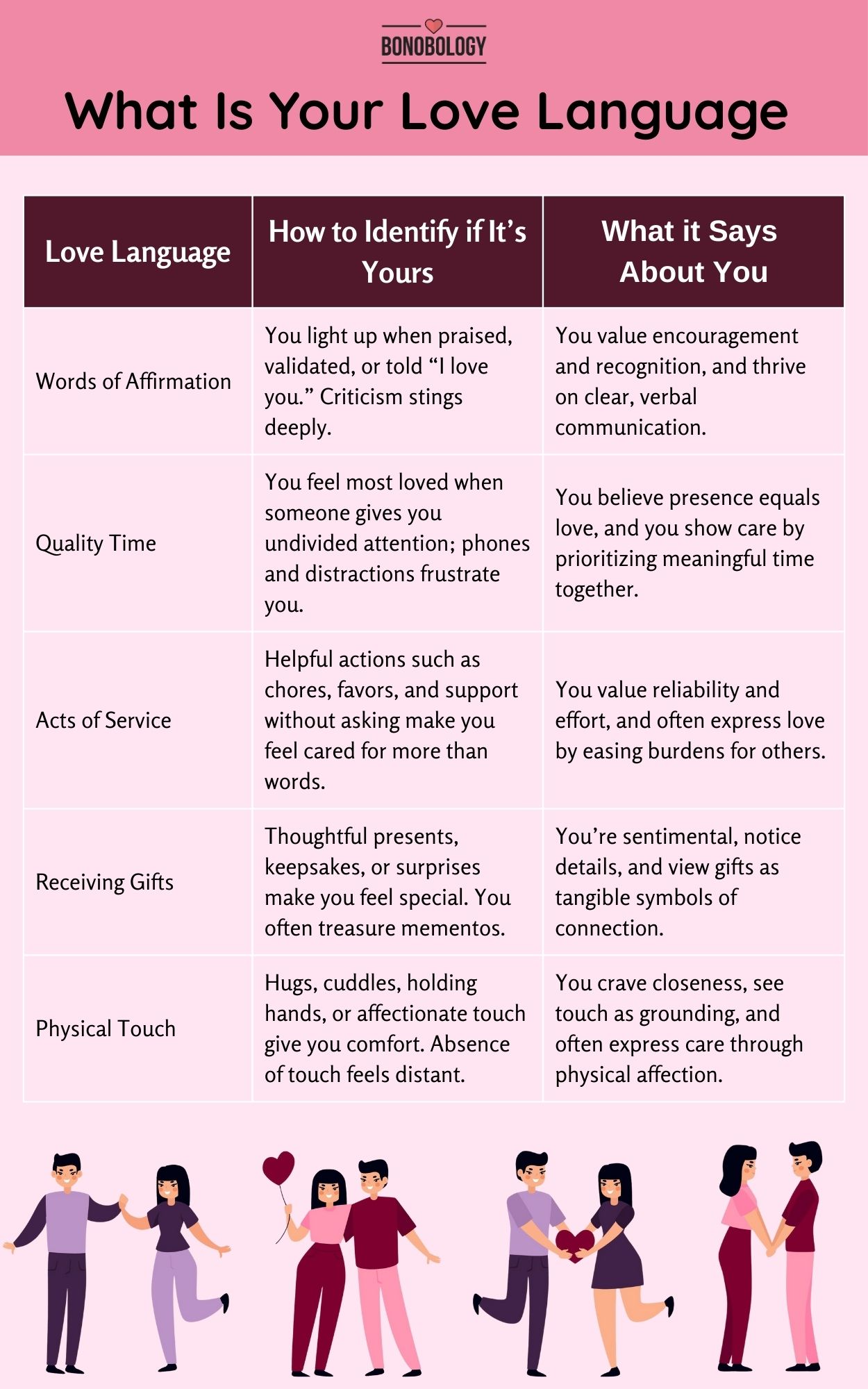
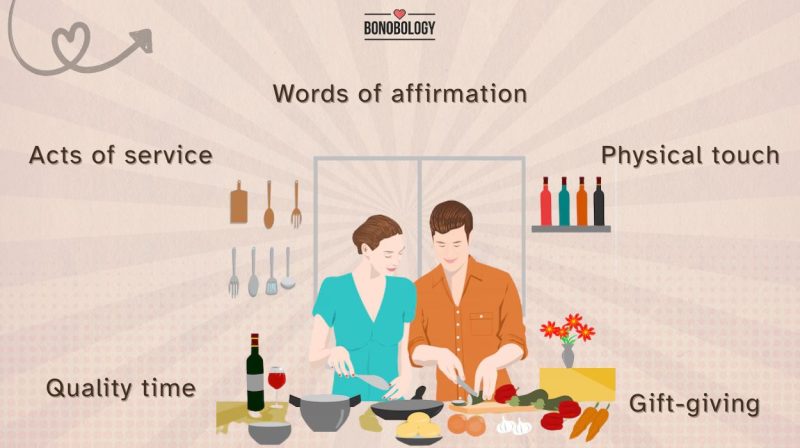
Before you ask, “What is my love language?”, you need to understand what a love language is and how it plays out in relationships. As we’ve already discussed, Chapman’s theory gives us five love languages. Each “language” represents a category of gestures and expressions that people value most. While we can enjoy all five to some degree, most of us have one or two primary love languages that speak to us deeply. Here is a brief overview of each:
1. Words of affirmation

This love language is all about verbal appreciation. If words of affirmation are yours, you feel most loved when you receive encouraging words, compliments, and frequent “I love you”s. Hearing someone say they value you or are proud of you can light you up. For example,
- A simple “You mean the world to me” text out of the blue, or saying “Thank you for everything you do,” can completely make your day
- On the flip side, negative or absent feedback can hurt a lot if this is your primary language, because kind words are what fill your emotional tank
Related Reading: 5 Types Of Love Languages And How To Use Them For Happy Relationships
2. Quality time
Quality time lovers value undivided attention. You feel most adored when someone spends meaningful time with you. No distractions, just being truly present. This could mean having long, thoughtful conversations, sharing a leisurely walk, or curling up together for a movie with phones off. It’s quality over quantity: an hour of focused one-on-one time can matter more than a whole day of half-hearted hanging out.
“Quality time love language is all about giving your undivided attention to that one special person, without the distraction of television, phone screens, or any other outside interference.” —Fariha Mahmud-Syed, psychotherapist
If Quality Time is your love language,
- You likely crave scheduled date nights or regular catch-ups
- Missed dates, postponed plans, or a partner who constantly stares at their phone might leave you feeling distanced or unimportant.
3. Acts of service

For some people, actions speak louder than words. If you feel loved when your partner does helpful things for you, acts of service could be your love language. It’s all about easing each other’s burdens. For example,
- Your partner cooking dinner when you’re swamped with work
- Someone you’re casually dating taking the day off to help helping you move apartments
- Your spouse taking the kids out so you can rest
Those thoughtful actions hit your heart even more than hearing a compliment. These gestures say “I care about you” in a practical way. On the other hand, broken promises or neglecting to follow through on helping can feel especially hurtful to someone who values acts of service.
Related Reading: Top 10 Gift Ideas For Each Of The 5 Love Languages
4. Receiving Gifts
Receiving gifts isn’t about materialism. A well-chosen gift can make a person feel appreciated and loved because it shows someone was thinking of them. The size or cost of the gift often matters far less than the thought behind it. A person with this love language expects and appreciates small gestures like,
- Their partner picking up their favorite pastry on the way home
- Souvenirs from trips
- Surprise flowers
- A handmade card
- A heartfelt token
If this is you, you likely treasure mementos and see gifts as symbols of connection.
5. Physical Touch

This love language is about expressing love through physical affection. People with this love language feel most loved when they receive loving touch such as,
- Hugs
- Hand-holding
- Cuddling on the couch
- Kisses
- Sexual intimacy
If a long cuddle or an affectionate arm around your shoulder makes you feel secure and adored, then physical touch is likely your primary love language. A lack of physical contact or a partner who is physically distant can leave you feeling emotionally lonely.
Related Reading: Exploring The 6th Love Language: ‘Feeling Known’
Why Knowing Your Love Language Matters
The “how to find my love language” quest becomes that much more meaningful when you understand why this matters and how it can transform your relationship. Here are some key benefits:
1. Better Communication
When you know what makes you feel loved, you can tell your partner about it clearly. Likewise, when you know your partner’s love language, you can tailor your gestures to hit the mark. This clarity takes guesswork out of the equation and leads to far better communication. Instead of a vague hope that “they’ll just know what I need,” you both have a shared understanding.
Discovering each other’s primary love language and speaking it regularly creates a much better understanding of each other’s needs. No more feeling like your expressions of love are lost in translation.
—Sunny Motamedi, therapist
2. Emotional closeness
Speaking someone’s love language is like choosing the express route to their heart. It fosters a deeper emotional intimacy because that person truly feels your love profoundly. For example, suppose your partner’s love language is words of affirmation, and you make an effort to praise and encourage them often, sincerely. In that case, they’ll likely feel a new level of validation and warmth in the relationship.

Psychologists note that when partners feel loved in the way that resonates with them, it builds emotional intimacy and trust. You’re essentially saying, “I see you and I get what makes you feel valued,” which can be incredibly bonding.
3. Stronger relationships
When communication improves and people feel emotionally fulfilled, it naturally leads to stronger, healthier relationships. You might notice fewer petty arguments or feelings of neglect. Instead, there’s more appreciation and a sense of being on the same page.
In fact, research suggests that couples who actively respond to each other’s love language preferences enjoy higher relationship satisfaction. By contrast, ignoring these needs can lead to frustration.
How Do You Figure Out What Your Love Language Is? 5 Common Ways To Discover
Many people ask, “How can I find out what my love language is?” or “How do you figure out what your love language is if they all sound relatable?” The good news is, it’s not as hard as it may seem, and the process can actually be pretty fun and insightful. Often, it comes down to paying attention to what makes you feel most appreciated.
You can even turn it into a self-discovery exercise or a conversation with loved ones. Below, we’ll explore five common ways on how to find your love language to discover your love language. Try one or try them all, and by the end, you should have a much clearer idea of what truly makes you feel loved:
Related Reading: 25 Ways To Show Someone You Care And Express Your Love
1. Take a love languages quiz
If you’re wondering, “How can I find out what my love language is?”, one of the quickest ways is to take the official quiz or a similar questionnaire. These quizzes present scenarios and ask which response would make you feel more loved. Your pattern of answers will point to your primary love language.
You can try Dr Chapman’s official love language quiz here
2. Reflect on when you feel most loved

When you’re wondering how to find your love language, a bit of self-reflection can go a long way. Think about the last few times you truly felt loved, appreciated, or content in a relationship. What was happening in those moments? Maybe it was when your partner dropped everything to spend time with you after a bad day, which points to quality time. Or perhaps you felt a rush of love when your partner told you, “I am so grateful for you”, suggesting you value words of affirmation. Pay attention to what moves you emotionally.
Ask yourself questions like:
- Do I light up when someone praises me out of the blue?
- Do I feel most secure when I’m being held?
- Do I get a warm fuzzy feeling when someone helps me without me asking?
These reflections offer clues. It also helps to consider how you instinctively show love to someone else. Often, we give love in the way we wish to receive it. By reflecting on both how you receive and how you give love, you’ll start to see a pattern, and it will lead you to that “aha” moment where you recognize, “Oh, I feel loved when X happens.”
3. Ask friends or family for insight
Sometimes our close friends or family can see patterns in us that we miss. If you’ve been racking your brains over, “What is my love language?”, consider asking the people who know you best. You could say, “Hey, when do I seem happiest or most appreciative?” or “Have you noticed what gestures really make me light up?” Their answers might offer surprising insights.
A friend might say, “Honestly, you get super giddy whenever someone gives you a gift. Remember how excited you were when that guy you were dating surprised you with your favorite cupcakes?” And, just like that, you know receiving gifts might be your primary love language.
Related Reading: I Don’t Feel Loved: Reasons And What To Do About It
4. As your partner for feedback
If you’re in a relationship, an open conversation with your partner can be one of the most direct routes to resolving the dilemma of how to find your love language.
Try this: Both you and your partner separately think of two or three times you felt especially loved by the other. Then share these discoveries with each other. You might tell your partner, “I felt really loved last week when we just talked for an hour without any distractions.” They might say, “I felt super loved when you comforted me with a hug yesterday.” In this exchange, it becomes clear: you value quality time, and your partner prefers physical touch.
This kind of back-and-forth not only helps you pinpoint your love language, it also builds understanding. It’s basically two people saying, “I want to know how to love you better.”
5. Experiment with different expressions of love
If you’re still unsure, treat it like a playful experiment. Try giving and receiving love in each of the five ways and note which ones resonate most. For example,
- Deliberately initiate a week of extra words of affirmation. Send kind texts, give compliments
- Next week, focus on quality time. Plan a date night or long call with your partner.
- Then, for a week, prioritize acts of service. Do helpful favors and also notice how you feel when others do them for you.
- Rotate through receiving gifts and physical touch in the same manner
During this time, observe what kind of impact each of these activities has on you. Pay attention to your emotional responses: Did a surprise gift from your partner leave you glowing for days, whereas a bunch of hugs were just “nice”? Or did spending undistracted time together bring you more joy than any compliment could? In your responses lies the answer to what your love language is.

Consider: How You Give vs. Receive Love
A thoughtful thing to keep in mind is that the way you give love might not be the exact way you receive love. For many people, their natural instinct is to show love in the same way they like to get it. For example, if you feel loved through gifts, you might frequently give gifts to others as your way of saying “I care”. In that case, your giving and receiving love languages align.
However, it’s not always a one-to-one match. Some individuals discover that what they appreciate getting is different from what they tend to give. Maybe you feel really loved when you receive comforting words of affirmation, but you realize you mostly show love by doing things for your partner. This can happen due to personality or even how we were raised. Perhaps you learned to express love in a certain way, even if deep down you’d personally prefer another way.
Now, there is nothing wrong with this. It just means you speak two dialects of love! What’s crucial is to recognize and communicate it. Let your partner know, for instance, “I love doing things for you because that’s how I show love, but honestly, I realize I feel most loved when you praise or encourage me with words.” This way, you each understand that when you’re scrubbing the kitchen, it’s you saying, “I love you!” in one of your preferred languages, and when they hug you tight or say “You’re amazing,” it’s them doing the same in the other language you prefer.
What Your Love Language Says About You
Your love language doesn’t just explain how you feel loved, it also offers insight into your personality, needs, and even how you show up in relationships. Think of it as a mirror. The way you most want to receive love often reflects what you value in life. Here is what your love language says about you:
1. Words of affirmation
If you like your love expressive and verbal, it means:
- You value encouragement, appreciation, and recognition
- You’re sensitive to criticism. Words cut deep
- You thrive on communication and reassurance in relationships
- You often tell people how much they mean to you
Related Reading: 150 Words Of Affirmation Examples To Cement Your Bond
2. Quality time
If being with your significant other makes you feel love, it means:
- You believe love equals attention and presence
- You dislike distractions like phones and multitasking when connecting with others
- You may crave meaningful conversations and shared activities over material things
- You show others you care by prioritizing your time with them
3. Acts of service
If you feel love is best expressed by showing up when it counts the most, it means:
- You see effort and reliability as proof of love
- You’re practical, dependable, and helpful in relationships
- You may get stressed if promises are broken or tasks are ignored
- You tend to demonstrate care by doing things that make life easier for others
Related Reading: 9 Heartwarming Actions Of Love That Speak Louder Than Words
4. Receiving gifts
If you feel loved through thoughtful gestures and gifts, it means:
- You appreciate thoughtfulness and symbols of love
- You’re sentimental and may hold on to keepsakes and mementos
- You pay attention to details
- A thoughtful surprise means more than an expensive item
- You often show affection by giving meaningful gifts yourself
5. Physical Touch
If physical closeness makes you feel loved and secure, it means:
- You view touch as grounding, calming, and affirming
- You enjoy closeness, hugs, or physical affection in relationships
- You may feel distant or unloved if touch is missing in a relationship
- You often initiate physical gestures as your way of expressing care
FAQs
You’re not a robot with a single setting, so it’s perfectly okay to have more than one love language. In fact, most people have a primary love language and one or two strong secondary ones. Chapman’s original idea was that each person has a predominant style, but even he notes we all relate to most of the five to some extent
Absolutely, yes. Love languages aren’t set in stone for life. Many people experience shifts in their primary love language as they grow, age, or go through different life stages. For instance, someone who in their twenties swooned over receiving gifts might find that in their thirties, with a hectic job and kids, acts of service, like a partner doing laundry, now mean the world to them.
Different love languages don’t mean you’re incompatible. It just means you have to be bilingual to be able to speak in each other’s preferred language. The important thing is not to fall into the trap of loving them the way you want to be loved rather than the way they want to be loved. Over time, you might even start to enjoy expressing love in new ways because you see how much it means to your partner.
Yes, cultural background and social norms can influence how people express and perceive love. The five love languages concept is quite Western-centric. In different cultures, certain “languages” might be emphasized more, while others are downplayed. While the need for love is universal, the form it takes can be influenced by culture, upbringing, and personal context.
Key Pointers
- The 5 Love Languages are Words of Affirmation, Quality Time, Acts of Service, Receiving Gifts, and Physical Touch. They each highlight a unique way people feel loved
- Knowing your love language improves communication, emotional closeness, and overall relationship satisfaction
- Quizzes, reflection, feedback from friends or partners, and experimenting with different expressions reveal your primary love language
- The way you show love may differ from how you like to receive it, and recognizing this helps reduce misunderstandings
- Each love language reflects personality traits and values, offering deeper insight into your relationship style
Final Thoughts
Discovering and understanding your love language is a powerful step toward building more meaningful connections. When you know what truly makes you feel loved, you can communicate that to others and also recognize when someone is trying to love you in their own way. It brings a lot of clarity. So go ahead, talk about it, laugh about it, maybe even print out a little “cheat sheet” for your partner. The effort you put into understanding these love languages will pay off in more open communication, fewer missed signals, and a whole lot of warm-fuzzy feelings.
Your contribution does not constitute a charitable donation. It will allow Bonobology to continue bringing you new and up-to-date information in our pursuit of helping anyone in the world to learn how to do anything.











Featured
777 Angel Number Meaning In Love: What It Means for You
How to Romance a Man: 24 Ways to Deepen Your Love
Third Date: Guide, Rules, And What To Expect
The Little Habits That Keep Love Strong Over Time
Big Spoon And Little Spoon Cuddling: Meaning, Benefits And How To Do It
Beyond Flowers And Dinner: 5 Heartfelt Ways To Celebrate Your Anniversary
Ways To Show Affection: Practical Tips, Examples, And Expert Advice
Unconditional Love Symbol: Meaning, Origins, and Popular Representations
How To Flirt Over Text: Tips, Examples, And Psychology Behind It
How Long Does It Take To Fall In Love?
120 Flirty Good Morning Texts For Him
Intimacy Therapy At Home: 15 Marriage Intimacy Exercises
How To Build Trust In A Relationship: Effective Strategies For A Lasting Bond
Love Songs For Him: The Ultimate Guide To Expressing Your Heart
What Do Guys Like To Be Called By Their Partners? These 20 Names
25 Signs A Guy Is Attracted To You, According To Dating Experts
What Is A Real Relationship? 13 Defining Characteristics
130 Beautiful Things to Say About Your Wife
101 Silly Questions To Ask Your Partner For Fun, Laughter, And Bonding
200 Heart Touching Love Messages For Her