
| Key Takeaways |
| • There is no correct timeline for dating after the death of a spouse. Grief is personal, and readiness looks different for everyone. |
| • Guilt about dating again is normal and does not mean you are betraying your late spouse. Love and grief can coexist. |
| • Your first relationship after being widowed will bring unique challenges: comparison, identity shifts, fear of vulnerability, and family dynamics. |
| • Go slow. The pace should be yours, not determined by social expectations or loneliness. |
| • Professional support such as grief counseling and therapy can help you process complex emotions before and during a new relationship. |
| • Your children need honest, age-appropriate communication. Their feelings matter and deserve space alongside your own. |
The death of a spouse is a life-altering setback that is difficult to overcome. The memories and pain continue to haunt you for a long time, especially if it was a strong, long, and beautiful relationship that changed your world. But with time, as the grief ebbs, a woman or a man who is left alone feels the need to have a companion. Someone to share a meal with. Someone to call at the end of a long day. The loneliness, if we are being honest, is often the hardest part. And a lot of people carry baggage from the loss that can complicate every new connection they try to form.
Your first relationship after being widowed requires delicate handling because even when you are ready, starting afresh romantically brings forth a new set of challenges. Guilt creeps in at unexpected moments. You wonder if people will judge you. You worry about your children’s reaction. And somewhere underneath all of that, there’s a quiet fear: What if I’m not capable of this anymore? Being in touch with your real, raw emotions is the first step toward building something real.
I’ve spoken with dozens of widows and widowers over the years, and one thing always strikes me: almost everyone asks some version of, “Am I moving on too quickly after death of spouse?” or “What are the signs a widow is ready to date?” There are no right or wrong answers to these questions. A good rule of thumb: when you feel ready, you’re ready. Don’t feel pressured to start dating if you don’t want to, and at the same time, don’t put it off out of fear of judgment.
This guide will walk you through everything: how to know you’re emotionally prepared, the common pitfalls, the dos and don’ts based on what actually works, and how to talk to your children about this new chapter. Let’s get into it.
Related Reading: Widows Are Human Too, And Have Needs
Understanding Grief: Why There’s No ‘Right’ Timeline
Table of Contents
Before we talk about dating, we need to talk about grief. Because the two are connected in ways most people underestimate. Elisabeth Kübler-Ross introduced the five stages of grief—denial, anger, bargaining, depression, acceptance—in her 1969 book On Death and Dying and while the model has been widely adopted, it’s also widely misunderstood. Grief doesn’t move in a straight line. You don’t finish “anger” and move neatly into “bargaining.” Some days you feel like yourself again, and the next morning, a song on the radio sends you right back to square one.
More recent research favors theDual Process Model of Grief developed by Stroebe and Schut, which suggests that healthy grieving involves oscillating between processing the pain and rebuilding your life, forming new identities, and engaging with the world. Dating can actually be part of that restoration process. It doesn’t mean you’ve stopped grieving. It means you’re also living.
Then there’s continuing bonds theory, which challenges the old idea that you must “let go” of your deceased spouse to move forward. Research published in the journal Death Studies shows that maintaining an emotional connection with a late spouse while simultaneously forming new attachments is not only possible, it can be healthy. You don’t have to stop loving your husband to love someone new. The heart is generous that way.
However, if grief remains intensely disabling for 12 months or more and find yourself unable to function, unable to engage with daily life, unable to think about anything other than your loss well past a year, reaching out to a therapist who specializes in bereavement counseling is worth considering because as per the DSM-%, that’s the clinical threshold for prolonged grief disorder.
Related Reading:Am I Moving On Too Quickly After Death Of Spouse—How To Decide
Signs a Widow or Widower Is Ready to Date Again
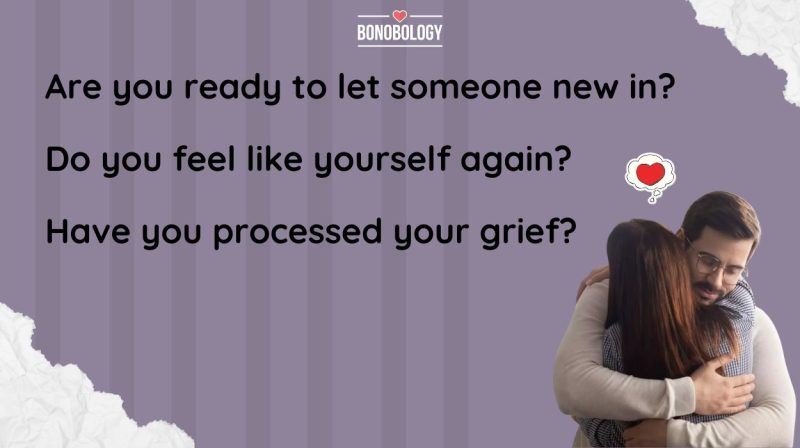
How do you know when you’re ready? I wish there were a checklist you could tick off. There isn’t. But there are patterns I’ve noticed among people who went on to build healthy new relationships versus those who jumped in too early and ended up hurting themselves or someone else.
1. Grief no longer consumes your entire day
You still think about your spouse. You probably always will. But there’s a difference between grief being a presence in your life and grief being your entire life. If you can get through most days without being overwhelmed by sorrow, if you’re sleeping reasonably well, eating, working, seeing friends, that’s a meaningful shift. It doesn’t mean you’re “over it.” It means you’ve made room.
2. You’ve learned to live independently

One of the widowers I spoke to put this well, “I had to figure out who I was without her before I could figure out who I wanted to be with.” If your primary motivation for dating is to fill the silence, that’s worth examining. Loneliness is real and valid, but a relationship built on a void tends to collapse once the initial comfort wears off. When you’ve found some stability on your own, you bring something real to the table. Learning to deal withuncertainty in a relationship becomes easier when you’ve already built that internal anchor.
3. You’ve stopped comparing everyone to your late spouse
This is a big one. If you’re measuring every person you meet against the life you had, you’re going to be disappointed. Your spouse was unique. Your next partner will be, too. When you can appreciate someone for who they are, rather than who they aren’t, that’s emotional readiness.
Related Reading:My Husband Died And I Want Him Back: Coping With Grief
4. You can talk about your loss without falling apart
Being able to share memories of your late spouse in a constructive way, without spiraling into deep sadness, is a good indicator. Your new partner will have questions. They deserve honest answers. And you deserve to be able to give them without it derailing your evening.
5. The future feels possible, not threatening
When you can imagine a life ahead that includes new experiences, new companionship, maybe even new love, and that thought brings curiosity instead of dread, something has shifted. You’re not replacing what you had. You’re opening a new chapter. Understanding thephases of dating can help you know what to expect as you step back in.
Related Reading:How To Rebuild Your Life After The Death Of A Spouse: 11 Expert-Backed Tips
How Long Should a Widow Wait Before Dating?
There is no universally right or wrong answer to this question. Every individual processes grief differently, and the healing timeline varies. While some may feel ready to date within a few months, others may take years before even considering a new relationship.
Abel Keogh, author of Dating a Widower and a remarried widower himself, began dating five months after his wife’s death. He’s written openly about the judgment he faced and his own conclusion: readiness is personal, not chronological. Some of his friends thought five months was too soon. He felt it was right for him. And by his own account, he has no regrets.

What I’ve seen is that the people who struggle most aren’t the ones who dated “too early” or “too late” by someone else’s standard. They’re the ones who let external pressure drive the decision. Your in-laws may think two years is appropriate. Your best friend may think six months is fine. Neither of them is living your life.
That said, there are some honest questions worth sitting with: Am I dating because I want connection, or because I can’t bear being alone? Do I see this new person as their own person, or as a replacement? Can I give emotionally, or do I only need to receive right now? If the answers skew toward the latter in each case, more time might help.
Related Reading:Is A Second Marriage A Second Chance?
9 Dos for Your First Relationship After Being Widowed
Whenever you decide to enter the dating arena or want to finally get down to downloading those dating apps for widows, be sure of what you want from the relationship. As mentioned above, you alone can decide the fate of your life, and how soon you want to begin it depends entirely on your state of being. That said, here are some ways you can ease into your first relationship after being widowed:
1. Do go super slow
If there is one top piece of advice for a woman or man entering their first relationship after being widowed, it is to go slow. Just the way there is no one-size-fits-all answer to the question of how long should you wait for dating after being widowed, the pace at which you take a new relationship forward also depends solely on you. There’s no rush. A person who truly cares about you will understand that. Need more guidance? Here’s our full take ontaking it slow in a relationship.
2. Do work through your emotions first
At one end of the spectrum, some widowed people seek an intense emotional bond right away because they’re craving what they lost. At the other end, some seek physical intimacy without commitment, more as a means to release pent-up loneliness. Both are understandable responses to grief, but both can be confusing for the other person if they don’t know where they stand.
To prevent that kind of mess in a new connection, work through the emotional baggage before you start dating as a widow. Seek help from a counselor to understand why you really want to start dating and how you feel about it on a conscious and subconscious level.
Related Reading:12 Signs Your Past Relationships Are Affecting Your Present Relationship
3. Do start with a clean slate
If you have decided to cement your first relationship after being widowed, make special efforts to ensure that the shadow of your marriage does not mar the new bond. The secret to dating as a widow successfully is to start with a clean slate. Of course, this doesn’t mean that you have to erase the memories of your deceased spouse. However, make a conscious effort not to bring them up in every other conversation. It can be reassuring to find a new partner who is sympathetic to your grief, but talking too much about your spouse or the moments you shared together can hamper your new relationship.
4. Do be open to new social circles

When you start dating again, you are meeting one person and, through them, several others. While in your former marriage, you and your spouse would have had common friends. You will make new ones in this new relationship. Be open to that expansion. New friendships and social circles are part of what makes starting over feel less like a loss and more like a genuine fresh start.
5. Do choose someone who understands your situation
Finding love after being widowed is easier when your new partner understands your past and respects it. If they’re threatened by the memory of your late spouse or dismissive of your grief, that tells you something important about their emotional maturity. You want someone who can hold space for your history without feeling diminished by it.Building trust in a relationship takes time, and it takes the right person.
6. Do have the “what are we” conversation early
One thing I’ve noticed among widowed people re-entering the dating world: they sometimes avoid the defining-the-relationship talk because everything feels fragile. But clarity helps everyone. Are you looking for companionship? Casual dating? Something that could lead to remarriage? Your new partner deserves to know, and so do you.Transparency in a relationship isn’t optional when two people are building something new.
7. Do lean on your support system
You don’t have to figure this out alone. Friends, family, a grief support group, a therapist: use the people and resources around you. Dating after widowhood can stir up emotions you thought you’d already processed. Having someone to talk to outside the relationship makes a real difference.
Related Reading:I Was A Widow And A Single Mother At 28 Till Life Gave Me A Second Chance
8. Do give yourself permission to feel joy
This sounds simple. It isn’t. Many widowed people I’ve spoken with describe feeling guilty the first time they genuinely laughed on a date, or the first time they felt a spark of attraction. Permit yourself to enjoy those moments. Your late spouse, if they loved you, would want you to be happy. That’s not a cliché. I genuinely believe it. Learning tobe vulnerable in a relationship again is part of allowing yourself to feel that joy.
9. Do consider professional support
Grief counseling or bereavement therapy can be useful before and during a new relationship. A study published in theJournal of Consulting and Clinical Psychology found that structured grief interventions helped reduce complicated grief symptoms and improved participants’ ability to form new emotional bonds. If your emotions feel tangled, a trained therapist can help you sort through them. Bonobology offersonline counseling with experienced relationship experts who can support you through this transition.
Related Reading:11 Expert Tips To Have A Successful Second Marriage
9 Don’ts for Your First Relationship After Being Widowed
As someone who has been reentering the dating arena after a long gap and a substantial load of emotional baggage, you also need to be aware of the common pitfalls you need to avoid in your first relationship after being widowed:
1. Don’t let guilt hold you hostage
Guilt is the single most common emotion I hear about from people dating after loss. You feel like you’re being unfaithful. Like loving someone new erases what you had. It doesn’t. Continuing bonds theory, which we discussed earlier, confirms what many widowed people eventually discover on their own: you can hold love for your late spouse and love for a new partner at the same time. They occupy different spaces in your heart.
Related Reading:Why I Will Never Date A Widower Again – A Woman’s Story
2. Don’t compare your new partner to your late spouse
This can destroy a new relationship faster than almost anything. Your new partner is a different person with different strengths, different quirks, different ways of showing love. The moment you say, or even think, “My husband would have handled this differently,” you’re being unfair to the person in front of you. Catch yourself when this happens. It will happen. Just don’t let it become a pattern. For more on why this habit is toxic, read our piece on why you shouldstop comparing yourself with your partner.
3. Don’t use your new partner as a therapist
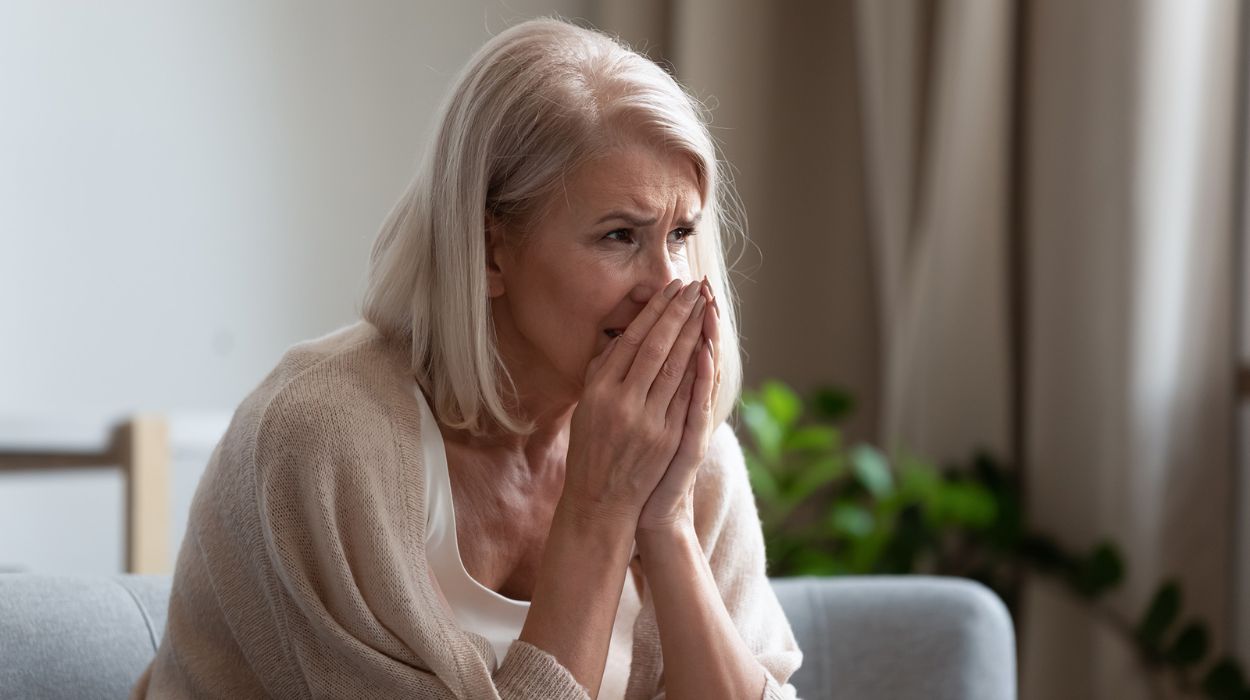
Your new partner should know about your loss. They should be patient with your hard days. But they should not become your grief counselor. If you find that every conversation circles back to your late spouse, if your dates feel more like therapy sessions, you may not be ready for a relationship yet. You need to understand how grief affects relationships and find a way to work through those messy emotions before taking a leap.
4. Don’t rush into commitment out of loneliness
Loneliness after losing a spouse is profound. I understand the urge to fill that void quickly. But committing to someone just because they’re there and they’re kind is not a foundation for a lasting relationship. It’s a recipe for hurting both of you when the initial comfort fades and you realize you don’t have much in common. If things feel like they’re moving too fast, here’s how to slow down a relationship without ending it.
5. Don’t ignore red flags because you’re grateful for attention
Widowed people, especially in the early stages of dating again, sometimes tolerate behavior they wouldn’t have accepted before. They’re grateful someone wants them. They don’t want to be alone again. I get it. But your standards matter. If someone is emotionally unavailable, controlling, or dismissive of your grief, walk away. You’ve already survived one of the hardest things a person can go through. You don’t need to settle. Watch out forsigns of trust issues in yourself and in a potential partner.
6. Don’t hide your widowed status
Some people are tempted to downplay or avoid mentioning that they’re widowed, especially on dating apps. This almost always backfires. Be upfront. The right person won’t be scared off by your history. And anyone who is scared off probably wasn’t the right person.
Related Reading:First Love Theory: Is It True Men Never Forget Their First?
7. Don’t let the world dictate your timeline
Society has a lot of opinions about when widowed people should date. Some friends will push you toward it too soon. Others will judge you for moving on at all. I’ve seen widows get criticized for dating after six months and widowers get criticized for dating after two years. The only opinion that matters is yours. Block out the noise.
8. Don’t neglect your own identity
After decades of being someone’s spouse, it’s easy to lose track of who you are independently. Before you become someone’s partner again, spend some time figuring out what you actually want from life. Pick up hobbies. Travel if you can. Reconnect with old interests. The more grounded you are in your own identity, the healthier your next relationship will be.
9. Don’t keep your late spouse’s shrine as the centerpiece of your home
I say this with respect: honoring your late spouse’s memory is important. But if your home is a museum dedicated to your previous marriage, a new partner will feel like a visitor, not a participant. One widower I spoke with realized he had five framed photos of his late wife in the living room and none anywhere else. He didn’t remove them all. He moved a few to a private space and made room for his present life. That balance matters.
Related Reading:21 Lessons I’ve Learned From Dating A Widower
Common Challenges in Your First Relationship After Widowhood
Even when you’re ready and you’ve found someone kind, certain challenges are almost unavoidable. Being aware of them upfront helps you handle them with more grace.
1. The identity crisis
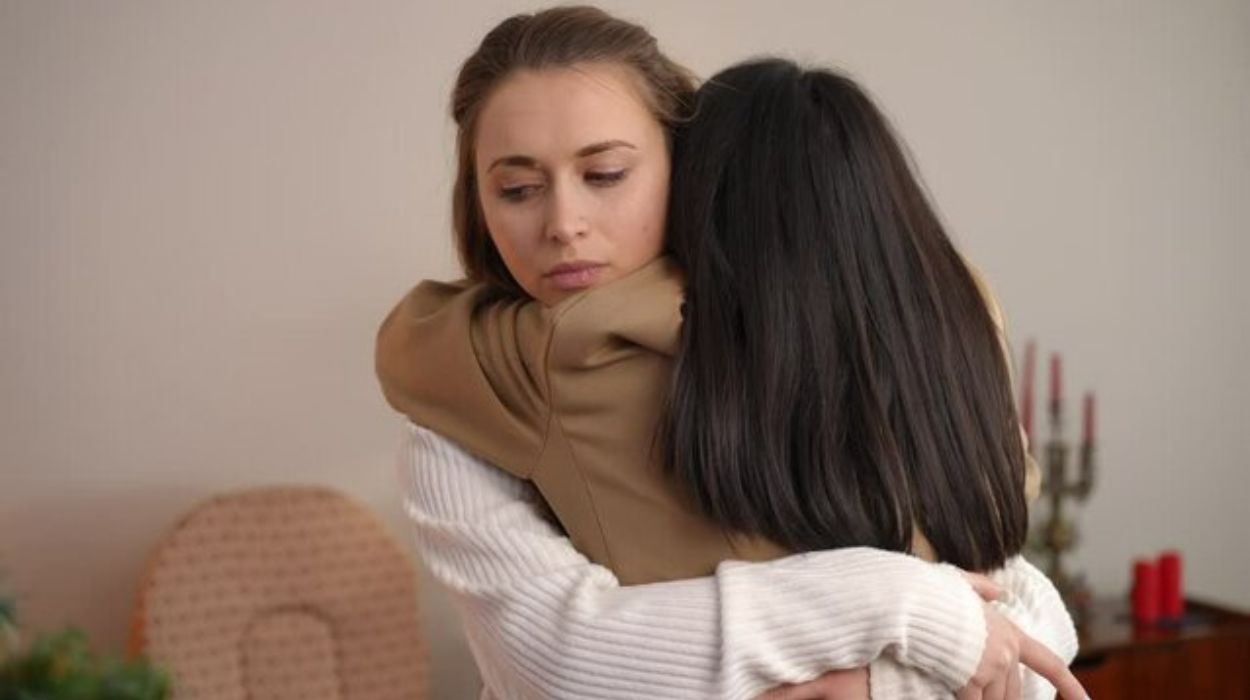
You went from being married to widowed to single to dating. Each of those transitions reshapes how you see yourself. Many widowed people describe feeling like they don’t know who they are anymore. Your sense of self was woven into your marriage, and now you’re trying to figure out who you are as an individual while simultaneously figuring out who you are as a partner to someone new. That’s a lot of identity work happening at once. Give yourself patience.
2. Emotional triggers and anniversaries
Your late spouse’s birthday. Your wedding anniversary. The song that played at their funeral. These triggers don’t disappear because you’re in a new relationship. A good partner will understand if you need space on certain days. And you should be honest enough to tell them when those days are coming.
Related Reading:My Boyfriend Is Grieving And Pushing Me Away: Tips To Cope
3. Physical intimacy fears
Being intimate with someone new after years or decades with one person can feel strange. Some widowed people describe it as feeling like a betrayal. Others say it felt like being a teenager again, awkward and uncertain. Both reactions are normal. Go at whatever pace feels right and communicate openly with your partner about what you need.
4. Judgment from in-laws and mutual friends
Your late spouse’s family may have strong feelings about you dating again. Some in-laws are supportive. Others feel abandoned or replaced. Mutual friends may pick sides. None of this is fair, but it’s common. Where possible, have direct conversations with the people who matter to you. Where that isn’t possible, accept that some relationships may change. You might find our piece onhow to rebuild trust in a relationship helpful in navigating these dynamics.
“Losing a spouse and choosing to love again requires a kind of courage that most people don’t fully appreciate. The grief doesn’t go away when a new person enters your life. What changes is your relationship with the grief. It becomes something you carry with you rather than something that carries you. If you’re considering a new relationship, be patient with yourself, be honest with your partner, and don’t let guilt rob you of a chance at happiness.”
—Neelam Vats, counseling psychologist and bereavement counsellor
How to Tell Your Children You’re Dating Again After Loss
If you are a widow with children, be sure to engage them when you enter a relationship, lest there be complications later. Sometimes children can be quite resistant and might object to their parent seeing a new person after the death of their father or mother. This is true regardless of their age. A five-year-old and a twenty-five-year-old can both struggle with it, just in different ways.
It would be best if you introduce your new partner to them only after you are sure of yourself first. If you’re merely in arebound relationship after the death of your spouse as a coping mechanism, you don’t need to let the children in on it. However, if a new connection has the potential of turning into something meaningful, then a conversation is warranted.

Let your children know about your loneliness and need for companionship. Be honest with them. Don’t minimize their feelings or rush them toward acceptance. They’re grieving too, and they may need time to process the idea that their surviving parent is moving forward romantically.
It will require maturity on your part as well as your partner’s side to forge a bond with the kids. One widow I spoke to waited eight months into her relationship before introducing her partner to her teenage sons. She told them over dinner, kept it casual, and made it clear: “No one is replacing your dad. This is about me being happy, and I want you to know about it.” It went better than she expected.
| Tips for Talking to Children About Your New Relationship |
| • Have the conversation in a calm, private setting. Not in the car. Not at a family gathering. |
| • Be age-appropriate. Young children need simple reassurance. Teenagers need honesty and room to react. |
| • Emphasize that no one is being replaced. Their parent’s memory and role are secure. |
| • Give them permission to feel whatever they feel. Anger, sadness, confusion, and even happiness are all valid. |
| • Don’t force a relationship between your children and your new partner. Let it develop naturally. |
| • Consider family therapy if emotions run high. A neutral third party can help. |
Dating After 50 and Widowed: Special Considerations
If you lost your spouse later in life, the dating landscape can feel alien. The last time you were single, dating apps didn’t exist. The rules have changed. Your body has changed. Your priorities have certainly changed.
The good news? People over 50 tend to know themselves better. You’re less likely to waste time on someone who isn’t right. You know what matters to you: kindness, companionship, humor, shared values. The superficial stuff carries less weight. That clarity is actually an advantage.
A few practical thoughts: online dating platforms like OurTime, eHarmony, and Hinge are worth exploring. They give you the ability to filter for what matters (age, values, relationship goals) and to ease into conversations before meeting in person. If the idea of a dating app makes you uncomfortable, consider starting with social activities: book clubs, volunteer groups, community classes. Meeting someone through a shared interest takes some of the pressure off.
Related Reading:How My Widowed Mother Married Her Best Friend
Remind yourself that everyone your age has lived a full life. Divorce, caregiving, loss, career upheaval: no one over 50 arrives without history. Your widowed status is part of your story, not a liability. The right person will see it as evidence of your capacity for deep love.
Related Reading:Remarriage After Death Of Spouse: A Heartwarming Journey Of A Woman
From Dating to Remarriage: When Your First Relationship Gets Serious
At some point, your first relationship after being widowed may cross a threshold. You’re spending most of your time together. Your families are getting to know each other. Someone brings up moving in. Maybe even marriage.
This is where things get logistically complicated. You may have to decide what happens with the home you shared with your late spouse. You may need to navigate blended family dynamics if both of you have children. Financial considerations, estate planning, and even something as simple as whose furniture goes where can become loaded conversations.
Take all of it step by step. Remarriage after the death of a spouse can be a genuinely beautiful thing. But it requires honesty about what each of you needs, expects, and is willing to compromise on. If your late spouse’s family is still part of your life, think about how a remarriage will affect those relationships too.
FAQs
There is no set timeline. Some feel ready after six months, others need several years. The key indicators of readiness are emotional stability, the ability to function independently, and a genuine desire for connection rather than a desire to escape loneliness. Don’t let anyone else’s opinion determine your timeline.
Yes, guilt is one of the most common emotions reported by people entering the dating world after loss. Research on continuing bonds theory shows that loving someone new does not require you to stop loving your deceased spouse. The guilt typically fades as you become more comfortable with the idea that your heart has room for both.
Key signs include you’re no longer consumed by daily grief, you’ve built a stable independent life, you’ve stopped comparing everyone to your late spouse, you can discuss your loss without being overwhelmed, and you feel hopeful about the future. If most of these resonate, you’re likely in a good place to explore a new relationship.
Choose a calm, private setting. Be honest and age-appropriate. Reassure them that no one is being replaced. Give them permission to feel whatever they feel, including anger or confusion. Don’t introduce your new partner until the relationship is established. Consider family therapy if your children are struggling.
Yes, this is one of the most important things to understand about love after loss. The continuing bonds model, supported by research in bereavement psychology, shows that maintaining love for a deceased partner while building a new relationship is healthy and common. Your new partner is not a replacement. They are a new chapter.
Rushing into commitment to escape loneliness. When you use a new relationship primarily to fill the void left by your spouse, you risk choosing the wrong person, overwhelming them with your grief, or creating an unhealthy dependency. Taking it slow and building a genuine connection based on who both of you are today makes for a much stronger foundation.
If you are the new partner of a widowed person, patience is essential. Occasional comparisons may happen, especially early on. What matters is whether your partner is aware of it and working to see you as your own person. If comparisons are constant and hurtful, an honest conversation is needed. You deserve to be valued for who you are.
Online dating can be a good option, especially if your social circle is limited or if you’re not comfortable meeting people through friends yet. Platforms like OurTime (for over 50s), eHarmony, and Hinge allow you to set your own pace and filter for compatibility. Be upfront in your profile about being widowed. The right matches will appreciate the honesty. Here’s our curated list ofdating sites and apps for widows to help you get started.
Some people will support you. Others will have opinions. In-laws may feel protective of their child’s memory. Friends may project their own discomfort. The most effective approach is to be open about your feelings with the people whose opinions you value, and to let go of the rest. You are not responsible for making everyone else comfortable with your choices.
Final Thoughts
A relationship after widowhood can work out beautifully if you are willing to give your love and energy to it. Yes, the dynamics will be different from the past, but the emotions remain the same. Don’t allow fear or guilt to come in the way of real happiness. You deserve it. Your late spouse, if they loved you well, would want it for you.
How To Emotionally Let Go Of Someone You Love: A Therapist Advises
Your contribution does not constitute a charitable donation. It will allow Bonobology to continue bringing you new and up-to-date information in our pursuit of helping anyone in the world to learn how to do anything.