

“Sexual frustration” refers to the stress and dissatisfaction that arise when someone’s sexual needs aren’t being met. This experience is common and natural for adults. In relationships, male sexual frustration can manifest in subtle or not-so-subtle ways that impact emotional well-being and partnership dynamics. Recognizing the signs of sexual frustration in men is important because it can affect mental health and relationship satisfaction if left unaddressed.
10 Signs A Man Is Sexually Frustrated
Table of Contents
How do you tell if a guy is sexually frustrated? Often, there are observable patterns in his emotions and behavior. Below we have listed 12 signs of sexual frustration in men. Keep in mind every individual is different; some men might show many of these signs, others just a couple. Context matters too. But if you notice several of these patterns together, it’s likely not just coincidence.
Emotional and mood changes
When sexual tension builds up with no outlet, it often affects a man’s emotional equilibrium. You might observe mood swings or irritability that weren’t there before. Key emotional signs a man is sexually frustrated include:
1. Irritability or a shorter temper than usual
Short temper without a clear reason is a major sign.
- He may seem on edge and easily agitated over minor issues
- Little annoyances that he’d normally brush off now set him off
- You might feel like you’re “walking on eggshells” because his patience has decreased.
The frustration is expressing itself as anger directed at whatever, or whoever, is around. It’s not that he suddenly became mean; internally, he’s stewing from stress-induced frustration due to unmet expectations in his sex life.

2. Sudden mood swings or emotional instability
You knew him as a fairly stable guy, but lately he’s up and down emotionally. These swings often correlate with his pent-up tension.
- One moment he’s despondent or withdrawn, and the next he’s agitated or moody
- He might go from sullen silence to snapping at you in the same evening
- Mood instability or an unusually wide emotional range can mean his emotional regulation is off-kilter
- You may also notice frequent irritation over minor issues followed by periods of sulking or emotional distance
The common thread is that his baseline mood is altered compared to when his sexual needs were being met. Beyond these, some men also experience feelings of loneliness or even sadness tied to sexual frustration. If he feels rejected or undesired, his self-esteem might dip, leading to subtle signs of depression or anxiety.
Related Reading: 12 Things That Can Go Wrong During Sex
Behavioral indicators
Sexual frustration doesn’t just stay in a man’s head but also shows up in his actions and habits. You might notice changes in how he interacts with you or where he focuses his energy. Here are behavioral signs of sexual frustration:
1. Emotional withdrawal or shutting down communication
A frustrated man might pull back emotionally.
- Perhaps he’s communicating less or seems distant
- Maybe he barely engages in the usual playful banter or deep talks you used to share
- You might sense a sudden emotional distance; like he’s present physically but not really there with you emotionally
In his mind, if sex is off the table, he might also withdraw from other forms of bonding. Essentially, he may act more like a roommate than a romantic partner when he’s internally frustrated. In practice, this could look like:
- Shorter conversations
- A communication breakdown about feelings
- Or him spending more time alone
Related Reading: How To Bring Back Intimacy In A Marriage After Menopause—9 Tips
2. Investing excessive time in physical outlets
Has he started working out like a man on a mission, or picked up new hobbies out of the blue? Some men cope with sexual frustration by channeling that pent-up energy elsewhere; almost as a distraction. You might notice:
- He’s hitting the gym more often
- Going for long runs
- Playing hours of video games
- Or immersing himself in hobbies to an unusual degree
It’s healthy to have interests, of course, but here it feels like he’s escaping. He could be looking for a physical release or a way to get the endorphins and adrenaline he’s missing from intimacy. If you observe a sudden, intense focus on anything except you, it could be his way of coping with feeling sexually unfulfilled.
“He’ll start to prefer alone time, or to do things by himself. Aggressivity, not necessarily violence but might go harder on the gym, work, etc. His days are all “fine” and “nothing special happened”. If he’s your partner, he’ll be distant/bored when you talk about that bad person or event at work. The communication channel doesn’t work as usual. Low excitement to whatever couple activity proposed to him.”
– Reddit User
3. Frequent sexual advances or excessive sexual talk
On the flip side of withdrawal, some frustrated men become more overt about sex.
- He might initiate intimacy repeatedly, even after you’ve said you’re tired or not in the mood, or drop hints and innuendo constantly
- He may make increased sexual or flirty jokes hoping you’ll get the hint, or he’s trying to cuddle and kiss you every night as a prelude to sex
- If he’s always asking when you’ll have sex next or complaining about the lack of it, that’s a pretty clear sign of frustration
- Another clue is if regular conversations somehow end up turning toward sexual topics or little “jabs” about your sex life
This excessive sexual focus is essentially him expressing the unmet desire in the only way he knows how; by pushing for it. He may also display passive-aggressive behavior like making snarky remarks such as “I’d get a lot more sleep if I had a reason to be tired tonight…”
Neither approach is healthy long-term: withdrawal can lead to an emotional disconnect, and constant advances can lead to a strained relationship. Recognizing these behaviors for what they are can help you address the root cause rather than just the symptom.
Related Reading: 30 Day Relationship Challenge | Get Your Relationship Out Of The Rut
Relationship and intimacy patterns
Sexual frustration in a relationship inevitably affects the dynamic between partners. You might notice changes in how he relates to you day-to-day, especially around affection and conflict. Here are signs in the relationship realm:
1. Increased conflict or tension
When a man’s sexual needs are not met, it can subconsciously breed resentment.
- This can show up as more frequent arguments, snippy comments, or tension over the smallest things
- You might find you’re bickering about who took out the trash, but underneath, there’s a bubbling issue of him feeling deprived
- Often, these fights escalate quickly or recur regularly
- In some cases, he might even steer arguments toward the topic of sex; directly or indirectly
If every disagreement somehow ends up being about your intimacy, or lack thereof, that’s a glaring sign. Even if he doesn’t openly blame it on sex, the general irritability and agitation caused by frustration can make conflicts more likely. You could also observe passive-aggressiveness or sulking after an argument, especially if it touched on intimacy.
2. Decrease in non-sexual affection
Apart from sex, intimacy also includes cuddles, kisses, warm hugs, and even simply being present with each other. A man who is sexually frustrated might start to withdraw these everyday displays of affection, almost as an unconscious protest.
- You might notice he isn’t as physically affectionate; fewer random hugs, less hand-holding, minimal affectionate touch
- He could also avoid prolonged eye contact or sweet talk that used to be normal
- In some relationships, when the sexual part is unfulfilling, the frustrated partner emotionally distances themselves, leading to reduced emotional intimacy across the board
Unfortunately, this can create a vicious cycle; the less affectionate he becomes, the more distance between you, and the harder it is to rekindle any spark. Emotional distance and lack of affection are major signs of sexual frustration in a man, especially when they coincide with a period of little to no sexual activity in the relationship.
Related Reading: 13 Exciting Signs She Wants You To Touch Her Body
3. Attempts to seek fulfillment outside the relationship
In more extreme cases, a sexually frustrated man might look for other ways to fulfill his needs outside the partnership.
- You might catch him flirting a bit too much with someone else
- Or notice he spends way more time socializing without you
- He could also be consuming erotic content or engaging in some form of emotional affair as a substitute for what’s missing
Obviously, an actual affair is the most damaging outcome, and it’s not a justified response, but it is a risk factor of long-term unresolved frustration. Even short of infidelity, he may fantasize about others or peruse dating apps out of curiosity. If you notice signs like secretive phone usage or him often mentioning how someone at work or the gym gave him attention, these could be red flags.
Related Reading: Intimacy Therapy At Home: 15 Marriage Intimacy Exercises
Physical symptoms
Aside from emotional and behavioral cues, there are also some physical or bodily signs that can accompany sexual frustration. These are generally related to nervous energy and attempts at self-soothing:
1. Restlessness or difficulty concentrating
A lot of men report feeling on edge when they’re sexually pent-up.
- He might appear fidgety, unable to relax, or like he has excess energy to burn
- This could show up as pacing, frequent sighing, or just an overall agitated vibe
- Maybe he has trouble focusing on tasks; his mind seems elsewhere
This kind of restlessness or agitation is basically the body’s response to unrelieved tension. Arousal frustration can cause a sort of background irritability that makes it hard for him to sit still. If you find him randomly doing push-ups at midnight or tossing and turning in bed, it could be that sexual energy looking for an outlet.

2. Increase in solo sexual outlets
Many men will try to relieve their frustration on their own if they’re not having partnered sex.
- You might notice an uptick in how often he masturbates or watches porn
- Perhaps you walk in and he hurriedly closes his laptop, or you find adult content in his browser history more often than before
- He could also be engaging in other compulsive behaviors like frequenting erotic chat sites or scrolling sexual content on social media
Now, masturbation and porn in moderation can be a normal part of life, but a sexually frustrated man might lean on them heavily, sometimes to the point where it feels excessive or secretive. Pay attention to changes: if previously it wasn’t a big thing and now it’s daily , that’s telling.
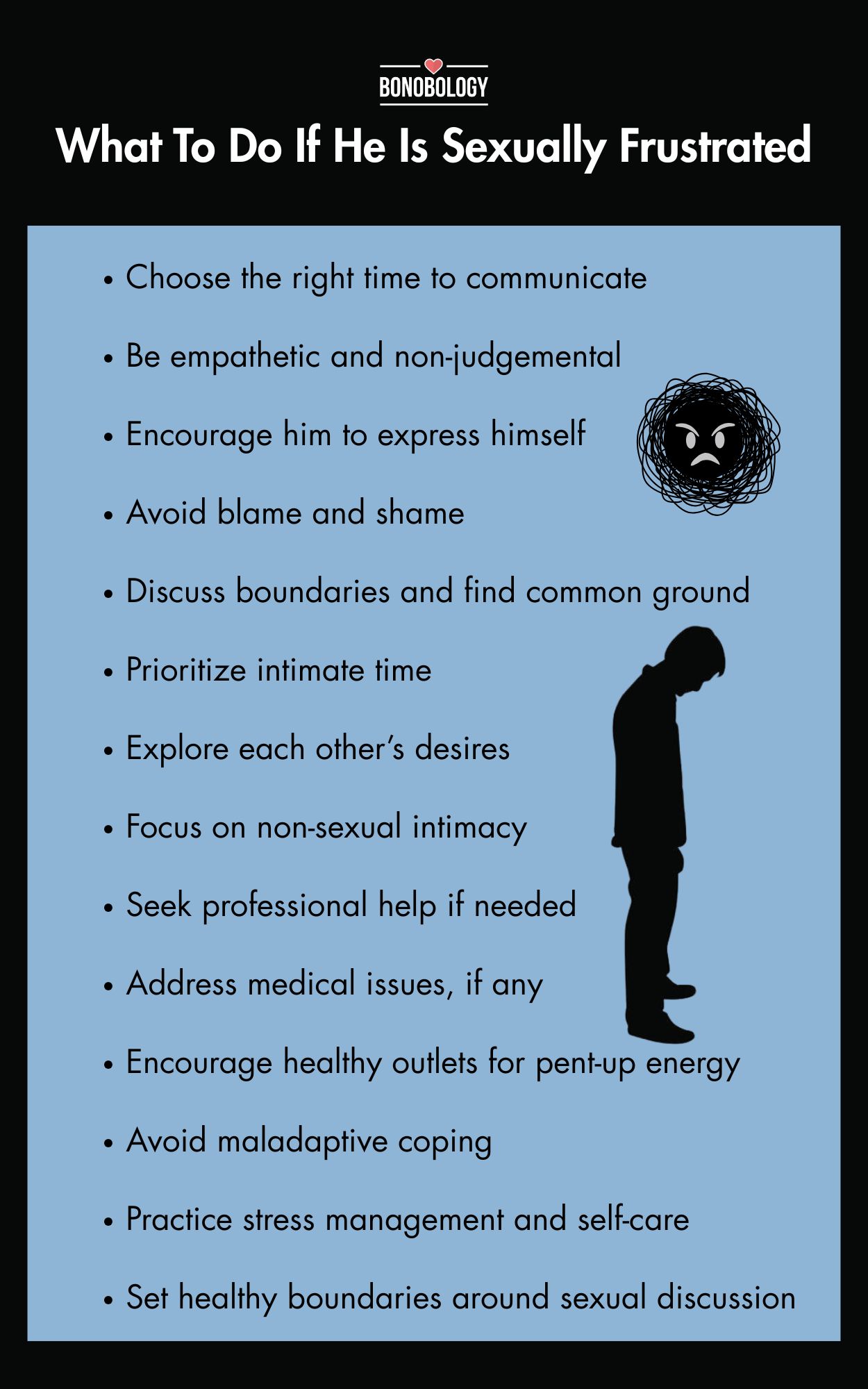
What To Do If He Is Sexually Frustrated
So you’ve identified that your partner is likely sexually frustrated, now what? The worst thing to do is ignore it or get into a blame game. Instead, approach it as a team problem to solve together. There are several constructive strategies, from improving communication to trying new things in your intimate life, that can help alleviate the frustration.
Communication tips
Open, honest conversation is the most important step in addressing sexual frustration. It might feel awkward to bring up, but creating a safe space to talk about it will do wonders. Here are some tips:
1. Choose the right time and tone
Pick a moment when you’re both relaxed and not in the middle of an argument. It could be during a quiet evening or on a weekend when stress is low.
- Start gently by acknowledging the topic is a bit sensitive
- Approaching the conversation calmly, not in the heat of frustration, is key
- Be honest but avoid accusatory language
- Speak from your perspective using “I” statements. This reduces defensiveness
Related Reading: 15 Expert-Recommended Couples Communication Exercises
2. Be empathetic and non-judgmental
Make it clear that you’re not attacking him for feeling the way he does. In fact, validate his feelings if you can.
- Let him know you understand he’s been feeling frustrated or rejected, and that it’s a legitimate feeling
- Emphasize that you’re on the same team, looking for a solution that makes both of you happy
- If he senses empathy rather than criticism, he’s more likely to open up
The goal is to replace any passive-aggressive behavior that’s been happening with direct, compassionate dialogue.
Related Reading: 9 Signs Of Bad Communication In A Relationship
3. Encourage him to express himself
Some men have trouble articulating their needs or fears about sex. Encourage him to share by asking genuine questions and then giving him your full attention.
- Ask things like, “How have you been feeling about our intimacy lately?” or “Is there something you wish could be different?”
- When he answers, really listen without jumping in to defend or dismiss
- Show that you hear him by maybe reflecting back
- Sometimes just voicing the frustration can relieve some of the tension
- It also might reveal misconceptions; for instance, he might say, “I feel like you’re not attracted to me anymore,” which gives you a chance to reassure him if that’s not true.
Open sexual communication is about creating a two-way street: he shares his perspective, and you share yours, in a respectful way.
“What’s helpful is to share from a space of wanting to be close and connecting with their partner.”
– Candice Cooper-Lovett, sex therapist
4. Avoid blame and shame
Steer clear of language that blames. Instead,
- Focus on the issue as a solvable problem between you
- Don’t shame him for his sexual needs
- Also, if you’re the one with the lower libido at the moment, try not to take his frustration as a personal attack
- Both of you should aim for a tone of problem-solving
- If either of you starts to get heated or defensive, take a breath and remind each other that you love each other and are trying to improve the relationship
Related Reading: Communication Problems In Relationships – 11 Ways To Overcome
5. Discuss boundaries and find common ground
Part of communication is also clarifying boundaries or addressing misconceptions.
- Maybe he’s frustrated because he wants to try something new and isn’t sure how you’d react; talking openly can clear that up
- Or maybe you have reasons for a lower drive, like stress or hormonal issues,that he didn’t know; sharing that can help him not take it personally
- Talk about what each of you considers a satisfying sex life in terms of frequency or activities, and see where you can compromise
- Consent-based intimacy is crucial: ensure you both only agree to what you’re comfortable with, but also be open to each other’s ideas.
- If you’re uncomfortable with something he desires, express that gently but perhaps brainstorm alternatives together
The conversation itself can be bonding, it shows you care enough to tackle a tough topic together. By the end of a good talk, even if everything isn’t “solved,” you both should feel heard and have a better understanding of each other’s feelings. That alone can reduce tension and prevent the misunderstanding-fueled fights.
Related Reading: How To Fix Lack Of Communication In A Relationship – 15 Expert Tips
Practical strategies
Improving the situation will likely require some actionable changes or experiments in your intimate life. Talk is essential, but so is the walk. Once you’ve started communicating, consider these practical strategies to address the imbalance and rekindle physical intimacy:
1. Prioritize intimate time
It may not sound sexy to put “date night” or “couple time” on the calendar, but busy lives often require a bit of planning. If fatigue or lack of time is a major factor, scheduling intimacy can ensure it doesn’t keep getting pushed aside. This could mean:
- Setting aside a particular evening when you’re both usually free
- Or creating small rituals like going to bed at the same time a few nights a week with the intention to be close
- The idea is not to make sex a chore, but to signal that it is important to both of you
Knowing there’s a plan can ease his anxiety and also give you time to get mentally in the mood so it’s not always a surprise when he makes a move. Over time, the hope is that this becomes more spontaneous again, but a schedule can be a good bridge to that.
2. Explore each other’s desires and preferences
Use your renewed communication to learn what might make sex more fulfilling for both of you. Sometimes frustration comes from monotony or unmet fantasies. Perhaps he’s frustrated not just from lack of frequency but because he craves a certain kind of stimulation or adventure.
- Have an open-minded discussion about what turns each of you on
- Are there things he’s always wanted to try?
- Are there things you wish for that could re-ignite your passion?
This could include:
- Trying a different setting
- Role-playing
- Using sex toys
- More extended foreplay
- Emotional connection during sex
A great approach is to talk about the really great moments you’ve shared in the past; What made those encounters exciting? Repeating or building on those can help. Also, if his frustration partly stems from feeling you’re not into it, discussing your likes can reassure him that you do have sexual interest. Make it a team project to spice up things:
- Maybe read a book or article together,
- Watch something erotic together if that’s comfortable
- And discuss what looks intriguing
Intimacy negotiation is an ongoing process in long-term relationships; it’s normal for what you both want to evolve over time. By exploring this, you might solve not just the quantity issue but the quality one too.
Related Reading: Mens Sexual Fantasies | 15 Kinky Things & Ideas To Try
3. Focus on non-sexual intimacy too
It might sound counterintuitive, but sometimes the path to a better sex life is through strengthening affection and romance outside the bedroom. Remember that earlier disconnect where you stopped hugging or spending quality time? Bring those back intentionally.
- Increase the cuddles, the kisses for no reason, the compliments, and the emotional support
- Plan a date that’s purely about enjoying each other’s company
- Rekindling the emotional intimacy can make the physical intimacy flow more naturally
Men, even if stereotyped as just craving the physical, often need that emotional closeness too; and they definitely need to feel desired and appreciated, not just seen as a pestering libido. By being warm and touchy in non-sexual contexts, you reassure him that you still love him and find him attractive. Paradoxically, when he feels more generally loved and connected, his anxiety about sex may lessen, which can make intimacy easier.

4. Consider professional help if needed
If you’ve tried communicating and making changes and it’s still a major issue, don’t hesitate to seek outside help. Sometimes a few sessions with a couples counselor or sex therapist can open up new avenues. They can
- Provide a neutral space to discuss things
- Suggest exercises
- Or help resolve underlying issues such as anxiety or past traumas
A therapist trained in sex therapy can particularly help if there are deeper issues like:
- Mismatched attachment styles
- Persistent resentment
- Or sexual dysfunction
Related Reading: 45 Sexy, Dirty Text Messages For Your Boyfriend
5. Address medical issues, if any
If a cause of frustration is something like ED or pain during intercourse, be proactive in seeking medical advice.
- Perhaps he needs to talk to a doctor about testosterone levels or check side effects of a medication
- Or maybe you have hormonal fluctuations affecting your libido, where a gynecologist or endocrinologist might help
- Additionally, if porn or technology is getting in the way, that might need to be addressed by setting some boundaries or detoxing from porn for a while
Whatever the specific snag, tackle it together. Celebrate small victories, like if you manage to be intimate more this month than last, or if you tried something new that made both of you laugh and feel close. Positivity goes a long way.
Related Reading: 21 Exotic Roleplay Ideas To Boost Naughtiness In Your Relationship
Self-care and coping
While you work on the relationship solutions, it’s also important for both of you to manage the frustration in healthy ways day-to-day. The truth is, no matter how great a couple is, there will be times when desire levels don’t perfectly match or life gets in the way. Having healthy coping mechanisms can prevent those times from causing misery or conflict. Here are some self-care and coping tips to alleviate sexual frustration in a constructive manner:
1. Encourage healthy outlets for pent-up energy
Physical exercise is one of the best ways to release stress and boost mood. If he’s feeling on edge, a solid workout can burn off that excess tension and even simulate some of the endorphin release of sexual activity.
- Whether it’s hitting the gym, going for a run, or even doing some vigorous housework, it can take the edge off the irritability
- Exercise also improves confidence and overall wellbeing, which can indirectly help your sex life
- Another outlet can be hobbies or creative activities; something absorbing that puts him “in the zone”
- For example, playing music, painting, or even a focused video game session can channel his mind away from frustration
The key is it should be something that genuinely engages him, not just mindless distraction. If he already has hobbies, give him space and support to dive into them. If not, maybe suggest trying something new together like a dance class; it’s physical and intimate and might spark some fun.

2. Avoid maladaptive coping
On the flip side, watch out for unhealthy ways of coping. These can include:
- Excessive alcohol or drug use
- Overeating
- Lashing out in anger
- Or escapism that harms the relationship
Those behaviors might numb the frustration temporarily but ultimately make things worse and can create new problems. Instead, gently suggest healthier alternatives.
- If he tends to get antsy in the evenings, propose a nightly walk together to talk and unwind
- If he’s venting by playing violent video games for hours, maybe balance it with a calming activity like yoga or meditation
It’s all about emotional regulation: helping him handle those feelings without destructive outlets. Also, keep an eye on anger levels. If you notice his frustration is frequently turning into intense anger, that’s a sign he might benefit from talking to a counselor individually, or learning some anger management techniques.
Related Reading: Here’s How To Say ‘Let’s Experiment In Bed’ To Your Partner
3. Practice stress management and self-care
Sexual frustration is fundamentally a form of stress. General stress reduction techniques can therefore help manage it.
- Encourage him to prioritize good sleep; being well-rested can improve mood and reduce irritability
- If he’s open to it, relaxation techniques like deep-breathing exercises, progressive muscle relaxation, or mindfulness meditation can reduce the overall tension he feels
- You both can also benefit from keeping life as balanced as possible: eating healthy meals, keeping social connections, and maybe engaging in affectionate non-sexual touch to fulfill some of that touch starvation without pressure
- Sometimes just laughing together over a silly comedy or spending a weekend doing something enjoyable can remind both of you that your bond isn’t solely defined by sex, which paradoxically can ease sexual issues
Related Reading: 15 Signs He Is Fantasizing About Someone Else
4. Set healthy boundaries around sexual discussion and attempts
This might seem counter to earlier advice to communicate openly, but it’s about balance. If every interaction has turned into a negotiation for sex, that’s exhausting for both of you. It can help to set some gentle ground rules. For instance:
- You might agree that constantly begging or pressuring is off the table
- And in return you promise not to continuously reject without listening
- Instead you’ll communicate and plan times for intimacy
- Or you might agree on a non-verbal signal system; maybe a particular candle or playlist means “I’m in the mood” so that he isn’t verbally pestering when you’re not
- This way, he doesn’t feel like he has to nag, and you don’t feel constantly guilty or on edge
When To Seek Professional Help
How do you know if it’s time to get a therapist or counselor involved? The short answer: if sexual frustration is causing significant distress for either partner or seriously harming the relationship, professional help is a smart move. Sometimes an outside perspective and guidance can break patterns that you two alone can’t. Here are some signs and scenarios where seeking help is warranted:
1. Persisting resentment or emotional pain
If despite your attempts to talk and make changes, one or both of you are still feeling very resentful, hurt, or disconnected, a therapist can step in to facilitate those tough conversations.
- For example, if he feels so rejected that it’s affecting his self-esteem or mental health, it’s important to address that with a professional
- Likewise, if you feel continually objectified or pressured and it’s causing you anxiety or dread, that’s a serious issue
A trained counselor can help unpack those feelings in a safe environment. If you notice that bitterness growing, don’t wait until it completely corrodes your bond. Therapy can help reset the narrative from “me versus you” to “us versus the problem.”
Related Reading: How To Be A Better Lover – 11 Pro Tips By A Sex Therapist
2. Frequent fights and communication breakdown
Are you finding yourselves in the same argument over and over with no resolution? Is the topic of sex so charged that you can’t discuss it without a fight? That’s a strong indicator that you might need a mediator to help improve communication patterns.
- A counselor can teach you both healthier ways to express needs and emotions without spiraling into conflict
- They can also identify any deeper issues that underlie the fights
- Sometimes what starts as sexual frustration can tie into other things like feelings of inadequacy, power dynamics, etc., which a skilled therapist can help bring to light and address
- If you’ve reached a point where it feels like you’re talking to a wall or every talk turns into a shouting match or silent treatment, professional intervention could prevent further escalation
- Also, if one partner has essentially shut down because they’re tired of fighting, therapy can provide a structured way to re-open dialogue
Related Reading: 10 Things To Do Outside The Bedroom For A Better Sex Life
3. Sexual dysfunction or trauma factors
If part of the frustration involves sexual dysfunction like erectile dysfunction, painful intercourse, very mismatched libidos possibly from medical causes, or past sexual trauma for either of you, a sex therapist or a medical professional is definitely recommended. These issues often require specialized treatment, for instance:
- ED might be solved with medical intervention or therapy for performance anxiety; past trauma might require therapy to heal and allow intimacy
- A Certified Sex Therapist is trained to handle a multitude of sexual issues in a sensitive, informed way
- They can help an individual work through internal blocks or a couple to find alternatives and rebuild a satisfying sex life
If you suspect that the level of frustration has less to do with desire and more to do with an underlying condition, seeking help sooner rather than later can prevent a lot of suffering.

4. Threats of infidelity or separation
If it’s gotten to the point where one of you has considered cheating or has said things like “Maybe we should just be friends” or “I can’t do this anymore,” that’s a crisis level. Don’t wait; get professional help immediately. A neutral party can help de-escalate the emergency. They’ll dive in to help you understand both perspectives and find a path forward, whether that’s rebuilding intimacy or, in worst cases, parting amicably.
FAQs
Sexually frustrated behavior in men can manifest in several ways.
Often, he may become irritable and short-tempered over small things, showing a short fuse without a clear reason
You might notice frequent irritation over minor issues and moodiness
Some men either withdraw emotionally, acting distant, not engaging in conversation or affection
Yes, sexual frustration is a normal experience at times, both for men and women. Almost everyone will go through periods in life where their sex life isn’t aligning with their desires, leading to some level of frustration. Life circumstances, like stress, health issues, busy schedules, etc., can cause a dry spell or reduced intimacy, and feeling frustrated or tense about it is a natural response.
Absolutely. Chronic sexual frustration can negatively impact mental and emotional health.
In the short term, it often causes stress, irritability, and low mood
Over the long term, if not addressed, it can contribute to more serious issues like depression or anxiety
They might start to feel undesired, insecure, or lonely in the relationship; which can lead to sadness or even hopelessness
Key Pointers
- Sexual frustration refers to the stress caused by unmet sexual needs
- Some symptoms of sexual frustration are restlessness, emotional withdrawal, and increased conflict
- When communicating with him about sexual frustration, remember to be empathetic and avoid putting blame
- To resolve this, prioritize intimate time, address any medical issues, and focus on self care as well
- If resentment and conflicts persist, consider seeking professional help
Final Thoughts
Remember that a loving relationship is about mutual care. Sexual fulfillment is one form of care you give each other. If your guy is sexually frustrated, it’s hurting him, and likely you as well, so approaching it with love, patience, and a problem-solving mindset is an act of care that can bring you closer. With open communication, empathy, and willingness to make changes, you and your partner can turn that frustration into an opportunity to understand each other more deeply.
How To Deal With Sexual Rejection From Your Partner – 9 Tips
Sexless Marriage Effect On Husband – 9 Ways It Takes A Toll On Him
Your contribution does not constitute a charitable donation. It will allow Bonobology to continue bringing you new and up-to-date information in our pursuit of helping anyone in the world to learn how to do anything.
















Featured
17 Red Flags In A Relationship To Be Wary Of
What Is A Trophy Wife?
7 Signs You Should Not Marry Him
Signs A Guy Is Obsessed With You In A Bad Way: 15 Red Flags
Unintentional Love Bombing: 9 Ways You May Be Overwhelming Your Partner
13 Signs Of A Hot And Cold Relationship & How To Break The Pattern
21 Subtle Signs You’re Not Really In Love With Your Partner
I Hate My Girlfriend: Why You Feel This Way And What To Do
When Health Challenges Affect Your Relationship Dynamics
5 Harsh But True Signs He’ll Never Marry You
21 Signs That You Are Alone In A Relationship
11 Situationship Red Flags You Should Know About
Why Do I Get Attached So Easily? 9 Possible Reasons and Ways to Stop
How To Respond To DARVO: Expert Lists 7 Strategies
What Is Fexting, And Why Is It Bad For Your Relationship?
Are Narcissists Capable Of Love?
11 Prominent Male Narcissist Traits to Watch For
Why Does My Girlfriend Hit Me? Expert Shares 11 Possible Reasons And Ways To Cope
How Does A Narcissist React When They Can’t Control You?
“My Anxiety Is Ruining My Relationship”: 6 Ways It Does And 5 Ways To Manage It