
In today’s world, where, according to statistics, about 90% of Americans have sex before marriage, this level of intimacy in a relationship can seem like a given. The truth is, there’s no one-size-fits-all answer. While for most people, having sex before marriage is just a normal part of dating, there are still some, for whom, it clashes with deeply held beliefs or personal values. Even as cultural attitudes shift, Christian views on sex before marriage and those of other faiths still strongly influence many people’s feelings on the topic.
If you find yourself on the precipice of a decision about being intimate with a partner and are conflicted about whether or not it’s the right move, we’re here to help. Let’s explore the religious and cultural dynamics of having sex before marriage, its impact on a relationship, and pros and cons of the choice, so that you can make an informed decision.
Is Sex Before Marriage A Sin?
Table of Contents
Whether sex before marriage is a sin depends largely on religious and personal beliefs. Many religious traditions—Christian views on sex before marriage, for instance—teach no sex before marriage, labeling premarital sex as sinful. This can create deep internal conflict in someone raised with these beliefs who also feels normal sexual desire. That said, not everyone interprets religious teachings the same way.
Some people of faith argue that sex before marriage is not a sin if it happens in a loving, committed relationship, essentially focusing on the quality of the relationship rather than a wedding date. Theologian Dr. Richard Davidson points out, “The concept of sin is often shaped by culture and time, but the essence of moral integrity remains.” Ideas about sin can change with context. Even within Christianity, there’s debate: the Bible explicitly condemns adultery, but it doesn’t categorically state, “Premarital sex is a sin.” This leaves room for interpretation.
What Different Faiths and Cultures Say About Premarital Sex
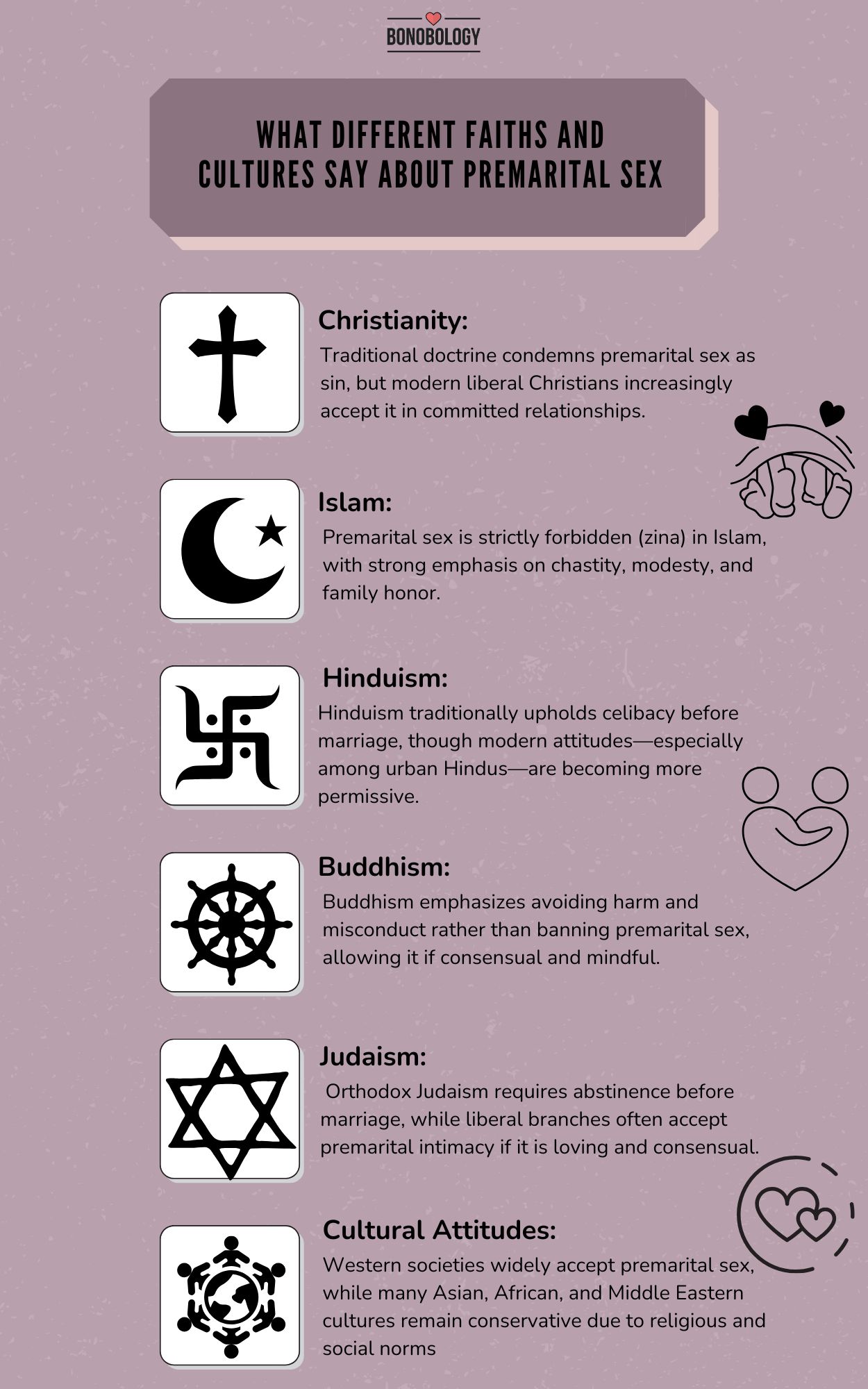
Attitudes toward premarital sex vary widely across faiths and cultures. Many traditional faith-based perspectives consider sex before marriage taboo or sinful, and advocate saving yourself for marriage. However, modern interpretations offer more liberal views, emphasizing personal conscience, the role of consent, and cultural norms.
Typically, conservative societies, often in parts of Asia, Africa, and the Middle East, uphold stricter abstinence ideals, while Western cultures have become more accepting of premarital sex in recent times. These divergent views showcase the tension between personal choice vs. traditional values when it comes to intimacy in romantic relationships. Let’s take a closer look at what different religions say about premarital sex:
Related Reading: What Does Celibacy Mean And How To Live Without Sex?
- Christianity: Traditional Christian doctrine strongly advocates waiting until marriage for sex, often labeling premarital sex as fornication, a sin. For example, the Catholic Church teaches that “fornication is gravely contrary to the dignity of persons and of human sexuality.” Many conservative Protestants and Catholics preach saving yourself for marriage. However, modern liberal Christian views vary. Some progressive Christians argue that the Bible doesn’t explicitly forbid consensual premarital sex and focus more on commitment, trust, and values in the relationship. Indeed, surveys show many Christians today accept sex in committed relationships before marriage, reflecting a shift from strict faith-based rules toward individual conscience
- Islam: In Islam, premarital sex is considered haram. The act is considered zina (fornication) and a major sin in religious teachings on sex. The Quran and Hadith emphasize chastity and reserving intimacy for marriage. Culturally, there is a strong emphasis on modesty, commitment, and family honor, with practices like gender segregation and no cohabitation before marriage reinforcing these values. Consequently, Muslim-majority societies tend to have very low rates of premarital sex compared to other groups
- Hinduism: Hindu views on premarital sex are traditionally conservative, though not monolithic. Classic Hindu dharma texts promote brahmacharya (celibacy) in youth, expecting individuals to remain chaste until marriage. Sexual morality is tied to concepts of duty (dharma) and karma, and historically, virginity was highly valued. In modern India and the diaspora, attitudes are evolving. Urban and Westernized Hindus are more accepting of personal choice, yet many communities still view premarital intimacy as against cultural norms. Notably, global studies find Hindus among the least likely to engage in premarital sex, with only 19% partaking in it, as per one survey
- Buddhism: Buddhism does not have a strict decree against premarital sex, focusing instead on intention and avoiding harm. Moral precepts in Buddhism encourage avoiding “sexual misconduct,” which traditionally refers to exploitative or deceitful sexual behavior such as adultery or sex with someone underage or under coercion. Unlike some religions, there isn’t an absolute rule that sex must occur only after marriage. Instead, Buddhists are taught to practice moderation and mindfulness in relationships, including its sexual components. If premarital relations are loving, consensual, and do not involve betrayal or harm, they are generally seen as acceptable in many Buddhist interpretations. In some cultures, for example, in Chinese Buddhism, this precept is taken more strictly to mean no sex outside marriage
- Judaism: Views in Judaism range from very traditional to modern and liberal. Orthodox Judaism expects strict premarital abstinence. Sex is reserved for marriage, and shomer negiah (not touching members of the opposite sex before marriage) is practiced by the very observant. Traditional Jewish law (Halacha) considers non-marital sex improper; maintaining modesty (tzniut) and family purity laws is paramount. By contrast, Reform, Liberal, and Reconstructionist Judaism take a more permissive approach. These modern movements do not consider themselves bound by all traditional sexuality rules and often accept premarital relationships as long as they are consensual and loving
- Cultural attitudes: Cultural attitudes toward premarital sex often mirror a society’s dominant religious and social values. In much of the Western world, premarital sex has become widely accepted over the past half-century. Secularization and the sexual revolution led to more emphasis on individual freedom and sexual compatibility. On the other hand, many Asian, African, and Middle Eastern cultures remain more conservative on this issue, often due to religious and communal norms. These differences lead to diverse experiences. For example, American or European couples may date for years and even live together, with society’s acceptance, whereas in more conservative societies, such behavior could trigger social sanctions
Related Reading: Am I Sexually Compatible With My Fiancé?
How Does Sex Before Marriage Impact A Relationship?
Does sexual intimacy between unmarried romantic partners impact a relationship, in a positive or negative way? There’s no universal answer. For some couples, premarital sex strengthens their bond and intimacy. For others, it introduces tension or doubts in the dynamic. Sex releases bonding hormones like oxytocin that deepen attachment, which can bring you closer. But if the relationship falters after sex, the heartbreak can be more intense. While sex before marriage might open doors to better understanding and communication, it can also cloud judgment.
“Physical intimacy can make it harder to see relational red flags because the emotional bond tends to override rational thought.”
—Esther Perel, relationship expert
Ultimately, how sex affects your relationship depends on both partners’ values, the nature of their connection, and how strong the foundation is.
13 Pros Of Sex Before Marriage
As you can probably tell by now, sex before marriage can be a mixed bag of experiences, with its fair share of benefits and pitfalls. These benefits extend far beyond physical pleasure and influence emotional connection and relationship satisfaction. Let’s take a look at the 13 potential pros of sexual intimacy before marriage to understand how:
1. Understanding your sexual self
Premarital sex lets you explore your sexual identity. By being intimate with someone you trust, you learn what you like, dislike, and where your boundaries lie. This self-knowledge can lead to a healthier sex life in marriage, because you’ll be able to communicate your needs and preferences to your partner.
Related Reading: She Wouldn’t Agree To Premarital Sex, So I Cheated On Her
2. Gaining sexual experience and skills
Having sex before marriage can build your confidence and skills in the bedroom. Like any activity, practice helps. You learn how to communicate about sex and understand each other’s needs. This comfort and experience can lead to a more satisfying, less awkward married sex life.
3. Testing sexual compatibility

Sexual compatibility is important for long-term happiness. Premarital sex lets you find out if you and your partner are a good match in bed, which is something you can’t fully gauge without trying. As one person quipped on Reddit, “Would you buy a car without test driving it?” Making sure you click physically can prevent unpleasant surprises later.
4. Identifying potential problems early
Premarital sex can reveal sexual problems or incompatibilities early on. You might discover a big mismatch in libido or other intimacy issues. It’s better to find this out before you’re married, so you can address it or even reconsider, than to be blindsided later.
Related Reading: 20 Questions To Build Emotional Intimacy And Bond With Your Partner On A Deeper Level
5. Deepening emotional intimacy
Physical intimacy often deepens the emotional bond between partners. Trusting someone with your vulnerability in that way can increase the love and closeness you share. Many couples feel more connected and “in sync” after being sexually intimate.
6. Improving communication between partners
Believe it or not, sex can improve your communication as a couple. Being intimate requires open dialogue about needs and boundaries. By practicing those honest conversations in the bedroom, many couples find it easier to communicate about other things too. In short, if you can talk about sex, you can talk about anything. And that builds trust.
7. Reducing sexual pressure and anxiety
Waiting until marriage can create a lot of pressure and anxiety around the “first time.” Being intimate before the wedding removes that big unknown. You won’t have all the performance pressure piled onto one night, and you can get past any initial awkwardness early. By the time you’re married, sex can feel more relaxed and natural.
8. Avoiding rushed marriages “just for sex”

Some people marry hastily mainly to have sex. If premarital sex isn’t off-limits, there’s less pressure to rush into marriage for physical reasons. You can take your time and marry when it feels right. Not because you’re desperately trying to stay celibate. This means you’re more likely to marry for love and compatibility, not just to legalize sex.
9. Ensuring your partner’s intentions are genuine
Sex before marriage can act as a bit of a filter for bad intentions. If someone is only interested in you for sex, they might lose interest after getting it. Painful, but better to know before marriage. A partner who truly loves you will stick around and grow closer after intimacy, not disappear.
Related Reading: 6 Important Things Couple Should Do Before Getting Married
10. Enjoying pleasure and stress relief
Let’s face it: sex is pleasurable, and that’s a valid benefit of giving it a try. It’s also a great stress reliever. Physical intimacy triggers feel-good hormones that lower stress and boost mood. Many couples find that enjoying a healthy sex life before marriage brings them closer and helps them unwind together.
11. Feeling empowered and confident
Choosing to have sex on your own terms can be empowering. You’re taking control of your body and decisions, instead of letting a rule define your worth. Many people (especially women) feel more confident and free when they don’t treat virginity as a trophy. Embracing your sexuality without shame can boost your self-esteem and make you a more assured partner.
12. No “what-if” curiosity left

Premarital sex can eliminate the curiosity. If you have some sexual experience, you won’t wonder what sex is like with someone else once you’re married. A woman who’d been with previous partners said on Reddit, “I also know exactly what I am missing and not missing out there in the world. It makes it really easy to know I picked a good spouse who I am happy to stay with.”
13. Building trust through vulnerability
Sex can build trust between partners. Being intimate means being vulnerable, and if you treat each other with care, it creates a deeper sense of security. You learn to respect each other’s boundaries and needs at a very personal level. As relationship expert Dr. John Gottman says, “Trust is built in the small moments.” Sharing those intimate moments before marriage can strengthen the trust in your relationship.
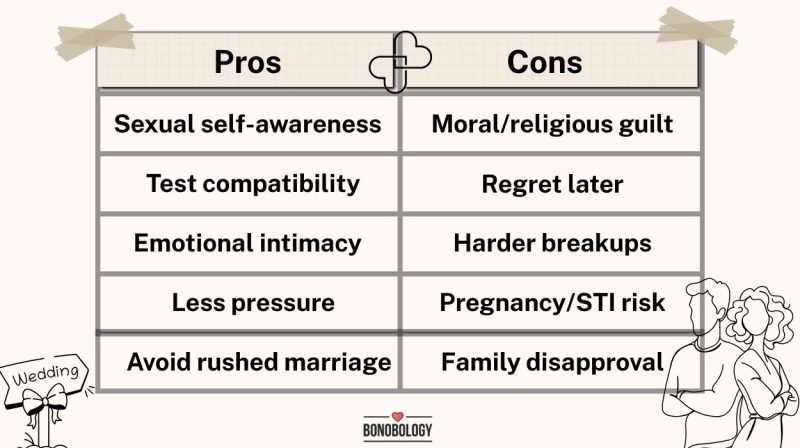
| Pros of Sex Before Marriage | Cons of Sex Before Marriage |
| Understanding your sexual self | Religious or moral guilt |
| Gaining sexual experience and skills | Possible regrets |
| Testing sexual compatibility | Deeper heartbreak after breakups |
| Identifying potential problems early | Risks of pregnancy and STIs |
| Deepening emotional intimacy | Feeling pressured or used |
| Improving communication between partners | Family or social disapproval |
| Reducing sexual pressure and anxiety | Comparisons and past baggage |
| Avoiding rushed marriages “just for sex” | Judgment can be clouded by sex |
| Ensuring your partner’s intentions are genuine | Potential for relationship imbalance |
| Enjoying pleasure and stress relief | It can lead to conflict if values differ |
| Feeling empowered and confident | It can lead to lower marital satisfaction |
| No “what-if” curiosity left | Ongoing guilt or self-esteem issues |
| Building trust through vulnerability | Harder to leave a bad relationship |
13 cons of sex before marriage
No decision is without risks. It’s important to consider the potential downsides of premarital sex as well. Here are 13 potential pitfalls of having sex before marriage:
1. Religious or moral guilt
If you’ve been taught that sex before marriage is a sin, breaking that rule can lead to intense guilt and shame. You might feel you’ve let down your faith or family. This kind of moral conflict can hang over you and even make it hard to enjoy intimacy later.
2. Possible regrets
Some people later regret having sex before marriage, especially if it wasn’t with their forever partner. They feel they gave away something special to the wrong person. Talking about losing their virginity to someone who didn’t last, a person on Reddit admitted, “I felt miserable when I realized how stupid it was.” If you always wanted your wedding night to be your first time, you might mourn the loss of that once-in-a-lifetime moment.
Related Reading: Intimacy: Why It Is Important in Marriage and Relationships?
3. Deeper heartbreak after breakups
Having sex tends to create a strong emotional bond. If the relationship falls apart, that bond can make the heartbreak much harder. Many people find that breakups hurt more after they’ve been intimate. The emotional fallout is often more intense because you shared such a personal connection. In other words, you might experience a deeper sense of loss and hurt when a sexual relationship ends.
4. Risks of pregnancy and STIs

Whenever you have sex, there’s a risk of pregnancy, even with birth control. An unplanned pregnancy can create serious emotional and financial stress, especially if you’re not ready to be a parent. There’s also the risk of sexually transmitted infections (STIs). Protection and testing lower the chances, but no method is 100%. Dealing with a surprise baby or a health issue can complicate your life and relationship before marriage.
5. Feeling pressured or used
Introducing sex can sometimes create imbalance in a relationship. One partner might feel pressured to go along with it before they’re truly ready, leading to guilt or resentment. On the flip side, some people lose respect or interest after they get what they want physically, leaving the other person feeling used or unvalued. If sex happens without equal emotional commitment, it can cause a lot of hurt.
Related Reading: Give Sex A Break! 13 Non-Sexual Touches To Feel Intimate And Close
6. Family or social disapproval
In some families and cultures, having sex before marriage is strongly disapproved of. If parents or community members find out, you might face anger, disappointment, or even shaming. You may feel forced to lie or hide parts of your life. This kind of outside judgment can be very stressful and can strain your relationship with both your partner and your loved ones.
7. Comparisons and past baggage
Having past sexual partners can introduce jealousy or insecurity into a marriage. You or your spouse might compare yourselves to each other’s exes, or feel uneasy knowing you weren’t each other’s first. Previous sexual experiences can also carry emotional baggage, whether it’s lingering memories or hurt. All this can lead to trust issues or a sense that your bond is less “special,” which may strain the relationship.
8. Judgment can be clouded by sex

Great sex can cloud your judgment. The emotional high of intimacy might make you overlook red flags or incompatibilities. You could end up staying in a bad relationship longer than you should simply because the physical bond is so strong. In other words, being sexually involved can make it harder to see a partner’s flaws clearly and make rational decisions about the relationship.
9. Potential for relationship imbalance
Becoming sexually active can sometimes skew a relationship’s focus. A couple might start to rely on sex to feel close or to fix problems, instead of working on deeper communication. It’s easy to spend more time hooking up than building your emotional bond. If the physical side takes over, other important aspects like friendship or shared goals may get neglected, which isn’t healthy for a long-term relationship.
Related Reading: How Has The Perception Of Sex Changed In The Last 40 Years?
10. It can lead to conflict if values differ
Premarital sex can spark serious conflict if you and your partner have opposing beliefs about it. One Christian woman who had sex with her atheist boyfriend shared on Reddit, “I am so glad he was my first. AND, I am sad because there are major conflicting views we hold that complicate our future.” She loved him, but their different values made things difficult. If one of you feels sex before marriage is wrong and the other doesn’t, it can breed guilt, resentment, or no trust in the relationship.
11. It can lead to lower marital satisfaction
Research suggest there are negative correlations between premarital sex and marital success. For example, one study found that people who had many sexual partners before tying the knot were more likely to divorce than those who had none or only one. Having a long “sexual history” might bring habits or expectations that could hurt a future marriage. While this isn’t a universal rule, it’s a trend that often gets mentioned in debates about waiting vs. not waiting.
12. Ongoing guilt or self-esteem issues
Beyond the immediate guilt, having sex before marriage can have long-term effects such as low self-esteem for some people. If you were raised to equate virginity with purity, you might struggle with feeling “dirty” or less worthy afterward, even if you rationally disagree. This internalized shame can linger and affect your mental health and future sex life. For example, someone might find it hard to fully enjoy intimacy with their spouse later because deep down they feel they ruined their purity by not waiting.
13. Harder to leave a bad relationship

Sex can be like a glue that makes you feel over-attached in a relationship, even if it’s unhealthy. After becoming intimate, you might find it harder to break up with someone who isn’t right for you. People sometimes stay in toxic relationships longer because they don’t want to “waste” the sexual bond, or they worry they won’t find that intimacy again. In this way, premarital sex can make it tougher to walk away when you otherwise would have.
Related Reading: How To Say No To Sex Without Hurting Him?
How To Decide If Premarital Sex Is Right For You
Deciding whether to have premarital sex is a deeply personal choice. There is no one-size-fits-all answer. It depends on your values, beliefs, emotional readiness, and life circumstances. It’s important to weigh faith-based perspectives or cultural expectations against your own feelings. The decision should ultimately be based on what’s right for you and your relationship. Here are some factors to consider in order to decide whether waiting until marriage or not waiting aligns with your moral framework better:
1. Reflect on your values
Take time for honest self-reflection about your beliefs, not just religious, but also cultural, and personal. Ask yourself how having sex now aligns with your morals or faith-based perspectives. If you’ve been taught that premarital sex is a sin or taboo, consider whether you agree and how breaking or keeping that tradition would make you feel.
Your upbringing and cultural norms might influence you, but remember this is your choice. Ensuring your decision matches your conscience and comfort level will help you avoid inner conflict or guilt. Know your stance on personal choice vs. traditional values and let that guide you so that whatever you decide, you feel at peace with it.
2, Discuss with your partner

Open communication is essential before becoming sexually intimate. Talk with your partner about each other’s expectations, boundaries, and what sex means to you both. Make sure you are on the same page about it. For instance, do you both view sex as a casual part of cohabitation and intimacy, or as a step implying deeper commitment? Clarity on this is crucial, so that neither of you feels betrayed or taken advantage of. It’s also important to,
- Discuss practical boundaries. For instance, some couples set limits like only after engagement or not until certain commitments are in place.
- Be clear about consent and comfort. You might say, “I need us to agree on what sex would signify in our relationship.”
- Ensure you both respect each other’s limits
Couples who communicate honestly about sex tend to have better relationship quality, whether they choose to wait or not. Good communication now will set the tone for how you handle intimacy and conflicts later.
Related Reading: The Dynamics And Importance Of Sex In A Relationship
3. Assess emotional readiness
Beyond love or physical desire, gauge your mental and emotional readiness for sex. Being “ready” means you feel secure, not anxious or pressured, at the idea of being intimate. Ask yourself if you’re considering sex for the right reasons. “Am I thinking about having sex because I want to, or because I feel I ‘should’?” If you feel nervous, fearful, or guilty at the thought, explore why. It’s normal to have some jitters, but persistent dread or a sense that it’s “wrong” for you could mean you’re not ready yet.
Emotional readiness also includes being prepared for potential outcomes: will you feel closer and more bonded, or might you feel regret? Make sure you’re not doing it to solve a relationship problem or to keep your partner around. Those are red flags that you’re saying yes to sex for the wrong reasons. Also consider your mental health and intimacy needs. If you have past trauma or strong moral reservations, those must be addressed first. The bottom line: never have sex out of pressure or as a “duty.”
4. Weigh risks and safety
Sexual intimacy carries real responsibilities and risks. Take a clear-eyed look at the possible consequences and how you will manage them. A key question to ask yourself is: “Am I prepared to deal with unintended consequences of sex such as pregnancy, sexually transmitted infections (STIs), or discomfort with my partner?” If you do choose to have premarital sex, safe sex is non-negotiable. Using protection like condoms or dental dams and possibly a reliable birth control method will protect your physical health and future fertility.
At the same time, you need to think about the emotional and relational risks. Sometimes sex can change the dynamics of a relationship. For some, it deepens intimacy. For others, it can create new tensions. Make sure you and your partner are ready to handle those changes in commitment and trust. By planning for safety, both physical and emotional, you can make premarital sex a positive, responsible choice if you decide to proceed.

5. Seek guidance if needed
If you’re torn or unsure, remember you don’t have to decide in isolation. Seeking advice from a trusted third party can provide clarity. Depending on your situation, this guidance might come from a faith leader, who can share religious wisdom in a non-judgmental way, or from a professional counselor or therapist who is experienced with relationship and sexuality issues.
Talking to a mentor, an older married couple you trust, or even a close family member can also help. They might not give you a “yes or no” answer, but they can help you explore your feelings and options. Of course, their advice can only guide you. Ultimately, the decision is yours. But if you feel confused or anxious, reaching out is a wise step.
FAQs
It depends on whom you ask. In many religious traditions, any premarital sex is considered sinful. These faith-based perspectives view abstaining as obedience to God’s commands. However, outside of strict religious contexts, premarital sex isn’t automatically seen as a sin. So, no, it’s not always a sin in everyone’s eyes. Whether it’s viewed as sinful comes down to your religious beliefs and moral outlook.
2. Does waiting improve marital satisfaction?
There’s no definitive answer. The idea is that waiting might build trust, ensure your values align, and avoid comparisons, potentially leading to higher marital satisfaction. Waiting can also mean you enter marriage with fewer emotional baggage or past complications. However, others argue that sexual compatibility is a key component of long-term happiness. And you really can’t tell if you’re sexually compatible with someone unless you have sex. So not waiting could help some couples ensure they are a good match intimately, possibly improving their relationship quality. Marital satisfaction is influenced by many factors, such as communication, love, mental health and intimacy, finances,, and whether or not you waited is just one piece of the puzzle.
3. Can premarital sex ruin a relationship?
Premarital sex per se doesn’t automatically ruin a healthy relationship but the context and feelings around it matter a lot. If both partners mutually want it, love each other, and communicate well, being intimate can actually enhance their bond and increase intimacy. However, problems arise if the sex happens in unhealthy circumstances. For example, if one person feels pressured or violated or if it violates one partner’s core values leading to guilt. If a couple has different expectations, it can lead to heartbreak or distrust.
4. What if my partner wants sex before marriage and I don’t?
The only way to address this mismatch is through honest communication and respect. First, know that you have the right to wait if you’re not ready or willing and a loving partner would respect that. Sit down with your partner and kindly explain your feelings and reasons. Together, you can discuss what intimacy means to each of you and find other ways to maintain closeness. If your partner cannot accept your decision to wait and continuously pressures or guilt-trips you, that’s a red flag. You may need to reconsider the relationship.
Key Pointers
- Whether premarital sex is considered a sin depends heavily on religious teachings on sex, personal beliefs, and cultural norms, with views ranging from strict abstinence to liberal acceptance
- For relationships, premarital sex can deepen intimacy, communication, and sexual compatibility, but it also risks guilt, heartbreak, or conflict if values clash
- The positives of a sex before marriage include empowerment, reduced pressure, trust-building, and testing compatibility
- On the other hand, there are certain drawbacks to consider as well, such as guilt, regret, family disapproval, and possible impact on marital satisfaction and stability
- Ultimately, deciding involves reflecting on personal choice, emotional readiness, partner communication, and safety, while considering guidance from trusted mentors or faith leaders
Final Thoughts
You’ll hear different stories from different people. One person might say, “I had sex before marriage and it didn’t ruin my life,” while another might wish they had waited. Deciding whether to have sex before marriage is deeply personal. Throughout history and even today, some hold to a strict no sex before marriage rule, while others believe sex before marriage is not a sin if it’s in a loving relationship. You’ve seen there are pros and cons on both sides.
Ultimately, you have to weigh what matters to you, factoring in your values, your emotional readiness, and the kind of relationship you want. There’s no one-size-fits-all answer here. What’s most important is that you and your partner feel respected, comfortable, and on the same page. Whether you follow traditional christian views on sex before marriage or make your own rules, make sure the choice aligns with what you truly want and believe.
How To Keep A Relationship Exciting And Interesting For Long Term
Your contribution does not constitute a charitable donation. It will allow Bonobology to continue bringing you new and up-to-date information in our pursuit of helping anyone in the world to learn how to do anything.


















Featured
Signs Of Lust In A Woman: How To Tell If She’s Physically Attracted To You
Daddy Kink: What It Is And How It Works
100 Naughty Text Messages for Him
Decoding Sexual Attraction: Why Am I So Sexually Attracted To Someone?
What Might Be Stopping Conversations About Sexual Health Among Partners?
How Long Is Too Long Without Sex In A Relationship?
19 Sure Signs Your Boyfriend Is Not Sexually Attracted To You
120 Juicy Questions To Ask Your Girlfriend
7 Reasons Showering Together Is Great For Intimacy And How To Do It Right
Beyond Pleasure: How Intimate Gadgets Foster Deeper Connections
21 Exotic Roleplay Ideas To Boost Naughtiness In Your Relationship
21 Kinky Foreplay Games To Turn Up The Heat
How To Clean A Vibrator? 9 Mistakes You Must Avoid
Financial Domination: What It Is, How It Works, And Can It Be Healthy?
How To Be A Better Lover – 11 Pro Tips By A Sex Therapist
Complete Theory On Neck Kissing | What Happens When You Kiss a Girl’s Neck
21 Common Sexting Codes And Meanings
Vanilla Relationship – Everything You Need To Know About
Why Twerking Is Directly Related To A Full Body Workout