

| Key Pointers Signs of bisexuality in males include recurring cross-gender attraction in fantasies, emotional pull toward people regardless of gender, the bi label feeling personally resonant, and defensiveness when bisexuality is dismissed Bisexuality exists on a spectrum. Most bi men are not equally attracted to all genders, and that does not make their identity any less valid A landmark 2020 PNAS study of 474+ men confirmed that bisexual-identified men show measurably distinct arousal patterns, establishing male bisexuality as a scientifically recognized orientation Bisexual men report higher rates of anxiety and depression than both heterosexual and gay men, largely driven by bi-erasure and stigma from both sides of the sexual spectrum These signs are starting points for self-reflection, not a checklist or diagnosis. The only person who can define your orientation is you |
Signs of bisexuality in males are the experience of romantic or sexual attraction to more than one gender. Not necessarily at the same time, not necessarily equally, and not necessarily in the same way. Bisexuality in men is a scientifically documented, stable orientation, not a stepping stone to something else.
And yet, if you’re a man trying to figure this out, the noise can be deafening. Bi men get told they’re really gay, that it’s a phase, that they just want a threesome, or that they can’t commit. None of that is true. What is true is that male bisexuality is more common than many people realize, more complex than most definitions capture, and more legitimate than the stigma around it would have you believe.
Gallup surveys show that bisexuals form the single largest group within the LGBT community, and that identification is rising fastest among younger adults. Yet bi men remain a minority within that group, in large part because the stigma around male bisexuality is uniquely punishing.
To help you understand what the signs of bisexuality in males actually look like, and what they don’t, we consulted Deepak Kashyap, counseling psychologist and certified life-skills trainer (MA, Psychology of Education), who specializes in LGBTQ and closeted counseling.
What Is Bisexuality?
Table of Contents
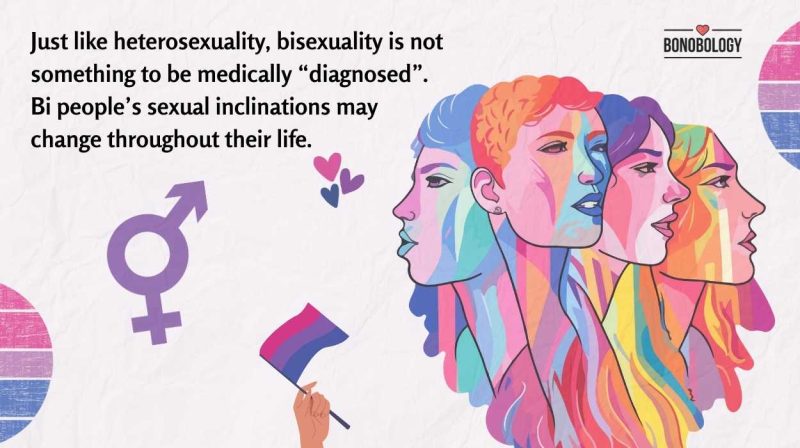
According to bisexual advocate Robyn Ochs, bisexuality is the potential to be romantically and/or sexually attracted to people of more than one sex and/or gender. Not necessarily at the same time, not necessarily in the same way, and not necessarily to the same degree. In 2020, Merriam-Webster updated its definition to reflect that gender exists on a spectrum, recognizing bisexuality as attraction to “the same gender and different genders” rather than simply men and women.
The prefix ‘bi’ trips people up because they read it as two, specifically the male/female binary. But the two in bisexual refers to attraction to genders like your own and genders different from yours. That opens it up considerably. If you’re actively questioning where you fall, Bonobology’s Am I Bisexual quiz is a useful starting point for self-reflection.
The Kinsey Scale and where bisexuality sits
Sexologist Alfred Kinsey introduced his famous scale in the late 1940s to show that human sexuality exists on a continuum, not a binary. The scale runs from 0 (exclusively heterosexual) to 6 (exclusively homosexual), with most people falling somewhere in between. Bisexuality, broadly speaking, covers scores 1 through 5.
| The Kinsey Scale at a Glance• 0: Exclusively heterosexual 1: Predominantly heterosexual, incidentally homosexual 2: Predominantly heterosexual, but more than incidentally homosexual 3: Equally heterosexual and homosexual 4: Predominantly homosexual, but more than incidentally heterosexual 5: Predominantly homosexual, incidentally heterosexual 6: Exclusively homosexual Most bisexual men don’t sit at exactly 3. Leaning more toward women, toward men, or toward nonbinary people at different points in life is all within the normal range. |
In the 1970s, Fritz Klein expanded on Kinsey’s work with the Klein Sexual Orientation Grid, which maps sexual orientation across seven factors: attraction, behavior, fantasy, emotional preference, social preference, lifestyle, and self-identification, mapped across the past, present, and imagined future. It’s a useful reminder that orientation isn’t a single fixed point.
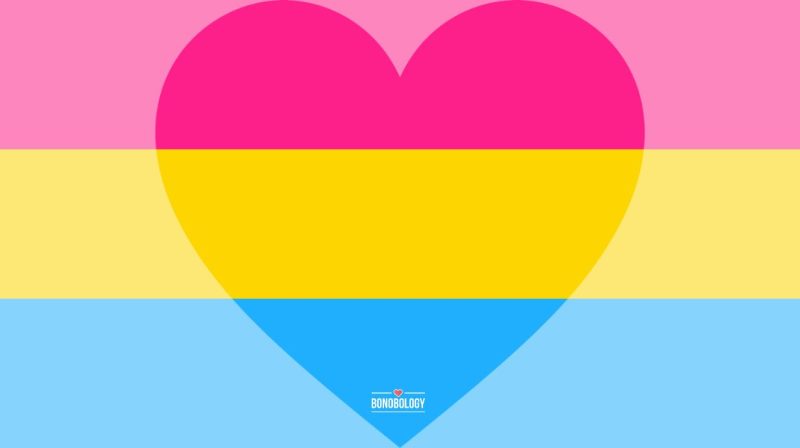
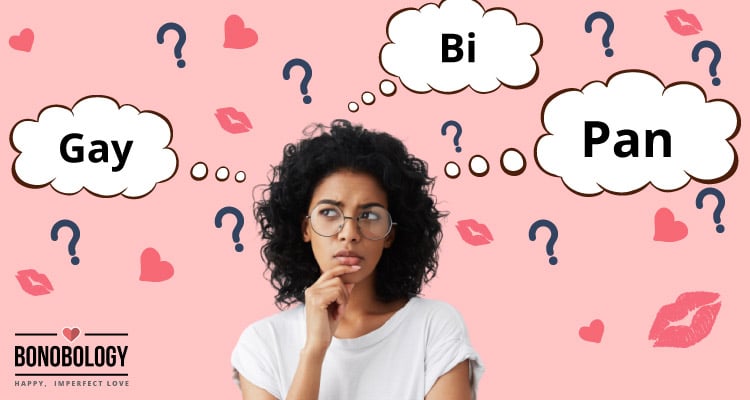
Bisexual vs. Pansexual: What’s the difference?
These two identities overlap and are sometimes used interchangeably, but they’re not identical. The distinction matters less for what you feel and more for how you want to describe it. Worth noting: some men find they resonate more with a panromantic identity, where romantic attraction exists independently of gender, which is a related but distinct experience from pansexuality.
| Bisexual | Pansexual | |
| Attracted to | More than one gender (gender is part of the experience) | People regardless of gender (gender is not a factor) |
| Gender awareness | Gender plays a role in how attraction is experienced | Attraction exists independently of gender identity |
| Overlap? | Yes, many people are comfortable with both labels | Yes, some pan folks also identify as bisexual |
| In practice | Often described as attraction to genders like and unlike your own | Often described as attraction to people, full stop |
Some men find ‘bisexual’ fits better; others prefer ‘pansexual’ or ‘queer.’ If neither feels quite right, that’s fine too. What matters is whether the feeling is real, not the word you use for it.
Related Reading:18 Types Of Sexualities And Their Meanings
Can men be bisexual?
Yes, and there’s robust scientific evidence to back it up. A landmark 2020 study published in PNAS (Jabbour et al.) combined data from eight previous studies involving 474 to 588 cisgender men across the US, UK, and Canada. The results were unambiguous: bisexual-identified men showed genital and subjective arousal patterns that were meaningfully more bisexual than those of heterosexual or homosexual men. Male sexual orientation exists on a continuum. For men working up to coming out, knowing the science backs up what they’re feeling can matter a great deal.
Despite this, male bisexuality remains less accepted than female bisexuality. Research consistently shows that attitudes toward lesbian and bi women are more favorable than toward gay or bi men. This isn’t a minor footnote. It shapes whether bi men feel safe enough to acknowledge their own feelings.
| By the numbers: Male bisexuality 55%+ of LGBT adults in the US identify as bisexual, making it the largest group within the community (Gallup, 2023). Around 2% of men in the US identify as bisexual. Researchers believe the real figure is higher due to stigma suppressing disclosure (CDC, 2016 report). A 2020 PNAS study of 474+ cisgender men confirmed bisexual-identified men show distinct, measurable arousal patterns, establishing male bisexuality as a scientifically recognized orientation. Bisexual men report higher rates of anxiety and depression than both heterosexual and gay men, largely attributable to bi-erasure from both straight and gay communities. |
Related Reading: Am I Bisexual? 18 Signs of Female Bisexuality
Why Male Bisexuality Is Still So Misunderstood
Bi-erasure is the tendency to ignore, dismiss, or actively deny bisexuality as a valid orientation. For men, it comes from multiple directions at once. The self-erasure piece is particularly corrosive: because of social conditioning and fear, some men suppress bi feelings so thoroughly that they show up only as a lack of emotional intimacy in their relationships, without ever examining why. According to Deepak, male bisexuality tends to be ignored, denied, or kept hidden for three main reasons:
- Social erasure: Society still treats male bisexuality as a soft launch for homosexuality. Bi men are pressured to pick a side.
- Self-erasure: Because of social conditioning and fear, some men suppress bi feelings entirely to avoid complicating their relationships or upsetting traditional expectations around marriage.
- Media erasure: Bisexual men are routinely stereotyped as greedy, hypersexual, or commitment-averse. These are representations that make bisexuality look less like a valid identity and more like a behavioral quirk.
The result is that many men carrying signs of bisexuality in males never examine those feelings at all. As Donald Weise wrote in a Lambda Literary essay: “As far as I was concerned, I was a gay man who was attracted to women, but I’ve seldom come out about that for fear of becoming an outsider among outsiders.”
1. “You’re just gay and not admitting it”
This is probably the most common thing bi men hear. Studies show that heterosexual, lesbian, and gay people alike tend to believe a bisexual man is more attracted to other men. But attraction doesn’t work that way. A man can be genuinely and consistently attracted to more than one gender, without that being a precursor to coming out as gay. The Kinsey Scale made this point 75 years ago. The world just hasn’t caught up.
Related Reading: Signs a Guy Is Pretending to Be Straight
2. “Bisexual men are attracted 50/50”
“Often, people think that the attraction bisexual people feel toward men and women is split even, 50/50. That is not the case,” says Deepak. Attraction ratios vary enormously across bi men. Some feel primarily drawn to women and occasionally to men. Some lean the other way. Some are more attracted to nonbinary people than to either binary gender. The 50/50 assumption is one reason bi men feel they have to prove their bisexuality, which is exhausting and pointless.
Related Reading:The Different Types of Attraction and How to Recognize Them
3. “Bisexual men can’t be monogamous”
This myth stems from the idea that bi men are perpetually torn between genders and will inevitably cheat. “Monogamy is not about whether someone is bisexual or not. It’s about whether two people are committed to the idea or not,” says Deepak. In fact, a study found that bisexual men were rated as better long-term partners, more caring, and better at forming equitable relationships by women who had dated them, some of whom said they would not go back to dating straight men.
4. “It’s just a phase”
“When we look at sexuality as a problem, it is easy to dismiss it as a phase,” says Deepak, “But sexuality doesn’t change. You just become more aware of different aspects of your sexuality in time.” Research consistently supports this: bisexuality is a stable, enduring orientation, not an experimental waypoint. The same pattern of external dismissal shows up across the board for questioning individuals, whether they’re asking am I a lesbian or am I bisexual. The ‘phase’ framing is rarely about the person and almost always about the discomfort of the people around them.
Related Reading: Are We Naturally Monogamous or Has It Been Forced Upon Us?
5. “A bisexual man is looking for a threesome”
The assumption that bi men are sexually omnivorous and will hit on everyone is as unfair as it is untrue. Sexual preferences are individual regardless of orientation. Some bi men like threesomes. The two are unrelated.
6. “A bisexual man isn’t relationship material”
This is contradicted by the same research mentioned above. Bisexual men in relationships were described as good lovers, caring fathers, and invested partners. Bisexual advocate Lewis Oakley made the point well in The Independent: ‘I’m an out bisexual man who found a woman that loves me for who I am…I’m living proof that dating a bi man can work out.’
Related Reading: 21 LGBTQ Flags And Their Meanings
13 Signs of Bisexuality in Males
Because bisexuality doesn’t come in a single mold, these signs are meant as a starting point for reflection, not a pass/fail test. There are no hard-and-fast rules about what makes someone bisexual. What matters is whether these experiences ring true for you.
1. Your fantasies feature more than one gender

“Check your fantasies and your fears. What are you attracted to and what are you afraid of?” says Deepak. Sexual fantasies and dreams are often the most unfiltered window into attraction, precisely because they bypass the social filters that keep you second-guessing yourself.
If your fantasies regularly include people from more than one gender, whether separately or together, that’s data worth paying attention to. “The body is never confused. It will tell you what it wants. Pay attention to what that is. Don’t just listen to what your brain is telling you about what it could mean,” he adds.
Related Reading: My Fantasy Sexual Life
2. Your porn history reflects broader interests
“See what kind of porn turns you on. What kind of porn do you enjoy? It is a good indicator, but not a surefire answer to whether or not you’re bisexual,” says Deepak. If you’ve found yourself watching content you didn’t expect to find appealing, or if the gender of the people involved matters less to you than the dynamic. That’s worth noting.
A caveat Deepak raises: “There are many lesbians who enjoy gay porn. That doesn’t mean they are turned on by gay men.” Context and pattern matter more than any single instance.
3. Your fictional crushes cross gender lines
When you’re watching a show, film, or reading a book, do you find yourself attracted to characters regardless of their gender? This is often one of the earliest signs of bisexuality in males, partly because fictional attraction feels lower-stakes and safer to acknowledge than real-world feelings. Many bi men trace their first inkling of bi feelings to a character crush they couldn’t quite explain.
Related Reading:I’m Bisexual: My Best Friend Is My Lover
4. You relate to bi characters more than you expected
Maybe seeing a character like Marvel’s Loki come out as bisexual hit differently than you thought it would. Or there’s a bi figure in a book, show, or public life that you find yourself pulling for in a way that feels personal. That identification is worth sitting with. It often surfaces before the label does. If you want to explore more of these perspectives, Bonobology’s list of LGBTQ books includes titles that handle bisexual identity with real nuance.
5. Your feelings for a close friend have confused you
A strong pull toward a close friend, one that seems to go beyond admiration or affection, is something many bi men describe as a turning point. Here are the questions Deepak suggests asking yourself:
- Are you romantically drawn to this person? Do you find yourself wanting one-on-one time rather than group settings?
- Are they appearing in your sexual fantasies?
- Are you afraid of someone finding out? Or avoiding the feeling altogether to protect the friendship?
“Fear and avoidance are often the most telling signals. Being attracted to someone is 100% normal even if you don’t quite know what to do about it yet,”
—Deepak
Related Reading:5 Ways to Tell Your Best Friend You’re Falling in Love With Him
6. You can picture long-term relationships with people of different genders
For many bi men, attraction is less about gender and more about the individual. If you can genuinely imagine yourself in a committed relationship with people across the gender spectrum, not as a vague hypothetical but as something you could actually want, that’s a meaningful sign. It doesn’t mean you’re equally attracted to all genders; it means gender isn’t a dealbreaker.
Related Reading: Signs You’re Ready for an Exclusive Relationship
7. Bi stigma hits you personally
When someone says male bisexuality isn’t real, or laughs it off, or suggests bi men are just confused: does it land differently than other homophobia? Does it feel like an attack on you specifically, even if you haven’t fully processed your own feelings yet? Deepak notes that taking bisexual stigma personally is often an early signal that there’s something worth examining. Defensive reactions to dismissals of bisexuality aren’t always about politics. Sometimes they’re about identity.
8. You keep asking yourself whether you’re bisexual
“Don’t try to fit yourself into a category. Move on with your life and your body will tell you,” says Deepak. That said, if the question keeps surfacing, it’s doing so for a reason. Something triggered it, whether a person, an experience, or a moment of honesty with yourself. The recurring question is itself a sign worth taking seriously. The same is true when you find yourself watching someone and wondering whether what you’re feeling is deeper than it looks. You don’t need a definitive answer today.
Related Reading:Practical Steps to Deal with Depression
9. Bisexuality feels appealing, not just theoretical
There’s a difference between understanding bisexuality intellectually and finding the idea genuinely appealing to your own life. If the concept resonates, if you feel something when you think about it rather than just academic curiosity, that’s a different kind of signal. It suggests an openness that may be pointing toward something real.
10. The bi label feels right
“At times, more than any specific thing, the bi label just feels right to some people,” says Deepak. If you put ‘bisexual’ next to yourself and something settles, that’s a form of self-knowledge. Don’t let the noise of misconceptions drown out a feeling that has been trying to tell you something. The label is a tool for your use, not a box anyone else gets to put you in.
11. You feel more at ease in LGBTQ+ spaces

A lot of bi men describe a sense of relief or belonging in queer-friendly environments before they’ve labeled anything. Feeling unusually comfortable, or unusually like yourself, in LGBTQ+ spaces, at a Pride event, in a queer friend group, or in a community where sexuality isn’t policed, is often an early indicator that your own orientation is less fixed than you assumed. The comfort often arrives before the vocabulary does.
Related Reading: How LGBTQ+ Individuals Can Benefit from Online Therapy
12. Your attraction is person-first, not gender-first
Many bisexual men describe their experience not as ‘I’m attracted to men and women’ but ‘I’m attracted to this person.’ Gender is present but not determinative. The person’s energy, mind, personality, or physical presence matters more than the gender category they sit in. Robyn Ochs’s definition captures this precisely: attraction to more than one gender, not necessarily in the same way, and not necessarily to the same degree. If your attraction patterns are consistently person-first rather than gender-driven, that’s a meaningful sign of bisexuality in males.
Related Reading:Romantic Orientation: Meaning, Types, and Finding Yours
13. Your attraction shifts or fluctuates over time
Some bisexual men experience what the bi community calls the ‘bi-cycle,’ meaning periods when attraction to one gender feels more prominent, followed by shifts toward another. This isn’t instability or confusion. It’s a recognized pattern within bisexual identity, documented in community literature and research. Your orientation doesn’t change because your attraction fluctuates; what shifts is its intensity and focus. Mistaking natural fluctuation for uncertainty about your identity is one reason many bi men spend years questioning something that has actually been consistent.
Related Reading: The Yin and Yang of the Sexuality Spectrum
What These Signs Don’t Mean
Recognizing some of these experiences doesn’t automatically make you bisexual, and that cuts both ways. These signs are indicators, not proof. A story that illustrates the complexity well: a gay man who was happily married to a woman for years shows how identity, behavior, and orientation can diverge in ways that resist simple labels. A few important clarifications:
- Having same-sex experiences doesn’t define orientation: There’s a meaningful difference between situational same-sex behavior and a genuine, enduring attraction to men. Bisexuality requires the latter
- Bisexuality doesn’t mean universal attraction: You don’t have to be attracted to everyone, or equally attracted to all genders. Most bi men have preferences
- Being in a same-sex or opposite-sex relationship doesn’t cancel your identity: A bi man in a heterosexual relationship is still bisexual. Your current partner’s gender doesn’t define your orientation
- Discomfort around LGBTQ+ topics alone isn’t a sign: Homophobia and internalized biphobia can produce complicated feelings, but they’re not reliable indicators of bisexual orientation on their own
Related Reading: 7 Signs Your Husband Is Gay and 5 Ways You Can Help Him
The Mental Health Side of Questioning Your Sexuality
If the process of recognizing signs of bisexuality in males feels heavy, it’s not because you’re doing it wrong. Beyond the personal work of self-discovery, bi men also face practical questions, from finding LGBTQ-affirming support to navigating dating apps built for queer people. But the emotional weight often comes first. A systematic review published in the Journal of Sex Research found that bisexual people experience higher rates of depression and anxiety than both heterosexual and gay/lesbian individuals. A 2022 meta-analysis in Acta Psychiatrica Scandinavica confirmed those findings, noting that there is currently no evidence of a narrowing gap.
Why bi men report higher rates of anxiety and depression
The primary driver isn’t bisexuality itself. It’s minority stress, the excess psychological burden that comes from navigating stigma, erasure, and discrimination from multiple directions simultaneously. Bi men often experience rejection from straight communities and skepticism from gay communities, leaving them without a clear sense of belonging in either. Invisibility is its own form of harm.
Research from PubMed confirms that bisexual individuals face strong evidence of increased mental health and substance use disparities, across measures of identity, attraction, and behavior. This isn’t a niche finding; it’s one of the most replicated results in sexual minority health research.
How to find support
Talking to someone who understands the specific experience of bisexual identity is meaningfully different from general counseling. A few options worth knowing:
- LGBTQ-affirming therapists: Psychology Today’s therapist finder lets you filter by LGBTQ+ specialty. An affirming therapist won’t question your orientation or treat it as something to resolve
- Bi-specific communities: The Bisexual Resource Center (biresource.org) offers connection, resources, and visibility
- Bonobology’s counseling panel: If you’re working through questions about your sexual identity in the context of a relationship, Bonobology’s experts can help
| Pro Tip: If you’re questioning your orientation and finding it harder than expected, that’s a normal response to carrying something alone. Reaching out to an LGBTQ-affirming professional isn’t a sign that something is wrong. It’s a practical step toward clarity. |
Related Reading:Queerplatonic Relationship: What Is It and 15 Signs You Are in One
How to Talk About Your Bisexuality
Even once you know how you feel, saying it out loud is a different thing. Coming out as bisexual, to a partner, a parent, or a friend, carries real stakes. Those stakes vary depending on who you’re talking to and what you’re risking. It’s also worth knowing that not all bisexual men want monogamy, and the landscape of what relationships can look like is wide. Understanding the difference between polyamory and open relationships can help clarify what kind of relationship structure actually works for you before you have any conversation.

“Why am I bisexual?” is a question that surfaces for a lot of men early on. Deepak’s answer is direct: “You are bisexual for the same reasons you have blue, brown, or black eyes. You are bisexual for the same reason you are bald or have curly, thick, and luscious hair: It’s biology.” If you’re deciding whether and how to come out, a few things to keep in mind:
- Set the stage: Choose a time when the other person has space for a real conversation, not a distracted five-minute window
- Prepare for a range of responses: Not everyone will respond the way you hope. That doesn’t mean you made a mistake
- Give people time: Someone who loves you may still need time to process what you’ve told them. Time isn’t the same as rejection
- You don’t owe anyone a coming-out: Your sexual identity belongs to you. Sharing it is a choice, not an obligation
Telling your partner you’re bisexual
If you’re in a relationship and coming to terms with bisexual feelings, the question of when and whether to tell your partner is real. There’s no universal right answer, but a few things are generally true: honesty tends to build more trust in the long run, and having a relationship where your identity feels hidden is a weight that compounds over time.
If your partner responds with jealousy or concern that you’ll want to be with someone else, the conversation isn’t about bisexuality. It’s about trust and commitment, which applies to every orientation.
Related Reading:10 Ways the Queerphobia Is Coming From Inside the House
Bisexual identity in a straight-passing relationship
Many bisexual men are in long-term relationships with women and live, by appearances, as straight couples. This is sometimes called ‘straight-passing,’ and it comes with its own form of erasure. You may feel like you can’t claim bisexual identity because you’re not ‘acting on it.’ But bisexuality is an orientation, not a behavior. A man in a monogamous relationship with a woman doesn’t stop being bisexual any more than a straight man in the same relationship stops being straight.
Related Reading:I’m a Bisexual Woman Married to a Man
How to Explore Your Bisexuality
If you’re fairly sure of your feelings but not sure what to do with them, Deepak has two practical anchors. Before getting to them, it’s worth knowing that bisexual exploration doesn’t always mean acting on attraction immediately. Some men find they first need to understand how their orientation relates to other dimensions of who they are, including whether aspects of demisexuality (where attraction only develops after emotional connection) factor into their experience.
- Be upfront about your bi leanings: If you’re experimenting or dating, let current and potential partners know where you are. You don’t have to have everything figured out, but transparency prevents harm
- Practice radical self-acceptance: Watch for narratives that make your feelings smaller or more shameful than they are. Try to see yourself as who you are, not who you think you should be.
Related Reading: Best Dating Sites for Bisexuals: Find Your Match Today
FAQs
The most commonly reported signs include recurring attraction in fantasies to more than one gender, finding the bi label personally resonant, feeling hurt by bisexual stigma, being drawn to people across genders in real life, and a recurring internal question about whether you’re bisexual. No single sign is definitive. Pattern and persistence matter more than any one instance.
Yes. Bi-erasure, internalized stigma, and the social pressure to be straight or gay mean many men don’t have the language or safety to recognize bisexual feelings for years. The experience of coming to bisexual identity later in life is common, not a sign that the orientation developed late.
Bisexuality involves attraction to more than one gender, with gender being part of how attraction is experienced. Pansexuality describes attraction to people regardless of gender, where gender isn’t a relevant factor. The two overlap considerably, and some men identify with both. The more important question is which label, if any, feels true.
Yes. A2020 study in PNAS examined 474 to 588 cisgender men from eight previous studies and found that bisexual-identified men showed distinct genital and subjective arousal patterns consistent with bisexual orientation. The results were described by researchers as highly robust.
No. Most bi men are not equally attracted to all genders, and Deepak is explicit about this: “It’s never that simple.” Attraction ratios shift, preferences lean in different directions at different points in life, and none of that disqualifies bisexual identity.
Yes. Bisexual identity isn’t contingent on behavior or relationship status. A man in a long-term heterosexual marriage can be bisexual. His current partner’s gender doesn’t define his orientation.
Primarily because of bi-erasure and stigma. Men who express bisexual identity risk being told they’re confused, lying, or not ‘really’ gay or straight. The social cost of claiming bisexuality is high enough that many men find it easier to suppress the feelings entirely rather than navigate the skepticism from all sides.
No. Research consistently shows bisexuality is a stable, enduring orientation. “Sexuality doesn’t change. You just become more aware of different aspects of your sexuality in time,” says Deepak. Men who do eventually identify as gay were often bi-identified during a period of coming to terms with their orientation, which is how the ‘phase’ myth got started.
Choose a time when you both have space for a real conversation. Be clear about what you’re sharing and what you’re not asking for. Reassure them that bisexual identity doesn’t mean dissatisfaction with your relationship. Expect them to need time, and understand that their reaction is theirs to manage, not yours to fix.
The Bisexual Resource Center is a good starting point. LGBTQ-affirming therapists (searchable through Psychology Today’s directory) offer professional support. Community forums on Reddit’s r/bisexual are also widely used as a space to process questions in real time.
Final Thoughts
Sexuality isn’t a one-size-fits-all box. It’s a map of what you desire, and how you read that map is up to you and no one else. If you’ve recognized signs of bisexuality in males in your own experience, you don’t need anyone’s permission to take them seriously. You also don’t have to have it all figured out today.
The signs in this article are starting points. They’re meant to give you a clearer picture of what bisexuality actually looks like from the inside, stripped of the myths, the erasure, and the noise. What you do with that picture is entirely your call.
7 Bollywood Movies That Have Sensitively Portrayed the LGBT Community
Your contribution does not constitute a charitable donation. It will allow Bonobology to continue bringing you new and up-to-date information in our pursuit of helping anyone in the world to learn how to do anything.










Im a bi mwm . I love my wife and the female body ,sex! I also since I was about 19 have been having oral sex with men with most of them being married men. Im closeted because I dont feel the need to come out to others. No one would ever suspect that im bi. To be honest im mainly a cocksucker (selective) because I love doing it.
Can’t believe no comments as yet. Very nice article and I can 100% relate to it.
On questions 9 &10 the answer is a resounding yes!